Arkansas Roofing Guidance
Roof Replacement in Farmington, AR
Compare roof replacement in Farmington, Arkansas with repair. Review roof condition, shingles and metal, tear-off, decking, ventilation, cleanup, and written proposals.
Arkansas Roofing Guidance
Compare roof replacement in Farmington, Arkansas with repair. Review roof condition, shingles and metal, tear-off, decking, ventilation, cleanup, and written proposals.
When shingles are wearing across broad sections, leaks keep returning, or several roof details need attention, a Farmington, Arkansas property owner may need to compare replacement with another repair. The decision should follow an assessment of the roof system and a clear explanation of which conditions support the proposed work. One stain or a few loose shingles alone do not establish that the entire roof needs replacement.
All Arkansas Roofing connects property owners with independent roofing contractors. Share the property address, building type, known roof concerns, and any access or occupancy needs. For local planning information, visit the Farmington roofing hub.
A useful assessment considers the roof covering, flashing, valleys, edges, penetrations, drainage details, and signs of moisture or movement. Interior observations can help describe the concern, but a ceiling mark does not prove where water entered or how far it traveled. Ask which areas were inspected, what was observed, and what could not be confirmed until materials are removed.
Replacement is worth comparing when wear or damage reaches several areas, leaks recur, or the existing assembly has broader concerns. A localized repair may still make sense if the affected section is limited and surrounding materials remain serviceable. Request the reason for each recommendation and a description of the roof areas each option covers. This keeps the decision tied to the property rather than a general label such as “old roof.”
Asphalt shingles and metal roofing differ in components, appearance, attachment, and installation details. Their suitability depends on the roof’s slope and geometry, existing structure, transitions, penetrations, and the property owner’s priorities. Compare complete systems and written scopes, not just surface material names.
A shingle proposal should identify the product, underlayment, flashing, edges, ventilation details, and removal plan. A metal proposal should identify the panel or seam type, fastening approach, trim, underlayment, and transitions. Ask how each proposed system fits the particular roof. For additional context, see residential roofing, asphalt shingle roofing, and the guide to metal roofing versus asphalt shingles.
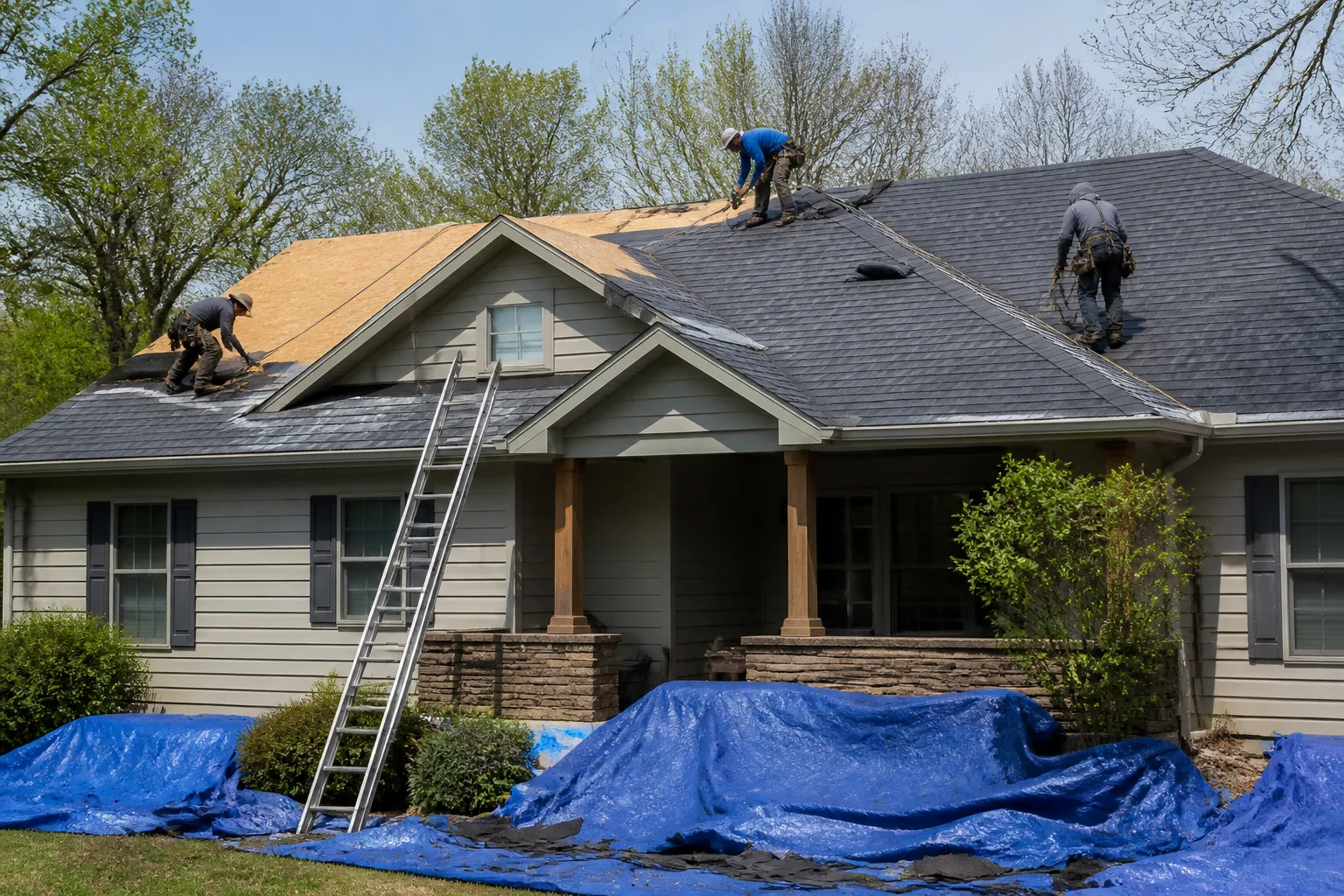
A tear-off removes existing roof material so the exposed roof deck can be inspected. Ask whether the proposal includes removing all existing layers, how materials will be handled, and what is included in disposal. Once uncovered, the deck may reveal soft, damaged, or uneven areas that were not visible beforehand. The amount of repair needed cannot be assumed without seeing those surfaces.
The written proposal should explain how concealed conditions will be documented and discussed before work outside the original scope proceeds. Check whether decking repair is included, excluded, or addressed through a separate process. Ask how any change to the work will be described and approved. Clear terms help avoid confusion when the visible roof covering is removed and new information becomes available.
Replacement planning should identify whether ventilation components are being assessed and whether any changes are proposed. The appropriate arrangement depends on the attic, roof shape, existing intake and exhaust paths, and system design. Ask the contractor to explain the proposed details for this building rather than relying on a simple vent count.
Also review how flashing, valleys, penetrations, edges, and transitions will be addressed. These details connect different roof surfaces and need to fit the proposed materials. A proposal that names the shingle or panel but leaves these components unclear is harder to compare with a fully described scope.
Before scheduling, identify landscaping, walkways, parked vehicles, outdoor equipment, entrances, and areas that need to remain accessible. Tell the contractor whether occupants, customers, or staff will be present and whether particular rooms or operations need consideration. Ask what the written scope says about protecting the property while old materials are removed and new roofing is installed.
Cleanup should be described as part of the project plan. Clarify how debris will be collected, how access routes will be kept usable, and what site review is included when work is finished. The exact approach depends on the property and agreed scope, so discuss specific concerns in advance rather than assuming a standard method.
Review written proposals side by side and confirm they cover comparable roof areas and work. Look for itemized descriptions of:
Ask for clarification when an item is vague or appears in one proposal but not another. The roofing estimate checklist offers additional questions for comparing scope. The City of Farmington provides building-permit information and an application that asks for the property address and job description. That information does not establish that every roof replacement has the same permit requirements. Confirm requirements for the address and exact project scope with the city using its Building Permits and Code Enforcement information.
Compare both when wear spans multiple areas, leaks recur, or the assessment identifies broader concerns. Ask which observed conditions support each option and what work each scope would cover.
That cannot be determined fully until existing materials are removed and the deck is visible. Ask how findings will be documented and how added work will be explained and approved.
It should state whether ventilation was assessed, identify any proposed changes, and explain how those details relate to the roof and attic configuration.
Compare the specific products and full installation details, including underlayment, flashing, attachment, transitions, tear-off, decking, ventilation, and cleanup. Consider how each system fits the roof design.
To compare replacement with a focused repair, review roof repair in Farmington and roof replacement in Arkansas. Share the property address and known conditions when you request an estimate.
What To Expect
Share your ZIP code, the service you are considering, and what you have noticed about the roof.
Discuss the observed condition, repair or replacement options, and proposed scope with the independent roofer, subject to local availability.
Review materials, work details, cleanup, exclusions, and any additional repairs before deciding how to proceed.
A Few Common Questions
Tell us where the property is and what your roof needs.
Roofing Estimate
Share the property ZIP code and the roofing service you need. The form uses the existing inquiry system.