Arkansas Roofing Guidance
Roof Repair in Farmington, AR
Learn how roof repair concerns in Farmington, Arkansas are assessed, what to report about a leak, how repair scopes are compared, and when to consider replacement.
Arkansas Roofing Guidance
Learn how roof repair concerns in Farmington, Arkansas are assessed, what to report about a leak, how repair scopes are compared, and when to consider replacement.
A water mark on a ceiling, damp insulation, or a shingle out of place can raise questions about a roof in Farmington, Arkansas. Record what you noticed, when it appeared, and whether it has happened before. A visible symptom is useful information, but it does not by itself show where water entered or how much of the roof is affected.
All Arkansas Roofing connects property owners with independent roofing contractors. Share the property address, roof type if known, and the location of the concern. A focused assessment can then compare what is visible with the roof areas and details that may be related. The Farmington roofing hub outlines local options and project-planning information.
Water does not always travel straight down from an opening. It can follow roof decking, framing, insulation, or other surfaces before appearing on a ceiling or wall. A stain inside a home may be offset from the place water entered. Roof valleys, flashing, vents, pipe boots, skylights, damaged shingles, and roof-to-wall transitions are possible entry areas, but a symptom cannot confirm which one is involved. Finding the source matters because a repair aimed only at the indoor mark or nearest roof detail may leave the water path open.
When calling about a leak, report the room or area where moisture appears, when it was first noticed, whether it follows rain, and whether earlier repairs were made. Mention changes in the stain, dripping, damp materials, or any visible exterior concerns. Photos from indoors or from ground level can help document what you see when they can be taken safely. Do not climb a ladder or walk on the roof to take pictures. If water is near an electrical fixture or a ceiling is sagging, keep people away from the area and include that information when requesting help.
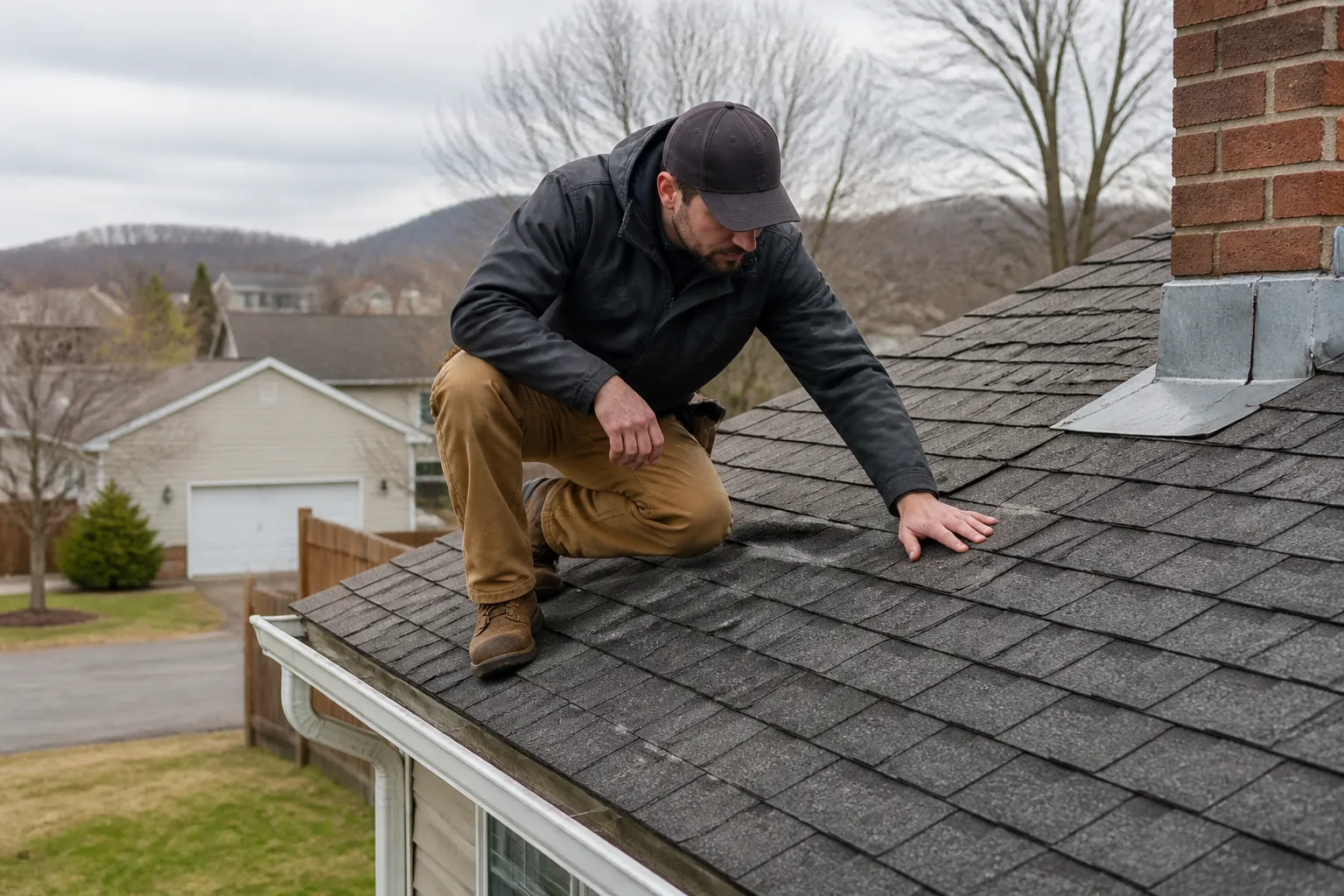
An assessment should connect the reported symptom to observed roof conditions and explain what remains uncertain. The roof covering, nearby flashing, penetrations, valleys, edges, and transitions may all be relevant. Access and weather conditions can affect what can be checked, so ask which areas were inspected and whether further evaluation is needed before the source can be confirmed.
A localized repair may be reasonable when a specific damaged section can be addressed and adjacent roof materials remain serviceable. The written scope should identify the area, the components involved, and how the proposed work addresses the suspected entry point. Ask what is excluded, especially where flashing or other nearby details could affect the repair.
A leak that returns deserves a fresh look at the roof and the earlier work, rather than an assumption that the same patch should be repeated. Water may be coming from another detail, the original source may not have been identified, or the surrounding material may have changed. Share when the earlier repair occurred, what area it addressed if known, and how the current symptom differs.
Ask the assessor to explain what was observed this time and how the proposed scope responds to it. If the source cannot be confirmed from the available access, a useful explanation should say so and describe what further inspection would clarify. This separates confirmed findings from a working theory and helps prevent a repair scope from promising more than the inspection supports.
Repair may remain practical when the problem is limited and the surrounding system is in usable condition. Replacement is worth comparing when wear or damage extends across multiple areas, similar leaks continue, or the roof assembly has broader concerns. Neither conclusion follows from one ceiling stain or one missing shingle. Ask for the observations supporting each option and which parts of the roof each scope would address.
Compare the scope, materials, flashing or penetration work, removal and disposal if applicable, cleanup, exclusions, and how concealed conditions will be discussed. A replacement proposal should describe the larger work rather than simply label the roof as worn. For a broader overview, see the roof repair or replacement guide. You can also compare roof repair in Arkansas with roof replacement in Farmington.
Before an assessment, note the exact property address, building type, access limitations, and any rooms or business areas that need to remain usable. For permit questions, the City of Farmington identifies its Building Official as the point of contact and provides a permit application that requests the site address and job description. That is a reason to ask about the specific work, not proof that every roof repair requires a permit. Confirm requirements for the address and project scope with the city. See Farmington Building Permits and Code Enforcement.
For homes, identify attic or interior signs only if they are safely accessible. For a shop or other commercial building, note operating hours, entrances, equipment, and any areas where water or debris could affect daily use. These details help make the proposed inspection and scope relevant to the property without guessing at the cause.
Not necessarily. Water can move along framing or roof components before becoming visible inside. The roof and likely water path need assessment to identify the source.
Share the address, where moisture appears, when it occurs, whether it follows rain, any previous repairs, and visible changes you can observe safely. Indoor or ground-level photos may help document the concern.
It may be possible, but the source and surrounding roof condition should be assessed first. Ask how the proposed scope addresses the observed condition and whether nearby details are included.
Compare both when damage appears in several areas, leaks return, or broader wear is reported. A written explanation should tie each recommendation to the roof conditions observed.
To discuss roof repair in Farmington, request an estimate and share the property location and observations. No roof access is needed to send an initial description.
What To Expect
Share your ZIP code, the service you are considering, and what you have noticed about the roof.
Discuss the observed condition, repair or replacement options, and proposed scope with the independent roofer, subject to local availability.
Review materials, work details, cleanup, exclusions, and any additional repairs before deciding how to proceed.
A Few Common Questions
Tell us where the property is and what your roof needs.
Roofing Estimate
Share the property ZIP code and the roofing service you need. The form uses the existing inquiry system.