Arkansas Roofing Guidance
Roof Replacement in De Queen, AR
Compare roof replacement in De Queen, Arkansas, including condition assessment, shingle and metal choices, tear-off, decking, ventilation, protection, and proposals.
Arkansas Roofing Guidance
Compare roof replacement in De Queen, Arkansas, including condition assessment, shingle and metal choices, tear-off, decking, ventilation, protection, and proposals.
Widespread wear, repeat leaks, or damage across several roof areas can make replacement worth comparing with a focused repair. For a De Queen, Arkansas, property, start with a condition assessment that identifies the affected roof sections and explains what supports replacement rather than relying on age or one visible symptom.
All Arkansas Roofing provides information to help homeowners and property managers review roofing options and written scopes. A useful proposal describes the existing roof, planned removal, new materials, work at transitions, property protection, and how concealed decking conditions will be handled. Compare the same roof areas and project assumptions before choosing a direction.
An assessment should identify the slopes or sections with wear, visible damage, leak history, prior repairs, and vulnerable areas such as valleys, edges, flashing, vents, and wall connections. Ask whether the entire roof or only certain sections were reviewed. A ceiling mark or missing shingle may justify inspection, but neither alone establishes that every roof plane needs replacement.
Ask what conditions make repair less suitable and whether a localized repair remains a reasonable alternative. A comparison is more useful when both options explain what they would address, what would remain, and what could not be confirmed until existing materials are removed. Keep notes about earlier repairs and affected rooms available for the assessment.
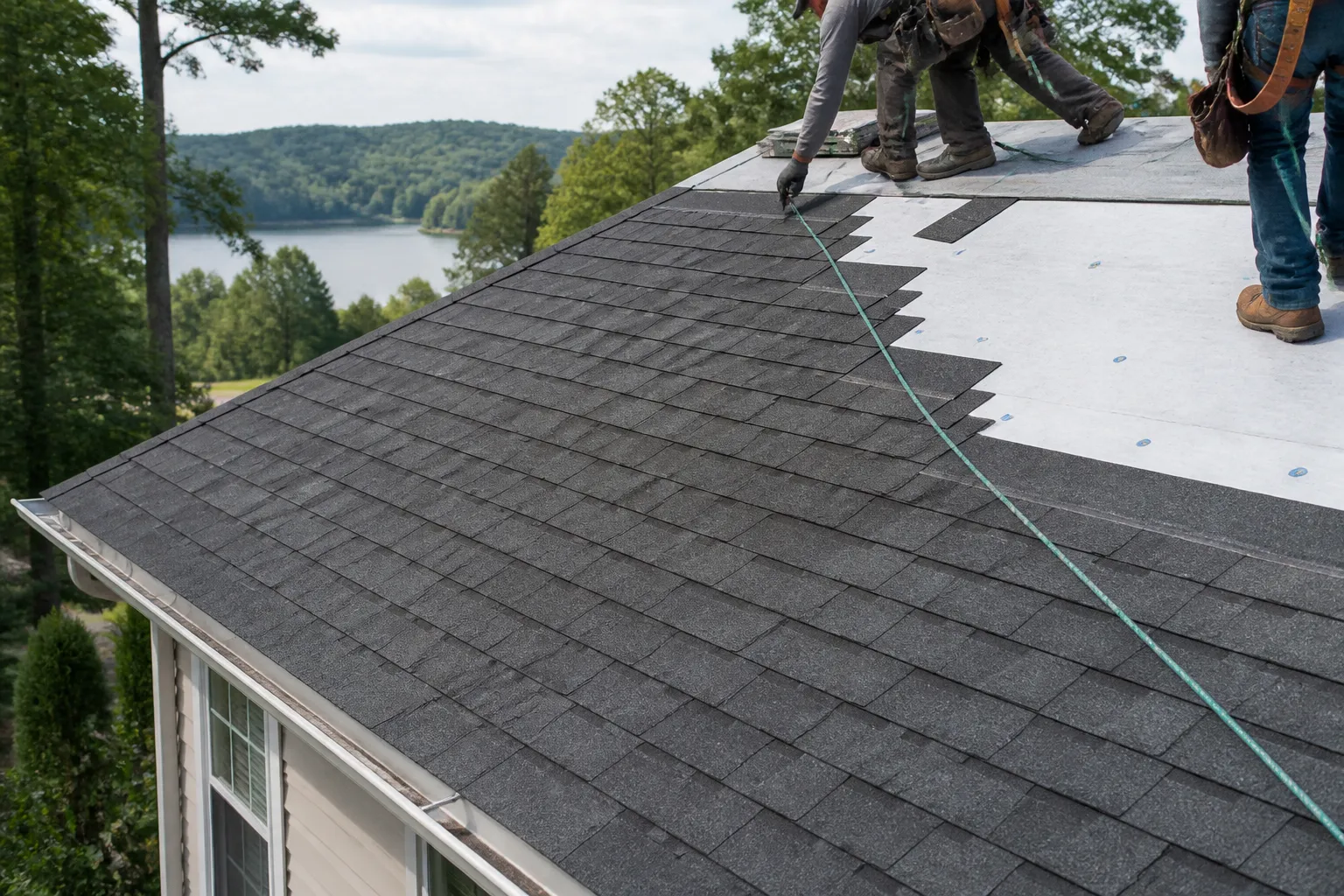
Asphalt shingles and metal roofing are different roof assemblies. A shingle proposal should name the selected product and describe underlayment, starter and ridge components, flashing, ventilation, edges, valleys, and penetrations. A metal proposal should specify the panel profile, fastening approach, trim, substrate preparation, and connections at eaves, ridges, walls, and roof openings.
Compare how each system fits the roof design and the proposed installation details, not just color or material category. Review residential roofing options, the statewide asphalt shingle roofing information, and the guide to metal roofing versus asphalt shingles. The right comparison depends on the property and the complete assembly described in each proposal.
The written scope should state how many existing roofing layers will be removed, which areas are included, and how debris will be contained and taken away. If prior overlays or multiple structures are involved, ask how they affect removal and the inspection plan. Clear boundaries help avoid confusion about which roof sections are included.
Some decking conditions remain hidden until the existing covering is removed. Ask how damaged sheathing will be located, photographed or described, and approved before added work begins. The proposal should identify the method for pricing or documenting this work and the replacement material to be used. An allowance or change process should be understandable before tear-off starts.
Replacement planning should note the current ventilation arrangement and whether the proposed work retains or changes it. Ventilation decisions depend on the building and roof assembly; ask which openings and components are included instead of relying on a general promise. Confirm how vents will connect with underlayment and the selected roof covering.
Ask what the scope says about valleys, eaves, rakes, ridges, wall junctions, chimneys, skylights, plumbing vents, and other penetrations. It should distinguish flashing that will be replaced from components that will remain. These transitions carry important installation details, so matching proposals should address them clearly.
Before work begins, discuss where materials and debris will be placed and how entrances, landscaping, exterior fixtures, vehicles, windows, and nearby stored items will be protected. For occupied homes or businesses, identify areas that need access during the project and any parts of the property that require extra care.
Cleanup should be written into the scope. Confirm removal and disposal of old roofing materials, cleanup of accessible ground areas, and how the site will be reviewed when work is complete. Avoid assuming these tasks are included if the proposal does not describe them.
Request proposals for the same roof sections and ask each provider to describe the complete installation. Compare removal and disposal, underlayment, roofing products, flashing, ventilation, decking contingencies, protection, cleanup, and exclusions. Ask how changes discovered after tear-off will be documented and approved. A lower total may represent a narrower scope rather than equivalent work.
For more comparison questions, read what affects roof replacement cost in Arkansas and the roofing estimate checklist. For project requirements, confirm with the authority responsible for the property address and exact scope rather than assuming a general rule applies.
All Arkansas Roofing offers roofing information for De Queen, Arkansas, property owners. Visit the De Queen roofing hub for local planning guidance. The statewide Arkansas roof replacement page covers broader considerations. If the observed damage may be limited, compare the companion De Queen roof repair page before deciding on full replacement.
It should identify the roof areas reviewed, visible conditions, repair history considered, and reasons replacement is being compared with repair. Ask what remains uncertain until tear-off.
Decking damage may only become visible after old materials are removed. Ask in advance how the condition will be documented, what repair method is proposed, and how added work is approved.
Compare the full assemblies, including underlayment, attachment details, flashing, ventilation, edges, and transitions. Confirm both proposals cover the same roof sections and explain preparation and cleanup.
Ask the written scope to describe protection for entrances, landscaping, vehicles, fixtures, and occupied areas, along with debris removal and final cleanup of accessible areas.
What To Expect
Share your ZIP code, the service you are considering, and what you have noticed about the roof.
Discuss the observed condition, repair or replacement options, and proposed scope with the independent roofer, subject to local availability.
Review materials, work details, cleanup, exclusions, and any additional repairs before deciding how to proceed.
A Few Common Questions
Tell us where the property is and what your roof needs.
Roofing Estimate
Share the property ZIP code and the roofing service you need. The form uses the existing inquiry system.