Arkansas Roofing Guidance
Roof Replacement in Morrilton, AR
Learn how to assess roof replacement options in Morrilton, Arkansas, compare shingle and metal systems, review tear-off and decking details, and evaluate itemized proposals.
Arkansas Roofing Guidance
Learn how to assess roof replacement options in Morrilton, Arkansas, compare shingle and metal systems, review tear-off and decking details, and evaluate itemized proposals.
Roof replacement in Morrilton, Arkansas may be worth comparing when wear spans several roof areas, leaks recur, or a focused repair no longer addresses the conditions found. A stain or missing shingle alone does not establish that a whole roof should be replaced. Start with an assessment of the roof’s covering, details, and visible condition, then compare the work proposed for the property.
All Arkansas Roofing connects Morrilton property owners with independent roofing contractors for assessments and written estimates. Share the property address, building use, roof concerns, and access needs. The written proposal should explain the observed condition, the selected materials, and how the work will be handled from preparation through cleanup.
A useful assessment looks beyond one visible symptom. It considers the roof covering, flashing, valleys, penetrations, edges, ventilation components, and any areas where water intrusion or deterioration has been reported. For homes, note repeated leaks, widespread shingle wear, and previous repairs. For a commercial property, include drainage, rooftop equipment, access, occupancy, and the effect of work zones on normal operations.
Ask which observations suggest replacement rather than repair and whether a localized repair remains a reasonable alternative. The answer should relate to the actual roof condition, the areas affected, and the scope needed to address them. A roof’s age can prompt questions, but should not replace an assessment. If concerns appear limited, compare a focused option with a full replacement scope. The Morrilton roof repair page explains what information to share about leaks and localized damage.
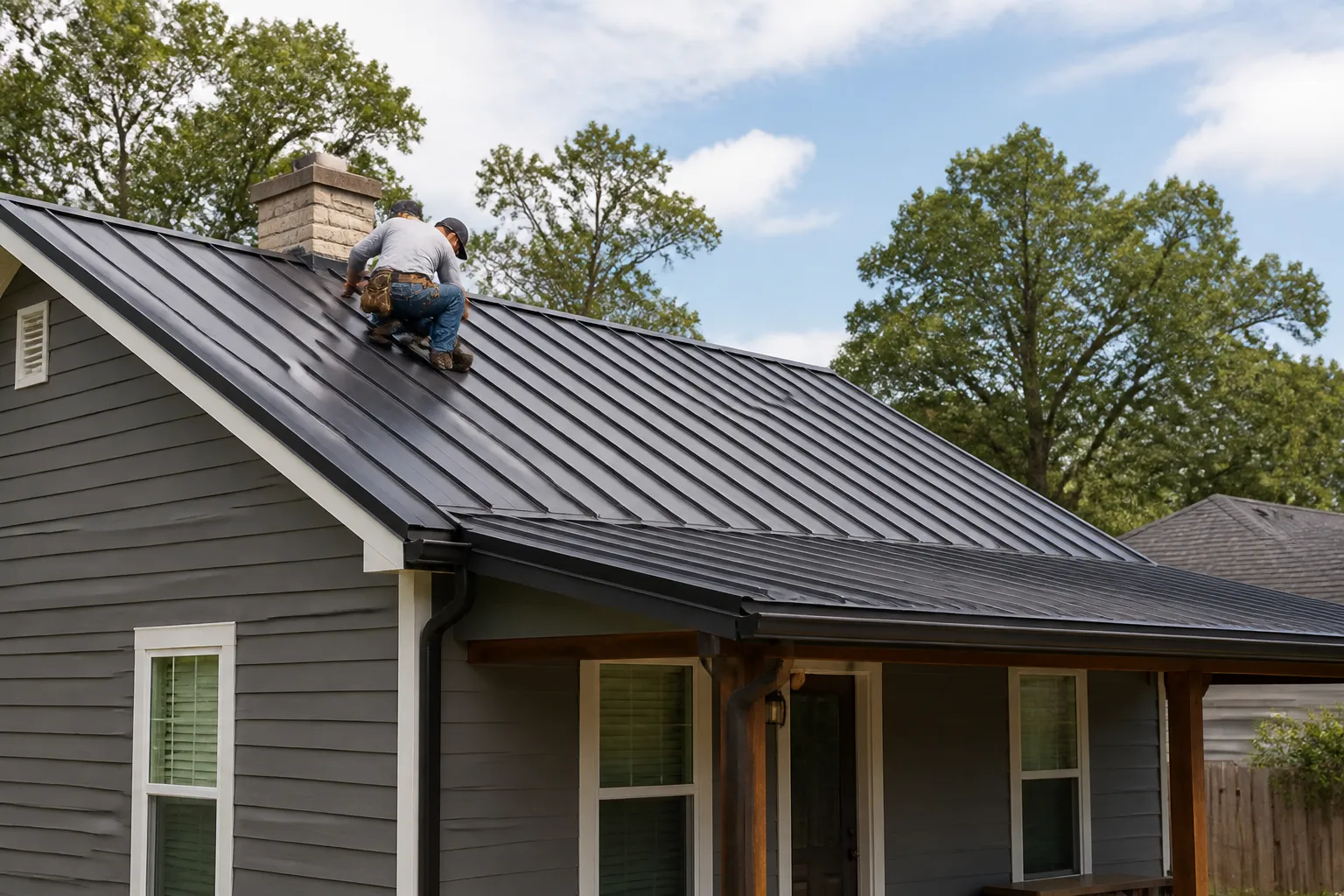
Asphalt shingles and metal roofing are different systems, and neither is automatically right for every property. Compare the exact product, roof shape and slope, installation details, appearance, and written scope. For residential projects, review residential roofing options and the available asphalt shingle roofing information when shingles are being considered. A metal proposal should identify the panel system, attachment, trim, and flashing details rather than only saying “metal roof.”
Ask how the chosen covering connects at valleys, roof edges, walls, chimneys, skylights, and other penetrations present on the building. Confirm which underlayment, flashing, ventilation components, fasteners, and accessories are included, and whether substitutions require written approval. Compare products by their specifications and how the proposal fits the roof, not just a broad material label.
For a replacement, the proposal should say what existing layers will be removed and how debris will be handled. After tear-off, exposed decking can be checked for damage that was not visible beneath the old covering. Ask how the assessment will be documented, what allowance or unit price applies if additional decking work is needed, and how quantities are measured.
Clarify how concealed conditions will be reported and approved before extra work proceeds. A written process should describe the condition, proposed correction, added scope, and any cost or schedule change. Avoid comparing a proposal with a clear decking allowance to another that leaves the same work undefined without asking for clarification.
Ventilation should be considered as part of the roof assembly. Ask what intake and exhaust components are present, whether they will remain or be changed, and what findings support any proposed ventilation work. A new roof covering alone does not resolve every moisture or ventilation concern. The estimate should identify included components and distinguish them from recommendations that are not part of the replacement scope.
Discuss protection before work begins. At a home, point out driveways, landscaping, outdoor living areas, entrances, and nearby structures. At a business or rental property, explain occupancy, delivery routes, customer access, operating hours, and rooftop equipment. Ask how work areas, debris, and materials will be managed and what cleanup is included, including collection of loose debris around the property. Confirm applicable permit requirements for the specific address and scope with the relevant local authority; do not infer a roofing requirement from general building guidance.
Request proposals that describe the same building and roof areas. Compare itemized lines for tear-off and disposal, underlayment, covering, flashing, ventilation, decking allowances, property protection, and cleanup. Check the product names and quantities, exclusions, payment terms, schedule assumptions, and how changes will be authorized. If a proposal uses a broad phrase such as “complete roof system,” ask which components that includes.
A total is meaningful only alongside the work it covers. The roofing estimate checklist can help organize questions about materials, removal, concealed conditions, and exclusions. Review the Morrilton service-area information for broader local roofing guidance, and compare the statewide Roof Replacement service page for general replacement considerations.
Ask for an assessment that describes the condition and extent of the affected areas. Compare replacement with a repair scope when damage is localized, and consider broader work when wear or recurring concerns span multiple sections.
It should state which existing layers are included for removal, how disposal is handled, how exposed decking will be checked, and how additional decking work will be measured, priced, documented, and approved.
Ventilation needs depend on the building and existing roof assembly. Ask what components were observed, which are included or retained, and what supports any proposed change.
Compare the exact products and system details, roof suitability, tear-off, underlayment, flashing, ventilation, decking assumptions, protection, cleanup, exclusions, and change process. The written scopes should describe the same areas and intended outcome.
What To Expect
Share your ZIP code, the service you are considering, and what you have noticed about the roof.
Discuss the observed condition, repair or replacement options, and proposed scope with the independent roofer, subject to local availability.
Review materials, work details, cleanup, exclusions, and any additional repairs before deciding how to proceed.
A Few Common Questions
Tell us where the property is and what your roof needs.
Roofing Estimate
Share the property ZIP code and the roofing service you need. The form uses the existing inquiry system.