Arkansas Roofing Guidance
Roof Repair in Morrilton, AR
Explore roof leak repair in Morrilton, Arkansas, including how to document leaks safely, understand source assessment, compare repair scopes, and consider replacement.
Arkansas Roofing Guidance
Explore roof leak repair in Morrilton, Arkansas, including how to document leaks safely, understand source assessment, compare repair scopes, and consider replacement.
A roof leak can leave a ceiling mark far from the place water entered. A loose shingle, worn flashing, an open roof joint, or another detail may be involved, but the stain or drip alone cannot identify the source. For a Morrilton, Arkansas property, note where moisture appears, when it occurs, and what has changed so an assessment can focus on the right questions.
All Arkansas Roofing connects property owners with independent roofing contractors for assessments and written estimates. Share the property address, building type, leak history, and any access or operating constraints. A clear description helps frame the request without assuming a cause before the roof is examined.
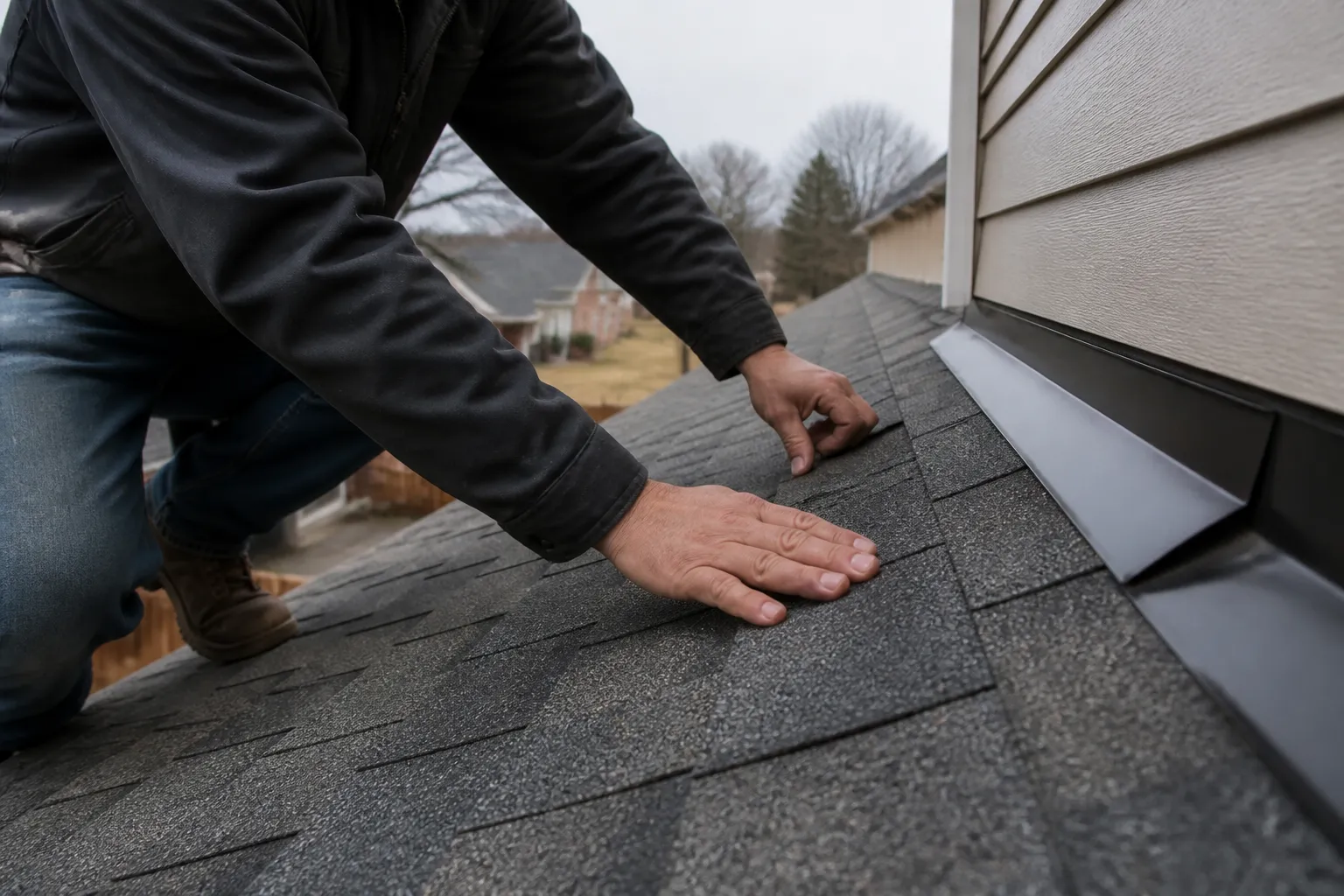
Water can move along roof decking, framing, underlayment, or other surfaces before it becomes visible inside. A ceiling stain may therefore appear away from the entry point. Possible locations for water entry include roof penetrations, valleys, flashing transitions, roof edges, seams, and damaged covering. These are possibilities, not a diagnosis: the roof and related details need to be assessed to identify the source and choose a repair that addresses it.
When calling about a leak, report the room and exact area where moisture appears, when it was first noticed, whether it follows rainfall, whether it is active or intermittent, and whether the same place has leaked before. Mention previous patches or repairs, visible damage from a safe location, and any affected belongings or business operations. Photos taken indoors or from ground level can document stains, drips, or visible exterior changes. Do not climb a ladder or walk on the roof to take pictures.
Source identification matters because treating only the interior stain or the nearest visible roof feature can leave the water path unresolved. Ask what roof area was assessed, what condition supports the recommended repair, and how the proposed work connects to that finding. If the source is uncertain, ask what further inspection is needed and what limitations affect the assessment.
A focused repair may be considered when the affected area is limited and nearby roofing components remain in suitable condition. The written scope should identify the location, the materials or components to be repaired or replaced, the intended correction, and any related items excluded from the work. For example, a proposal can distinguish a shingle or flashing repair from interior ceiling work, gutter work, or repairs to another roof section.
One leak does not automatically mean an entire roof needs replacement. At the same time, a small interior mark does not prove that the roof concern is limited. A roof assessment should consider surrounding materials, connected transitions, the condition of the relevant roof area, and whether moisture has affected decking or other components. Ask for photographs or a plain-language explanation of what was observed, where practical.
If water returns after a previous repair, share what work was done, when it occurred, and whether the leak appeared in the same or a different location. Repeat symptoms may mean that the original source was not fully identified, that a separate detail is involved, or that the roof condition has changed. A new stain can also reflect an old moisture path. An assessment is needed rather than assuming the previous repair was ineffective or repeating the same patch.
When a roof has concerns in multiple areas, widespread wear, or repeated problems despite localized work, compare a repair scope with a replacement assessment. Ask what findings support each option, which areas each would address, and what risks or exclusions remain. For practical background, read Roof Repair or Replacement? How to Compare Your Options. A recommendation should relate to the observed roof condition, not just the appearance of one stain.
Compare written scopes for the same roof area and intended result. Look for the suspected source and observations, the repair location, proposed materials, flashing or penetration details, surface preparation, and how adjoining components will be treated. The estimate should distinguish included work from excluded work and explain how concealed conditions or added scope would be documented and approved before proceeding.
Ask about site protection and debris cleanup, especially where entrances, landscaping, parking, tenants, or customers may be affected. For a business property, describe operating hours, access needs, and roof-mounted equipment. For a home, note driveways, outdoor spaces, and areas where falling debris could create a concern. Permit requirements can depend on the address and work scope; confirm applicable requirements with the relevant authority instead of assuming a general rule applies.
For a second perspective on documenting a leak safely, see what to do when a roof leaks after a storm. For service information across Arkansas, visit Roof Repair. Property owners can also review the Morrilton roofing service-area page and compare the related Roof Replacement in Morrilton page if broader work is being considered.
Not necessarily. Water can travel along roof layers or framing before appearing indoors, so the stain may be offset from the entry point. An assessment should consider the roof area and connected details rather than infer the source from the stain alone.
Give the property address, room and location of the leak, when it appears, whether it is active, prior leak or repair history, and any access or safety concerns. Photos from indoors or ground level can help if they can be taken safely.
No. Avoid ladders and roof access. Use safe indoor or ground-level views only, and describe anything that cannot be photographed safely.
Compare both when concerns recur, extend across multiple areas, or when an assessment identifies broader deterioration. Ask for the observations and written scope behind each option; the decision depends on the actual roof condition.
What To Expect
Share your ZIP code, the service you are considering, and what you have noticed about the roof.
Discuss the observed condition, repair or replacement options, and proposed scope with the independent roofer, subject to local availability.
Review materials, work details, cleanup, exclusions, and any additional repairs before deciding how to proceed.
A Few Common Questions
Tell us where the property is and what your roof needs.
Roofing Estimate
Share the property ZIP code and the roofing service you need. The form uses the existing inquiry system.