Arkansas Roofing Guidance
Roof Replacement in Blytheville, AR
Compare roof replacement materials, tear-off, decking, ventilation, property protection, cleanup, and written proposals for Blytheville, Arkansas homes.
Arkansas Roofing Guidance
Compare roof replacement materials, tear-off, decking, ventilation, property protection, cleanup, and written proposals for Blytheville, Arkansas homes.
For a Blytheville, Arkansas roof, replacement planning should start with an assessment that separates visible wear from concealed conditions and explains why a defined repair may or may not be practical. The proposal should describe more than the new roof covering.
All Arkansas Roofing connects property owners with independent roofing contractors for assessments and estimates. A written scope can help compare materials, removal, deck review, ventilation, protection, and cleanup before a project is scheduled. For local roofing information, visit the Blytheville service-area hub.
A useful assessment considers the roof covering, edges, valleys, flashing, penetrations, drainage details, and any visible interior signs. The report should describe the areas reviewed and the conditions observed, while noting where concealed layers cannot be evaluated until removal. Repeated leaks or broad wear can justify comparing replacement, but a single stain or isolated damaged shingle does not automatically establish that a whole roof needs to be replaced.
Ask how the observed condition relates to the recommended scope. If a repair remains practical, request that option too, with its limits and the roof areas it would address. Comparing clearly described alternatives helps separate a condition-based recommendation from a material preference.
Material selection should fit the roof shape, slope, existing assembly, and property requirements. Asphalt shingles are a common option for many homes; compare the proposed product, underlayment, flashing details, and installation requirements rather than relying on a broad category name. See asphalt shingle roofing information for factors to review.
Metal roofing may also be considered where appropriate, but panel profiles and attachment systems differ. Low-slope sections may need a system designed for that roof geometry rather than the same covering used on a steep slope. The residential roofing overview provides additional context for home projects. Ask the estimator to explain why the proposed system suits the actual roof and what components are included with it.
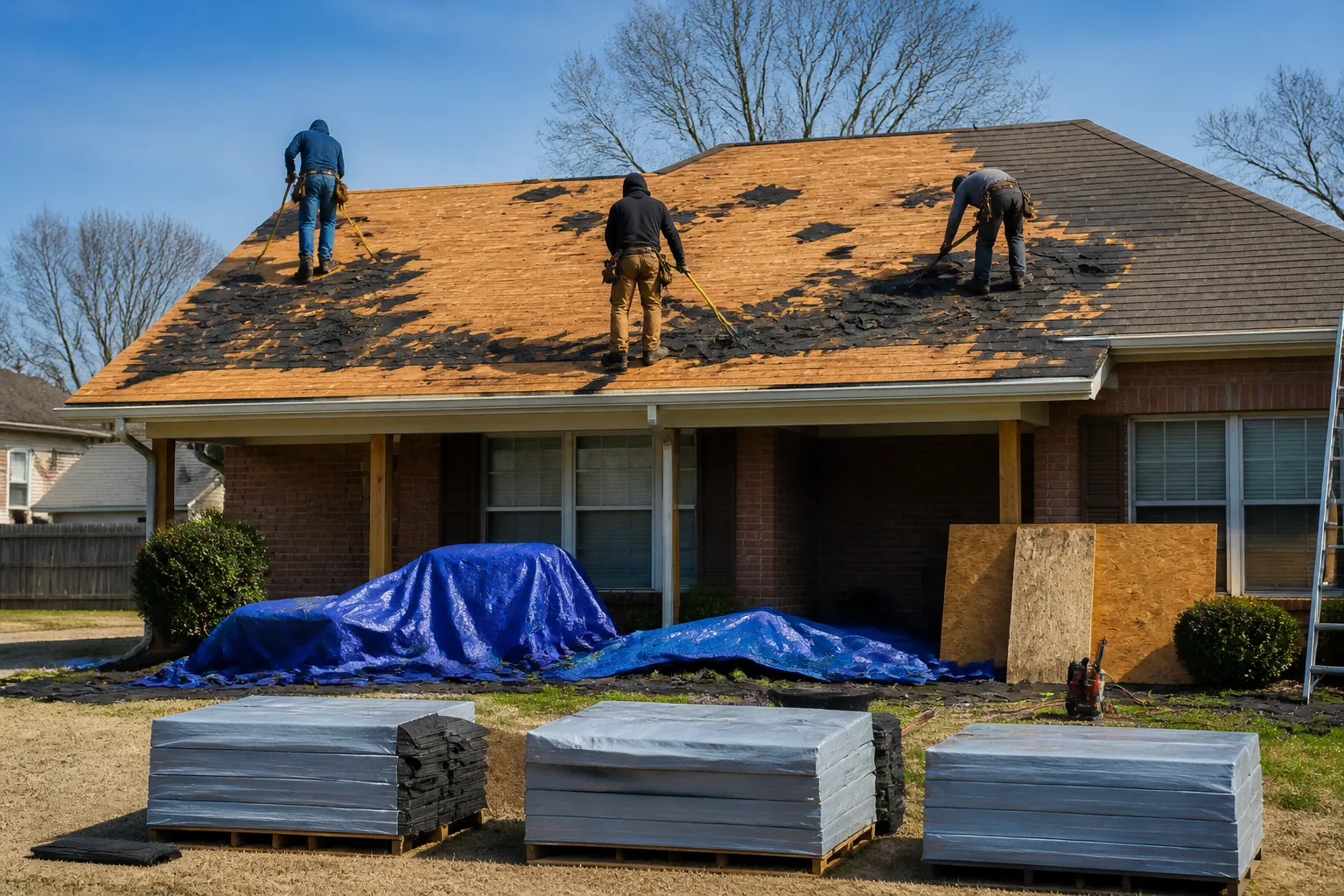
Ask whether the proposal includes removing the existing covering, how many existing layers are assumed, and how debris will be handled. Once old materials are removed, the roof deck may reveal deterioration or other concealed conditions. A complete proposal should state how the deck will be reviewed, what repair unit or process applies if damaged material is found, how the added work will be documented, and when owner approval is required.
Clarify whether underlayment, drip edge, flashing, valleys, ridge details, pipe boots, and penetrations are included or excluded. These components interact with the roof covering; listing them helps avoid comparing a comprehensive scope with a short description that leaves important work undefined.
Ventilation should be considered as part of the roof assembly, not treated as an automatic add-on or assumed solution to every moisture concern. Ask whether existing intake and exhaust paths were reviewed, whether the proposed work changes them, and what findings support any ventilation adjustments. Roof and attic conditions should be described separately so the proposal does not confuse ventilation with leak repair or concealed deck work.
Also ask how flashing, penetrations, and transitions will be integrated with the selected material. A clear scope names the details being addressed and indicates whether any existing condition is outside the replacement work.
Before work begins, discuss how landscaping, entries, outdoor equipment, parked vehicles, and areas near the home will be protected. Identify access routes and any household or business scheduling needs. The written plan can describe work areas, temporary exposure protection as old material is removed, debris collection, and how the site will be left at the end of the project.
Ask what cleanup is included and how remaining materials or debris will be handled. For an occupied building, confirm which access points may be affected and how changes to the daily plan will be communicated. These details are practical scope items, not assumptions to leave until tear-off day.
Use the same checklist to compare each proposal: roof areas and measurements, material and product descriptions, tear-off assumptions, underlayment, flashing, ventilation, decking review, protection, disposal, cleanup, exclusions, and the process for approving concealed-condition changes. Confirm whether the estimate covers the same roof sections and whether optional work is clearly separated.
Ask for unclear language to be explained in writing. A total alone does not show whether scopes are equivalent. The roof repair versus replacement guide can help frame the decision, while the written proposals should provide project-specific scope and material details. For the matching statewide overview, see roof replacement in Arkansas.
The City of Blytheville’s current FAQ says a renovation permit is required when a new roof is applied, and a building permit is required if the roofline changes. These are separate statements for separate scopes. Confirm the current requirements for the property address and proposed work with the City’s Building Inspections and Permits Division before scheduling. Review the official permit FAQ, especially if a project also changes the roofline. Do not assume site-work floodplain rules apply to roofing alone.
No. The roof needs assessment. A defined repair may be reasonable in some conditions, while broad wear or multiple unresolved areas may support comparing replacement. Ask for the observations behind each option.
Decking is often more fully visible after removal. The proposal should explain how concealed damage will be documented, how additional work is described, and how approval is obtained before scope changes.
Ventilation should be evaluated for the particular roof and attic assembly. Ask what was reviewed and what evidence supports any change rather than assuming the same adjustment fits every property.
Compare materials, removal, flashing, underlayment, decking review, ventilation, protection, disposal, cleanup, exclusions, and the process for concealed conditions. Confirm that each proposal covers the same areas.
For local repair considerations, see roof repair in Blytheville. A clear replacement proposal should explain the roof condition, included work, exclusions, and property-protection plan before the owner decides how to proceed.
What To Expect
Share your ZIP code, the service you are considering, and what you have noticed about the roof.
Discuss the observed condition, repair or replacement options, and proposed scope with the independent roofer, subject to local availability.
Review materials, work details, cleanup, exclusions, and any additional repairs before deciding how to proceed.
A Few Common Questions
Tell us where the property is and what your roof needs.
Roofing Estimate
Share the property ZIP code and the roofing service you need. The form uses the existing inquiry system.