Arkansas Roofing Guidance
Roof Replacement in Greenwood, AR
Review roof replacement planning in Greenwood, AR, from roof condition and material options to tear-off, decking, ventilation, cleanup, and written proposals.
Arkansas Roofing Guidance
Review roof replacement planning in Greenwood, AR, from roof condition and material options to tear-off, decking, ventilation, cleanup, and written proposals.
When shingles are aging, leaks recur, or roof wear is spreading, it may be time to compare a focused repair with full replacement. The decision should follow an assessment of the entire roof, not age or one visible stain alone. For a Greenwood property in Sebastian County, note where problems appear, what earlier repairs addressed, and whether damage is limited or recurring.
A replacement proposal should explain what will be removed, what materials will be installed, and how the roof system and property will be handled during the work. Comparing itemized written scopes helps reveal whether two proposals include the same components. This guide covers the questions to ask before deciding and the details to compare.
Look for patterns as well as individual defects: curling or cracked shingles, missing areas, exposed underlayment, granule loss, soft or uneven sections, and recurring leaks in different rooms. These observations do not diagnose the roof by themselves. An assessment should consider the covering, flashing, penetrations, valleys, edges, ventilation, and any visible signs of moisture inside.
Replacement may be worth reviewing when deterioration is widespread, multiple repairs have not resolved recurring problems, or the roof system has reached a condition where isolated fixes no longer address the overall risk. A localized issue on an otherwise serviceable roof may still be repairable. Ask what was observed and why the recommendation matches the pattern and extent of wear.
Material decisions involve more than color. Asphalt shingles and metal roofing have different profiles, installation details, and ways of integrating with roof edges, valleys, flashing, and penetrations. Compare the system proposed for the actual roof design, including underlayment and related components. Ask how ventilation and drainage fit the overall plan.
Consider the building’s shape and slope, appearance preferences, maintenance expectations, and the scope described in each proposal. A material name alone is not enough to compare two bids. The written documents should identify the product or system, installation approach, and the related details that complete the roof.
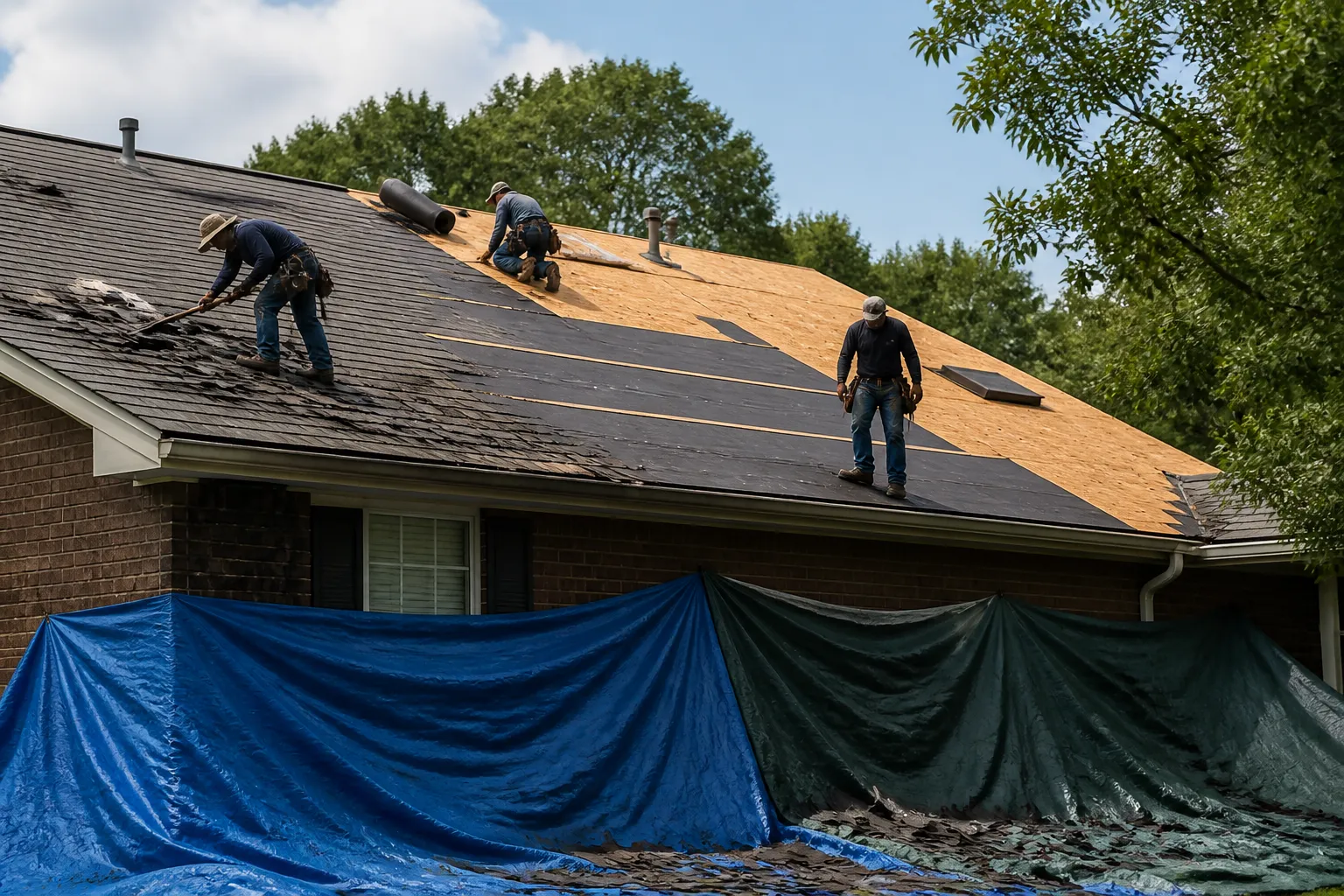
Removing existing roofing exposes the deck for inspection. A proposal should say whether old materials will be removed, how disposal is handled, and what assumptions apply to the decking beneath. If deteriorated or damaged sections are discovered after tear-off, the process for documenting the condition, describing any added work, and obtaining approval should be clear before work begins.
Ventilation and underlayment should be considered as part of the roof system. Ask what existing conditions will be assessed, what work is included, and how the proposed design handles airflow and moisture management. Flashing around walls, chimneys, and roof openings also deserves specific attention rather than a vague promise to install a new covering.
Roof removal and installation can affect areas around the building. Written project details should describe how landscaping, exterior surfaces, entrances, vehicles, and other nearby property will be protected. Discuss access and staging constraints before scheduling, especially where driveways are narrow, adjoining structures are close, or outdoor equipment cannot be moved easily.
Ask how debris will be collected, what cleanup is included, and how the work area will be reviewed at completion. Proposals should state what happens to removed materials and how cleanup around the home will be handled. Compare these provisions directly, rather than assuming every bid includes the same protections and disposal steps.
Read each proposal for matching scope. A useful estimate identifies the roofing system and materials, tear-off and disposal, underlayment, flashing, ventilation, decking assumptions, protection, cleanup, exclusions, and the process for changes when hidden conditions appear. If a line item is unclear, request clarification in writing before choosing.
Proposals that use different assumptions are not directly comparable. Ask each provider to clarify omissions or describe the same scope where possible. For additional comparison questions, see the roofing estimate checklist and the Arkansas roof replacement cost guide, which explains project factors without substituting for a property-specific estimate.
For local context, visit the Greenwood roofing hub. For statewide service information, see roof replacement in Arkansas. Project details depend on the property and the work being considered, so written scopes should describe the actual roof and proposed system.
If the roof may still be suitable for a localized repair, compare the assessment with roof repair in Greenwood. That page covers leak diagnosis, flashing, penetrations, damaged shingles, recurring water intrusion, and repair scope. If replacement remains under consideration, ask for a clear explanation of why broader work is preferable and which components the proposal includes.
Before reviewing proposals, gather any notes about recurring leaks, visible wear, and previous work. Share access limitations and property-protection concerns. A consistent written scope makes it easier to compare methods and identify what needs clarification, without relying on assumptions about how another property’s project was handled.
Compare the extent of wear, the number and location of recurring problems, and the condition of surrounding roof components. Ask for the evidence supporting each option and a written scope for any repair and replacement alternatives being considered.
It should state how the deck will be inspected after tear-off, what condition is assumed, and how additional damaged sections and any scope changes will be documented and approved.
Review the specified roofing system and products, underlayment, flashing, ventilation, and installation details. Compare how each proposed system fits the roof design rather than comparing material labels alone.
Check that both cover the same roof areas and compare tear-off, disposal, materials, decking assumptions, ventilation, flashing, property protection, cleanup, exclusions, and how concealed conditions will be handled.
Before making a decision, ask for a written proposal that identifies the materials, removal, deck review, ventilation and flashing details, protection, and cleanup. Clarify any assumptions about concealed conditions and how changes will be approved. With comparable scopes in hand, Greenwood property owners can weigh replacement against repair based on the roof’s observed condition and the work each option addresses.
What To Expect
Share your ZIP code, the service you are considering, and what you have noticed about the roof.
Discuss the observed condition, repair or replacement options, and proposed scope with the independent roofer, subject to local availability.
Review materials, work details, cleanup, exclusions, and any additional repairs before deciding how to proceed.
A Few Common Questions
Tell us where the property is and what your roof needs.
Roofing Estimate
Share the property ZIP code and the roofing service you need. The form uses the existing inquiry system.