Arkansas Roofing Guidance
Roof Repair in Greenwood, AR
Learn how roof leaks, flashing, damaged shingles, and recurring water intrusion are assessed in Greenwood, AR, and when replacement may merit review.
Arkansas Roofing Guidance
Learn how roof leaks, flashing, damaged shingles, and recurring water intrusion are assessed in Greenwood, AR, and when replacement may merit review.
A ceiling stain or drip can be worrying, but the visible spot does not always sit directly below the roof opening. For a Greenwood home, note where moisture appears, when it begins or returns, and any visible changes. Keep clear of wet electrical fixtures and do not climb onto a roof to investigate.
Roof repair begins with identifying the likely water path and checking related details, not simply covering the spot where water became visible. The roof’s age, the condition of nearby shingles, and previous repairs also matter. This guide explains common causes, what a repair scope should say, and when broader replacement deserves consideration in Greenwood, Sebastian County.
Water can travel along decking, framing, or other surfaces before a ceiling stain appears, so the stain is a clue rather than proof of where water entered. Possible entry points include flashing, roof penetrations, damaged shingles, and valleys; symptoms alone do not identify the source. When contacting All Arkansas Roofing, report the affected room or roof area, when the leak occurs, and any visible changes or prior repairs.
Photos taken safely from indoors or from ground level can help show the stain or visible roof changes without climbing. A careful assessment traces the likely source and checks related details before a repair is chosen. If the cause is uncertain, ask what was inspected and what evidence supports the proposed scope.
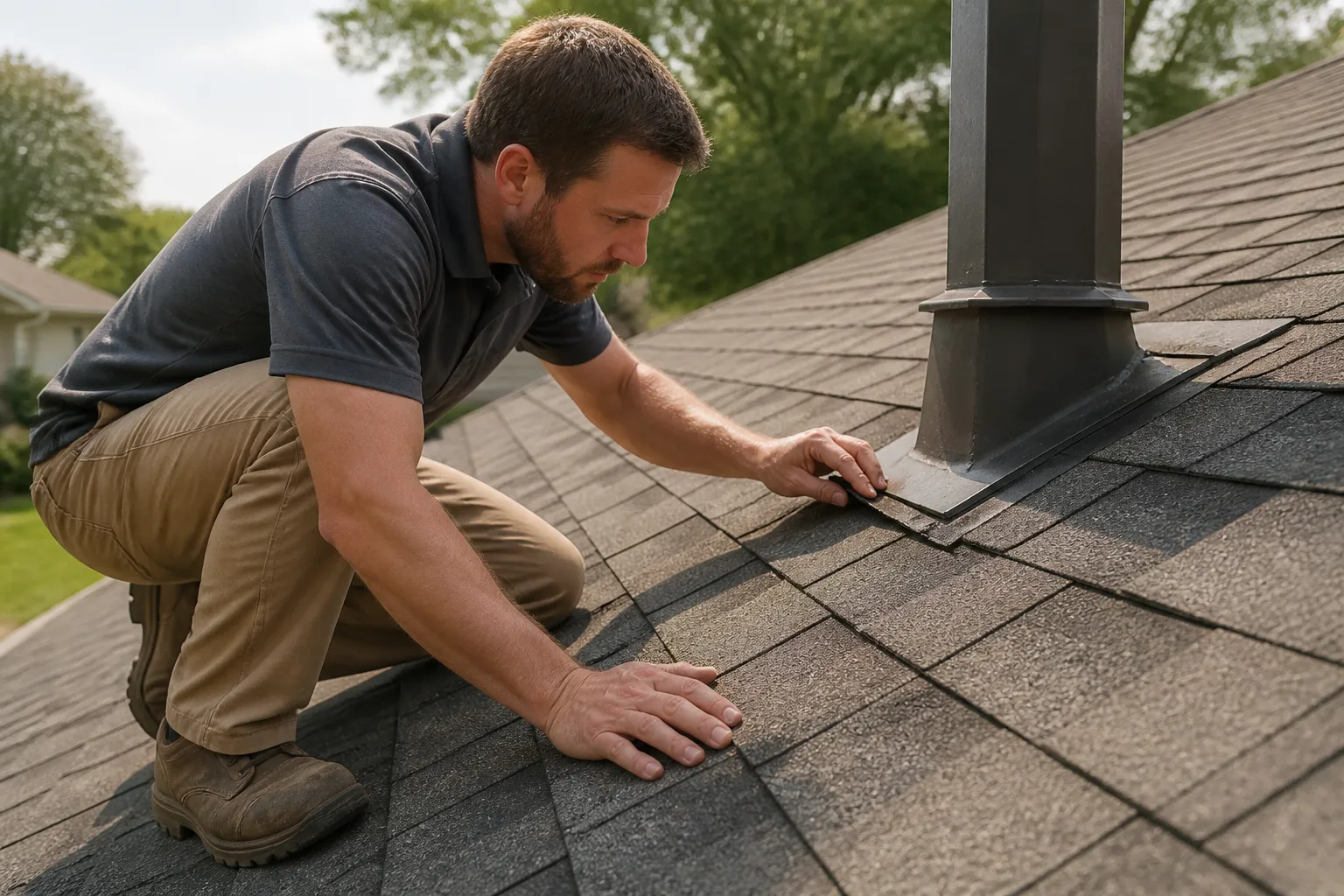
Flashing directs water around joints such as walls, chimneys, valleys, and changes in roof plane. Loose, corroded, displaced, or poorly integrated flashing can create a leak even when the surrounding shingles appear intact. A repair description should identify which transition is affected and whether adjacent materials must be lifted or replaced to make the detail watertight.
Vents, plumbing pipes, skylights, and other roof penetrations interrupt the roof surface. Seals and boots around them can crack, pull away, or deteriorate. Damaged shingles may be missing, split, lifted, or creased. The visible defect should be considered along with underlayment, nearby fasteners, and the condition of surrounding shingles. The right fix depends on what inspection reveals, not just the first visible mark.
When a leak returns after prior work, the original entry point may have been misidentified, more than one detail may be involved, or water may be traveling from a different roof area. Repeatedly sealing an interior stain does not correct the roof source. Share the timing of earlier repairs and whether the leak changed afterward.
A useful written repair scope states the area being addressed, the likely cause, the materials or components involved, and how adjoining flashing or shingles will be handled. It should also distinguish included work from exclusions and explain how concealed damage or a changed scope will be documented. If the suggested repair is limited to a small patch, ask how it addresses the path that caused the leak and what nearby conditions were observed.
A targeted repair can make sense when damage is localized and surrounding roofing remains serviceable. Replacement deserves a broader conversation when shingles are worn across large areas, several roof sections leak, repairs keep recurring, or the roof covering is near the end of its useful life. No single stain or missing shingle establishes that a full replacement is necessary.
Ask for the observations behind the recommendation: the extent and pattern of damage, the condition of nearby materials, and any history of repeated repairs. If both options are reasonable, compare the repair scope with a replacement proposal that itemizes removal, decking assumptions, flashing, ventilation, protection, and cleanup. For a broader comparison, read the roof repair or replacement guide.
For location-specific information, visit the Greenwood roofing hub. For statewide service details, see roof repair in Arkansas. Roof condition and service availability vary by property; a written assessment can help clarify whether the concern is limited or part of a larger pattern.
To prepare, note the affected room or roof area, when the water appears, whether it recurs, and any prior repair attempts. Mention visible shingle, flashing, or penetration concerns. Photos taken safely from indoors or ground level can help communicate what has changed without making assumptions about the cause.
If evaluation shows broader wear, compare the repair plan with roof replacement in Greenwood. If replacement already appears likely, that page explains project planning and written proposal details. This page focuses on understanding the repair question and the information that makes a scope easier to review.
Water may travel along roof or framing surfaces before it becomes visible indoors; the stain alone does not locate the entry point.
Yes, though an inspection of the detail and nearby roofing is needed to determine whether it is the source.
A localized shingle repair may be considered when the damage is confined and surrounding materials remain serviceable. Widespread brittleness, repeated leaks, or damage across several sections can call for a broader review.
It should identify the suspected cause, the area and materials involved, related flashing or penetration work, exclusions, and how concealed conditions or scope changes will be handled. Clear details make it easier to compare proposals.
Describe the property location in Greenwood, the symptom, when it began, and whether it has returned after previous work. Ask for a written explanation of the likely cause and the specific repair being proposed. A defined scope makes it easier to decide whether a focused repair addresses the condition or whether a broader roof evaluation is appropriate.
What To Expect
Share your ZIP code, the service you are considering, and what you have noticed about the roof.
Discuss the observed condition, repair or replacement options, and proposed scope with the independent roofer, subject to local availability.
Review materials, work details, cleanup, exclusions, and any additional repairs before deciding how to proceed.
A Few Common Questions
Tell us where the property is and what your roof needs.
Roofing Estimate
Share the property ZIP code and the roofing service you need. The form uses the existing inquiry system.