Arkansas Roofing Guidance
Roof Replacement in Siloam Springs, AR
Understand when a roof’s widespread wear may call for replacement, how material and installation details fit together, and what to compare in written proposals.
Arkansas Roofing Guidance
Understand when a roof’s widespread wear may call for replacement, how material and installation details fit together, and what to compare in written proposals.
A roof that is nearing the end of its useful life can show more than one warning sign: shingles may be brittle or losing granules, leaks may return after repairs, or several roof areas may look worn at once. Roof replacement in Siloam Springs, Arkansas, begins with assessing the full roof rather than choosing a material from appearance alone. The inspection and written proposal should connect visible conditions to the work being recommended.
Replacement is a major property project. A clear plan explains removal, the condition of the roof deck, ventilation details, protection for the home and surrounding areas, cleanup, and how concealed conditions will be handled. Comparing complete proposals makes it easier to understand what each option includes.
Look at the pattern of wear, not just the most visible shingle. Widespread curling, cracking, missing tabs, repeated leaks, or deteriorated areas at valleys and edges may point to broader concerns. A localized problem can still be repairable, so ask what was observed on each roof plane and why replacement is being considered. For an older roof, the material’s current condition and history of repairs are more useful than age alone.
Ask whether the assessment includes visible flashing, roof penetrations, ventilation, drainage paths, and signs of moisture inside the attic where access is safe and available. The goal is to understand the roof system and the scope, not to assume every component needs replacing.
Asphalt shingles and metal roofing are among the options property owners may compare. Each system has distinct appearance, installation details, and compatibility requirements. Suitability depends on the roof’s shape and slope, the building, existing layers, ventilation, and the priorities for the project. A proposal should name the material system and explain the components included rather than list only a broad product category.
Ask how valleys, edges, ridges, wall transitions, and penetrations will be finished with the selected material. On a home with a complex layout, those intersections deserve particular attention. Compare options based on the entire roof assembly and written scope, not on a single product feature.
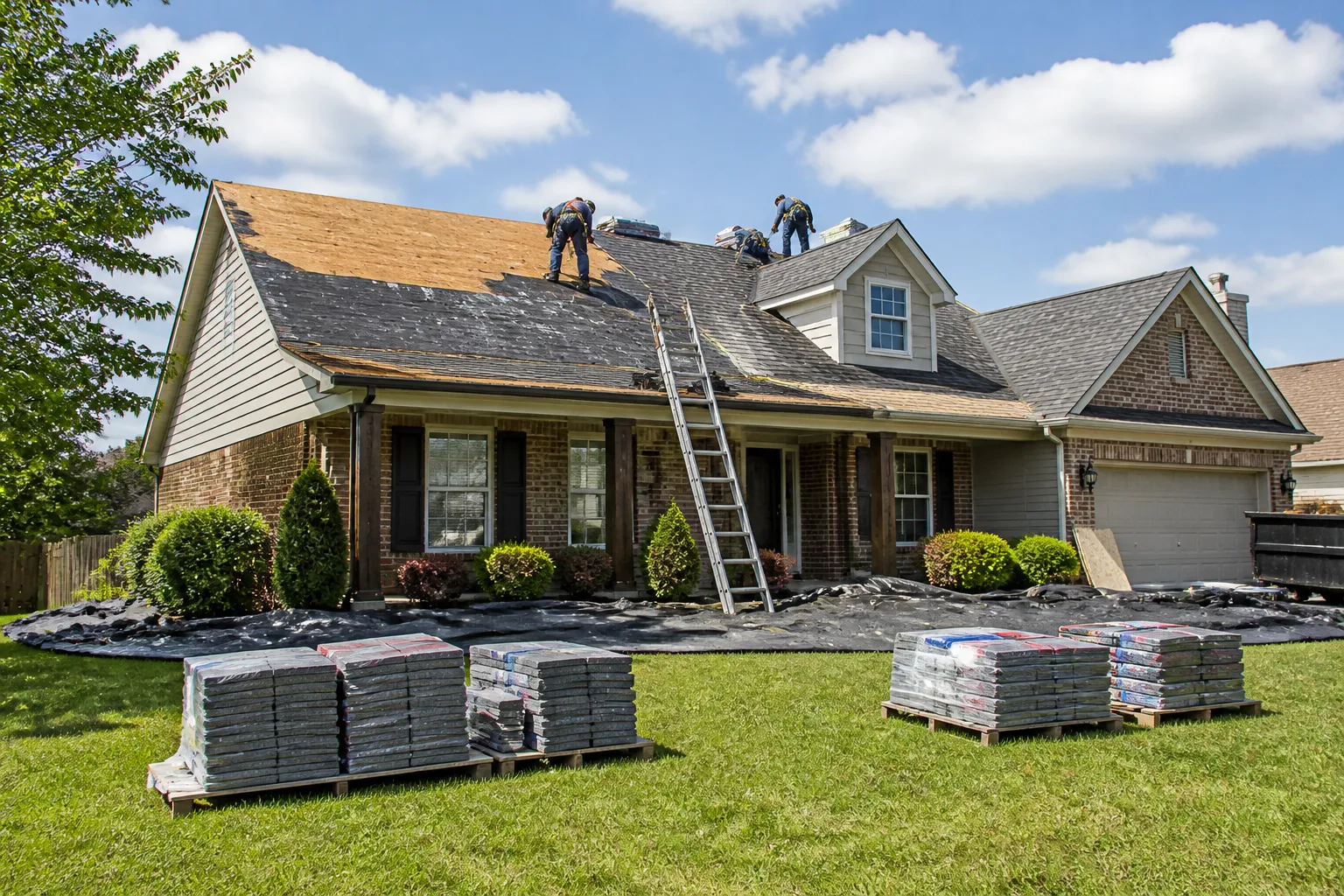
Removing existing material exposes the roof deck for a closer look. A proposal should say whether old roofing will be removed, how debris will be managed, and how visible decking concerns will be addressed. If damaged or soft sections are discovered after tear-off, ask how the condition will be documented, what work may be needed, and how approval and any added scope will be handled before proceeding.
Clarify whether the estimate includes underlayment, flashing replacement or reuse, drip edges, ventilation work, and disposal. These details affect how comparable two proposals are. If one scope is unclear, request a written explanation rather than assuming the same components are included.
Ventilation should be considered as part of the roof system. Ask what existing intake and exhaust openings were observed and whether the proposed plan changes them. The recommendation should be specific to the house rather than a generic promise about performance.
Access and delivery plans also depend on the individual property. A sloped driveway, limited staging space, nearby trees, or a complicated roof shape may affect where materials can be placed and how the work area is protected. These conditions do not apply to every Siloam Springs property, so mention only the ones present at your home. Ask what will be covered or moved, how landscaping and walkways will be protected, where tear-off debris will go, and what cleanup and final review are included.
For a useful comparison, each proposal should identify the roof areas, material system, removal plan, underlayment, flashing, ventilation, decking process, protection measures, cleanup, and exclusions. It should also explain how concealed conditions will be communicated and approved. If one proposal recommends repair while another recommends replacement, compare the inspection findings and ask each provider to explain the difference in scope.
Use the Arkansas roof replacement guide and a written scope to organize questions. Comparing item by item helps reveal whether proposals cover the same work, without relying on a total or a general label alone.
See the Siloam Springs roofing hub, statewide roof replacement information for Arkansas, and roof repair in Siloam Springs to compare a targeted repair with broader work. The roofing estimate checklist offers more questions for reviewing a written proposal.
No. Age alone does not establish the roof’s condition. The inspection should consider visible wear, leaks, prior repairs, and the condition of the roof system before recommending repair or replacement.
The written plan should explain how concealed conditions will be documented and brought to the property owner’s attention. Ask how the scope, approval, and any additional work will be agreed before it proceeds.
Compare the systems as complete installations, including compatibility with the roof design, underlayment, flashing, edges, penetrations, and ventilation. Ask why each material is being proposed for the specific property.
Review removal, materials, underlayment, flashing, ventilation, decking procedures, property protection, disposal, cleanup, exclusions, and concealed-condition handling. Matching these details helps show whether proposals cover equivalent work.
What To Expect
Share your ZIP code, the service you are considering, and what you have noticed about the roof.
Discuss the observed condition, repair or replacement options, and proposed scope with the independent roofer, subject to local availability.
Review materials, work details, cleanup, exclusions, and any additional repairs before deciding how to proceed.
A Few Common Questions
Tell us where the property is and what your roof needs.
Roofing Estimate
Share the property ZIP code and the roofing service you need. The form uses the existing inquiry system.