Arkansas Roofing Guidance
Roof Repair in Siloam Springs, AR
Practical guidance for tracking down roof leaks, evaluating damaged shingles and flashing, and deciding whether a focused repair fits the roof’s condition.
Arkansas Roofing Guidance
Practical guidance for tracking down roof leaks, evaluating damaged shingles and flashing, and deciding whether a focused repair fits the roof’s condition.
A roof leak can be difficult to trace from indoors. A ceiling mark may appear several feet from the opening, and water can follow decking or framing before it becomes visible. For roof repair in Siloam Springs, Arkansas, note where moisture appears, when it returns, and whether wind-driven rain or ordinary rainfall seems to bring it on. Those details help focus an inspection without assuming the stain shows the exact source.
From a safe place, look for visible changes such as missing or lifted shingles, loose flashing, or a damaged seal around a vent. Avoid climbing onto a wet or steep roof. A focused evaluation should identify the likely water path, explain the affected area, and clarify whether a targeted repair is appropriate or the roof’s broader condition deserves attention.
Water can travel along decking or framing before a ceiling stain appears, so the visible mark may not point to the roof opening. When calling All Arkansas Roofing, describe the room or location, when the moisture began or returns, and visible changes such as a new drip or a stain that is growing. Flashing, penetrations, damaged shingles, and roof valleys are possible entry points, not diagnoses that can be made from symptoms alone. Identifying the actual source first helps make the repair recommendation fit the affected area rather than just the indoor mark.
Take photos from a safe indoor position, and if helpful, photograph visible exterior changes from ground level; do not climb onto the roof. Note the date and room, and avoid wet electrical fixtures, sagging ceilings, or unsafe areas. Share any immediate safety concern when asking for an assessment.
Wind, impact, age, or prior work can leave a shingle cracked, displaced, or missing. A limited number of damaged shingles may call for a targeted repair if nearby material and the roof beneath it remain serviceable. A repair plan should identify which area will be addressed and how replacement material will be integrated with the existing roof.
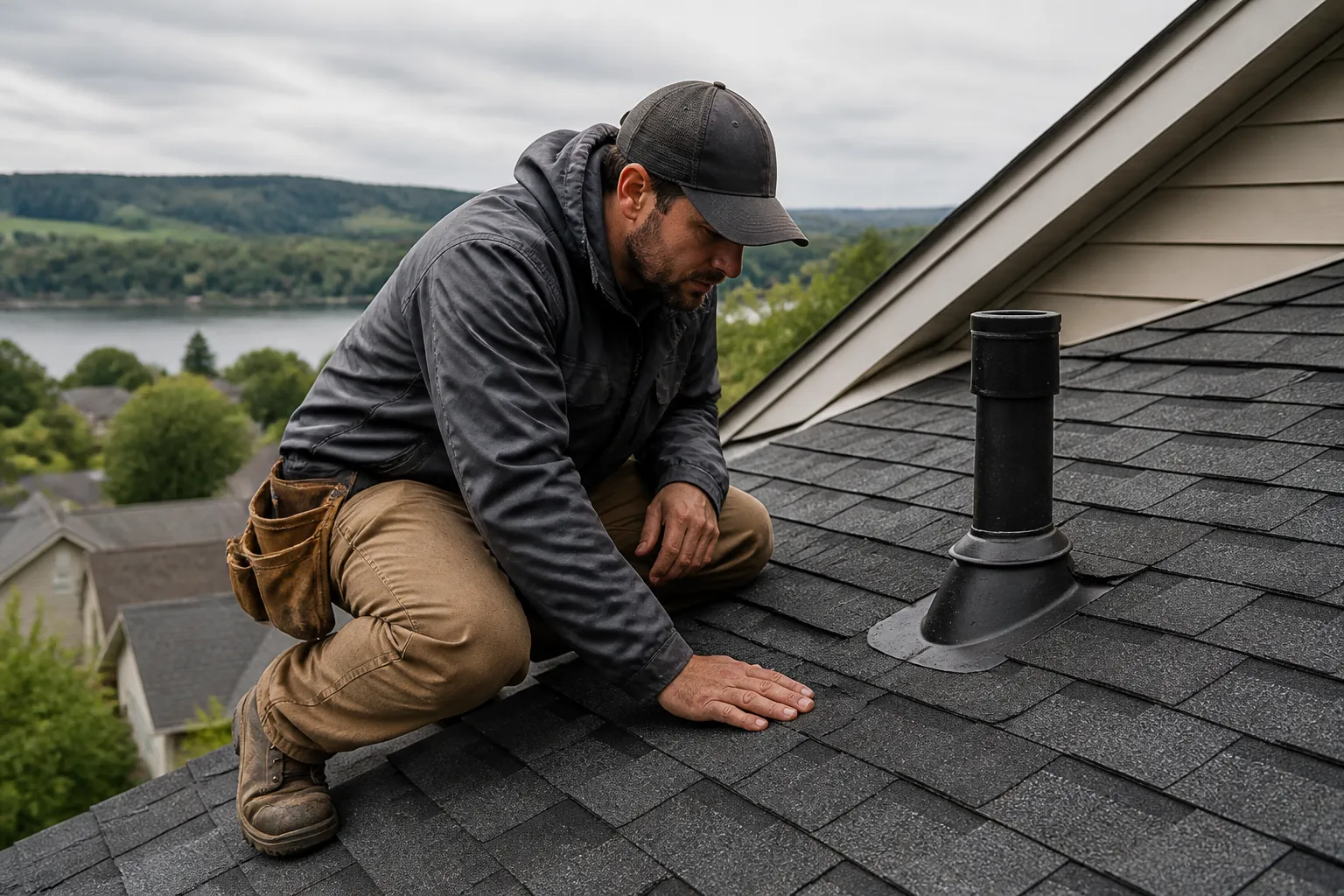
Flashing and penetrations require attention to how water moves around an opening, not simply a bead of surface sealant. A pipe boot or other fitting can split or loosen, and flashing at a wall, chimney, or roof intersection can pull away or lose its ability to shed water. Ask what was observed and how the proposed work corrects the water path. The explanation should distinguish a durable repair approach from a temporary cover that does not address the underlying condition.
If moisture returns after an earlier repair, the source may have been misidentified, the affected area may extend beyond the first repair boundary, or nearby materials may also be worn. Recurrence is a reason to review the full path of water and the prior work rather than repeatedly treating the interior stain. A written scope can name the roof plane or transition involved, materials to be replaced or reset, and related flashing or penetration work.
Ask what is included and excluded. If the inspection cannot confirm concealed conditions until materials are opened, the estimate should explain how additional findings will be documented and discussed before the work changes. That keeps the repair decision tied to observed conditions rather than an open-ended patch.
A localized defect does not automatically mean the whole roof should be replaced. Repair may remain practical when the damage is limited and surrounding materials are in sound condition. Replacement is worth discussing when wear is widespread, shingles are brittle or repeatedly failing, leaks recur in separate areas, or repairs no longer address the roof’s overall condition.
Ask for the observations that support either recommendation: which areas are affected, how the surrounding shingles and flashing look, and whether the concern appears isolated or repeated. If replacement is proposed, compare its scope with the repair option and ask what conditions would change the recommendation. For broader decision-making, read the roof repair or replacement guide.
Roof layouts and access differ across Siloam Springs properties. A sloped approach, nearby trees, or multiple roof intersections may affect access, debris, or drainage planning when present; these conditions should be assessed for the individual property, not assumed.
Explore roofing information for Siloam Springs, compare statewide roof repair in Arkansas, or review roof replacement in Siloam Springs if broader wear is part of the concern. The guide Roof Leaking After a Storm: What to Do Next offers practical next steps when a leak follows severe weather.
No. It is a clue, not confirmation of the roof opening; water may travel before it appears indoors.
The surrounding shingles or roof covering, the boot or flashing, and the way the opening sheds water should be reviewed. A proposed repair should explain the condition found and how the water path will be addressed.
It may fit when damage is localized and surrounding materials remain serviceable. The extent of wear, roof condition, and any history of leaks help determine whether a small repair is likely to address the concern.
Request a fresh assessment of the suspected source, nearby transitions, and prior repair boundary. Repeated moisture can mean the original entry point was not fully addressed or that related materials also need review.
What To Expect
Share your ZIP code, the service you are considering, and what you have noticed about the roof.
Discuss the observed condition, repair or replacement options, and proposed scope with the independent roofer, subject to local availability.
Review materials, work details, cleanup, exclusions, and any additional repairs before deciding how to proceed.
A Few Common Questions
Tell us where the property is and what your roof needs.
Roofing Estimate
Share the property ZIP code and the roofing service you need. The form uses the existing inquiry system.