Arkansas Roofing Guidance
Roof Replacement in Sherwood, AR
Explore roof replacement planning in Sherwood, AR, including roof assessment, material options, tear-off, decking, protection, cleanup, and proposal comparisons.
Arkansas Roofing Guidance
Explore roof replacement planning in Sherwood, AR, including roof assessment, material options, tear-off, decking, protection, cleanup, and proposal comparisons.
A replacement decision should start with the roof’s observed condition, not just its age or one visible leak. A Sherwood roof may have localized damage that can be repaired, or wear across several slopes that makes a complete system review more useful. A careful assessment documents what is deteriorating, checks related details, and explains why repair or replacement is being proposed.
For local roofing information, visit the Sherwood roofing hub. If the assessment points to a smaller, isolated issue, compare it with the Sherwood roof repair page before deciding on a project scope.
Look at the pattern of wear across the roof rather than focusing only on one stain or a missing shingle. Curling, cracking, brittle edges, widespread granule loss, exposed underlayment, and recurring leaks can justify a closer review. The roof’s valleys, flashing, penetrations, edges, and ventilation also affect how a new system should be planned. An interior ceiling mark alone does not establish that full replacement is necessary.
Ask for the observations that support a replacement recommendation and whether targeted repair remains a reasonable alternative. The statewide Arkansas roof replacement page provides a broader overview of replacement considerations. For additional context on scope and proposal factors, read the Arkansas roof replacement guide, which discusses project components rather than setting a price for a particular property.
Asphalt shingles and metal roofing are common options to discuss, but neither label alone identifies the right system. Compare how the materials suit the roof’s slope and shape, the detailing needed at valleys and penetrations, appearance preferences, and the property’s priorities. Ask which underlayment, edge, flashing, and ventilation components are included, not only which surface material is proposed.
For a change in material or color, check any requirements that apply to the property before making a selection. Requirements can depend on the specific property or governing documents, so verify them rather than assuming one rule applies to every home. The guide to metal roofing versus asphalt shingles offers a practical comparison of the two options.
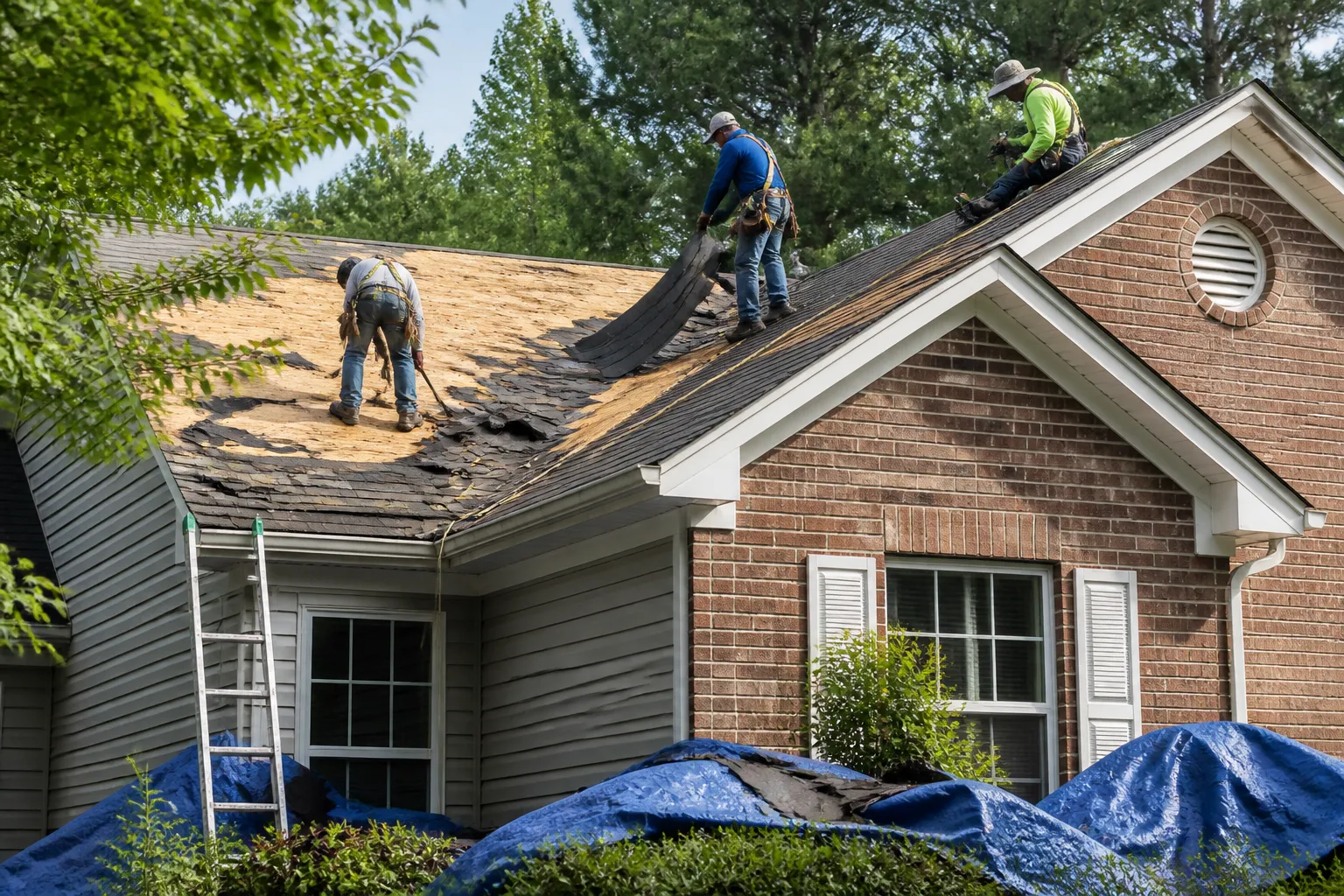
Replacement commonly begins with removing existing roofing layers so the roof deck can be inspected. Once visible, decking can be checked for soft, damaged, or deteriorated areas that may need attention before new materials are installed. Ask the proposal to explain how decking is evaluated and how any additional work would be documented and approved if concealed conditions are found.
Before installation, clarify how the work will address underlayment, flashing, roof edges, valleys, and penetrations. Ventilation should also be considered as part of the roof system. A proposal should state what is included rather than leaving important details implied by a general description such as “new roof.”
Discuss how the work area, landscaping, outdoor items, and access paths will be protected. Tell the estimator about site details that could affect delivery or staging, such as a narrow approach, a sloped driveway, or plantings near the building. These are property-specific planning considerations, not conditions shared by every Sherwood home.
Ask how old roofing and other debris will be removed and what cleanup is included at the end of the work. Confirm the expected work sequence, where materials may be staged, and how questions about an unexpected condition will be handled. Clear expectations help property owners prepare without relying on assumptions about the site.
Review whether each proposal covers the same roof areas, tear-off, disposal, underlayment, flashing, ventilation, decking assumptions, and cleanup. Compare the specific products and installation details, along with stated exclusions and the process for approving a scope change. If one proposal is vague, request clarification in writing before comparing it with a more detailed document.
A useful proposal explains the roof condition that led to replacement, the work planned, and the components included. Comparing these details gives a more reliable basis for evaluating options than comparing a single broad label. Keep the written documents together and note any unanswered questions so each can be addressed clearly.
No. A leak may result from a localized problem. The broader condition, leak history, surrounding materials, and repairability should be assessed before choosing between repair and replacement.
It should explain how the deck will be inspected after tear-off, what condition is assumed in the scope, and how any concealed damage or added work will be documented and approved.
Compare options against the roof design, building needs, desired appearance, and system details. Ask for the specific products and components proposed, and verify any property requirements before changing materials or colors.
Ask how landscaping and the work area will be protected, how debris will be handled, and what final cleanup includes. Share access constraints or outdoor items that may affect planning.
Share the property location, visible roof concerns, history of leaks or repairs, and any access considerations. Ask for a written explanation of the roof’s condition and options. If replacement is recommended, compare the full scope and included components before choosing a direction.
What To Expect
Share your ZIP code, the service you are considering, and what you have noticed about the roof.
Discuss the observed condition, repair or replacement options, and proposed scope with the independent roofer, subject to local availability.
Review materials, work details, cleanup, exclusions, and any additional repairs before deciding how to proceed.
A Few Common Questions
Tell us where the property is and what your roof needs.
Roofing Estimate
Share the property ZIP code and the roofing service you need. The form uses the existing inquiry system.