Arkansas Roofing Guidance
Roof Repair in Sherwood, AR
Learn how roof leak diagnosis, flashing, shingle damage, and recurring water intrusion inform repair options in Sherwood, AR.
Arkansas Roofing Guidance
Learn how roof leak diagnosis, flashing, shingle damage, and recurring water intrusion inform repair options in Sherwood, AR.
A ceiling mark, attic moisture, or drip can be visible some distance from where water entered. For a Sherwood repair request, note which room or area is affected and whether the concern has happened before.
For local context, start with the Sherwood roofing hub. The guide to a roof leaking after a storm covers practical first steps while you arrange an evaluation.
Water can move along decking, framing, or other surfaces before a ceiling stain appears. Flashing, roof penetrations, damaged shingles, and valleys are possible entry points for an inspection to consider, but none can be confirmed from an indoor symptom alone. The review should follow the reported moisture pattern and examine the related roof details before deciding what repair fits.
When contacting All Arkansas Roofing, share the location, when the leak occurs, and what has visibly changed, such as a new mark, spreading discoloration, or a drip. Mention whether it follows particular weather and whether earlier work addressed the area. Photos can help document an interior mark or a visible concern from a safe ground-level position; do not climb onto the roof.
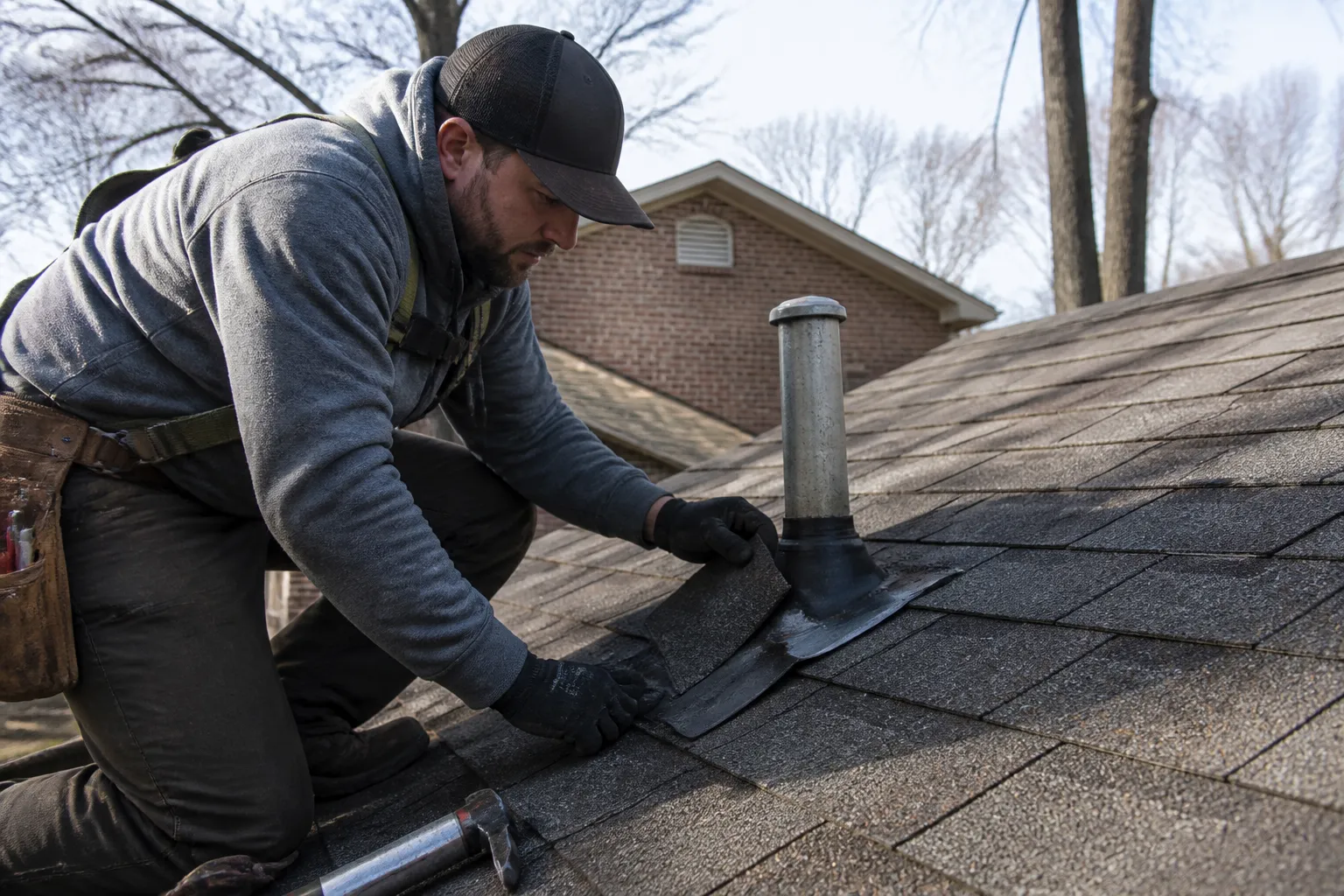
Localized shingle damage may include missing, cracked, lifted, or displaced pieces. A repair assessment should look at the surrounding shingles and underlayment as well as the visible spot; replacing one piece may not solve a problem if nearby materials are also deteriorated. Matching older shingles can also be affected by weathering and product availability, so ask how the proposed repair will blend and what limits may apply.
Flashing directs water around joints and transitions, including roof edges, walls, and intersecting roof sections. If flashing has lifted, separated, corroded, or been poorly integrated, simply applying surface sealant may not address the underlying path. Roof penetrations need similar attention. Pipe boots and seals around vents can crack or loosen over time, and openings for other equipment must be checked where they meet the roof covering.
If water returns after a previous repair, the next assessment should revisit the diagnosis. The original entry point may have been missed, a related detail may remain vulnerable, or the repair may have treated a symptom rather than the source. Describe exactly what was repaired, when the leak returned, and whether the pattern changed. That history can help focus the inspection without assuming the earlier work was done incorrectly.
A clear written repair scope identifies the affected roof area, the suspected cause, the materials or details to be corrected, and any related work included. Ask what is excluded and how concealed damage or a change in scope would be explained and approved. A defined scope makes it easier to understand what the repair is intended to accomplish and to compare it with another proposal.
A targeted repair can make sense when damage is limited and the nearby roof remains serviceable. Replacement may deserve discussion when leaks recur in separate areas, shingles show widespread aging, or each repair uncovers additional deterioration. Curling, cracking, missing granules, or exposed underlayment are reasons to look at overall condition, but no single symptom determines the answer.
Ask for the observed evidence behind a recommendation and whether a focused repair remains practical. The Sherwood roof replacement page explains what to consider if the roof needs broader work. The statewide Arkansas roof repair page offers additional repair guidance, including for other service areas.
Water may travel before reaching the ceiling, so the mark helps guide an assessment but does not identify the entry point by itself.
Sometimes. The surrounding materials, extent of damage, and general roof condition matter. A written scope should explain whether the issue is isolated and what nearby areas were considered.
Share when and where moisture reappears and what the prior repair covered. A follow-up review can reassess the source and scope.
Compare the specific area, diagnosis, materials, work steps, exclusions, and process for handling concealed conditions. Proposals are easier to compare when they describe the same scope.
When requesting an estimate, provide the property location, affected room or area, timing, visible changes, and any relevant repair history. If sharing photos, use indoor or ground-level views only. These details help frame the discussion while leaving diagnosis to a roof assessment.
What To Expect
Share your ZIP code, the service you are considering, and what you have noticed about the roof.
Discuss the observed condition, repair or replacement options, and proposed scope with the independent roofer, subject to local availability.
Review materials, work details, cleanup, exclusions, and any additional repairs before deciding how to proceed.
A Few Common Questions
Tell us where the property is and what your roof needs.
Roofing Estimate
Share the property ZIP code and the roofing service you need. The form uses the existing inquiry system.