Arkansas Roofing Guidance
Roof Replacement in Greenbrier, AR
Compare roof condition, material systems, replacement steps, and itemized proposals for Greenbrier, Arkansas, properties.
Arkansas Roofing Guidance
Compare roof condition, material systems, replacement steps, and itemized proposals for Greenbrier, Arkansas, properties.
When a roof in Greenbrier, Arkansas, has several worn or damaged areas, a replacement proposal should explain more than the visible covering. The assessment should identify which roof sections are included, what materials are proposed, how concealed decking will be handled, and what protection and cleanup are part of the work.
All Arkansas Roofing helps property owners compare written scopes and understand the differences between roofing options. A useful first step is to record visible concerns, ask what condition findings support replacement, and compare that recommendation with a defined repair option when localized work may still be reasonable.
A condition review should consider the roof covering and the details that help manage water: valleys, eaves, ridges, flashing, penetrations, transitions, and ventilation. The assessment should identify which areas show wear, whether damage appears localized or widespread, and whether earlier repairs affect the proposed work. Interior symptoms can inform the review, but a ceiling stain alone does not establish the roof's overall condition.
Ask for observations that distinguish replacement from repair. If only one slope or roof section is affected, find out whether it can be addressed separately and how that work would meet the existing roof. If several areas have similar deterioration, compare the scope of ongoing localized repairs with a complete system proposal, without assuming that age alone decides the question.
Asphalt shingles are available in different profiles and colors. A proposal should name the product or product class and describe underlayment, starter and ridge details, flashing, edge treatment, ventilation, and roof penetrations. Confirm that listed accessories and installation steps match the roof layout, rather than comparing only the shingle label.
Metal roofing systems also vary. Panel profile, seams, fasteners, substrate, trim, and transitions influence what is being installed. Ask how the system will be detailed at valleys, ridges, eaves, walls, and penetrations, and how it will meet any remaining roof sections. Compare like scopes and documented components. See residential roofing options and asphalt shingle roofing for additional context.
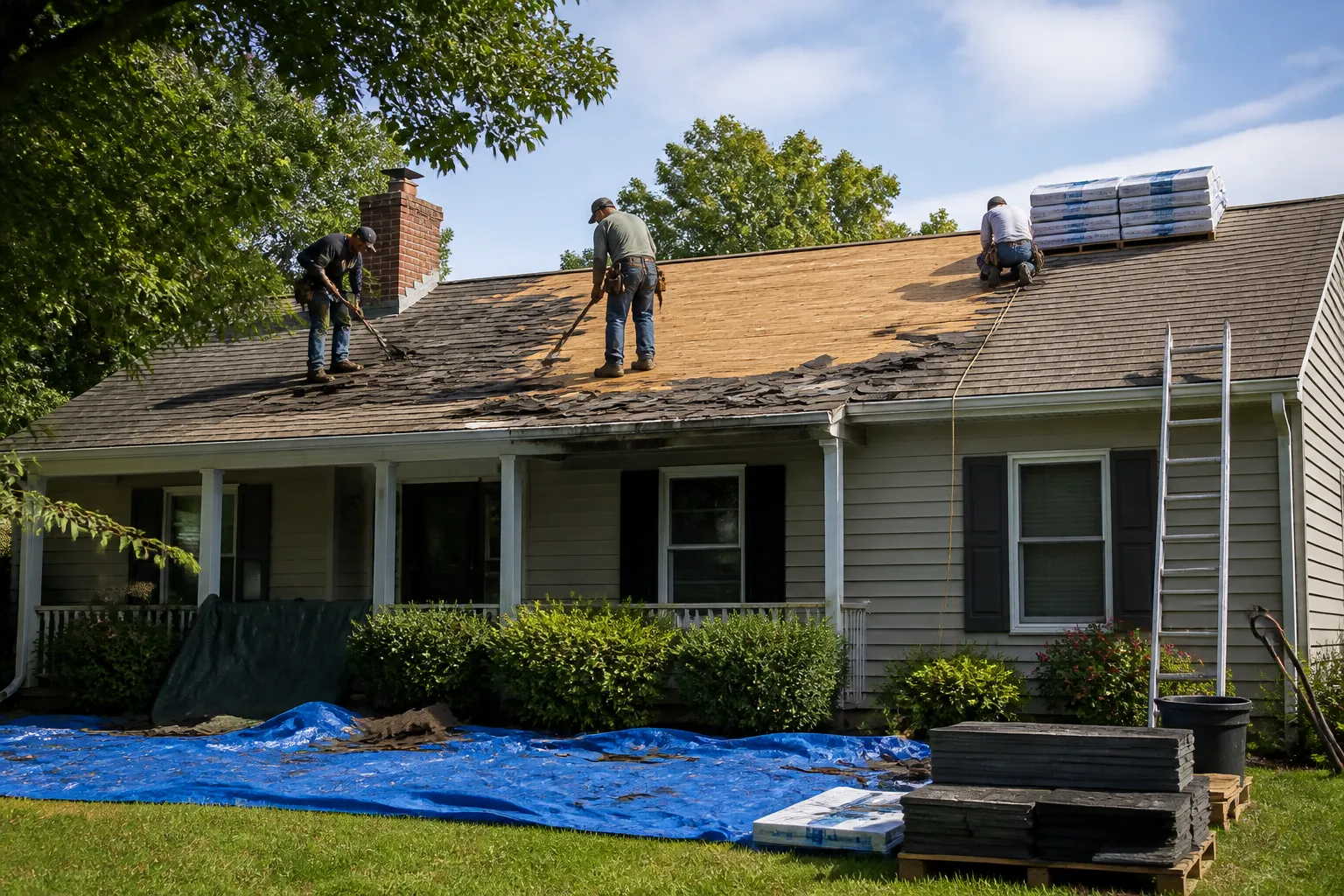
Replacement commonly involves removing some or all existing roof covering so the substrate and roof details can be reviewed. The written proposal should state what is being removed, how debris will be contained and taken away, and what preparation is included before the new system goes on. If the estimate assumes that existing decking is usable, ask how concealed deterioration will be documented if discovered during removal.
Decking work should have a clear approval process. Ask what evidence will be shared, how affected areas will be described, how any change in scope will be authorized, and how the added work will appear in the final documentation. Do not treat an allowance or assumption as a confirmed quantity before the roof is opened.
Ventilation should be considered as part of the roof assembly, not as an unrelated upgrade. Ask the estimator to identify existing intake and exhaust components, describe any proposed changes, and explain how the plan fits the roof and attic configuration. The proposal should also identify flashing replacement or reuse, underlayment, valleys, drip edges, and details around pipes or other penetrations.
Where the home has additions or multiple roof planes, ask how different sections and transitions will be handled. A complete description makes it easier to understand what is included and helps prevent assumptions based on a broad phrase such as “new roof.”
Before work begins, clarify how the proposal addresses landscaping, walkways, driveways, exterior equipment, windows, and access points. Ask where materials and debris will be staged and what areas need to remain clear. For occupied properties, discuss access and any practical steps needed to keep entrances usable.
Cleanup should be described rather than left implicit. Confirm how removed material will be collected, what the final site review covers, and how any debris concern can be reported. The proposal should identify removal and disposal steps without making unsupported promises about what cannot be seen or reached.
Request proposals for the same roof area and compare the included work line by line. Useful items to review include:
A guide to what a roofing estimate should include offers questions for reviewing proposals. For local service-area details, see Greenbrier roofing guidance, the statewide Roof Replacement in Arkansas page, and the companion Greenbrier roof repair page.
No. Age is one factor, but the observed condition, affected areas, and repair options matter. Ask for the findings behind the recommendation and compare a defined repair scope when appropriate.
The proposal should explain how concealed conditions will be documented, how the affected area and work will be described, and how approval for added scope will be obtained before proceeding.
Material alone is not a complete comparison. Review the full assembly, preparation, underlayment, flashing, ventilation, transitions, tear-off, protection, and cleanup for each option.
Confirm with the authority responsible for the property's address and describe the planned scope. A Greenbrier mailing address does not by itself establish which jurisdiction's requirements apply.
For statewide material guidance, compare asphalt shingles with other residential roofing options alongside the local assessment and written scope.
What To Expect
Share your ZIP code, the service you are considering, and what you have noticed about the roof.
Discuss the observed condition, repair or replacement options, and proposed scope with the independent roofer, subject to local availability.
Review materials, work details, cleanup, exclusions, and any additional repairs before deciding how to proceed.
A Few Common Questions
Tell us where the property is and what your roof needs.
Roofing Estimate
Share the property ZIP code and the roofing service you need. The form uses the existing inquiry system.