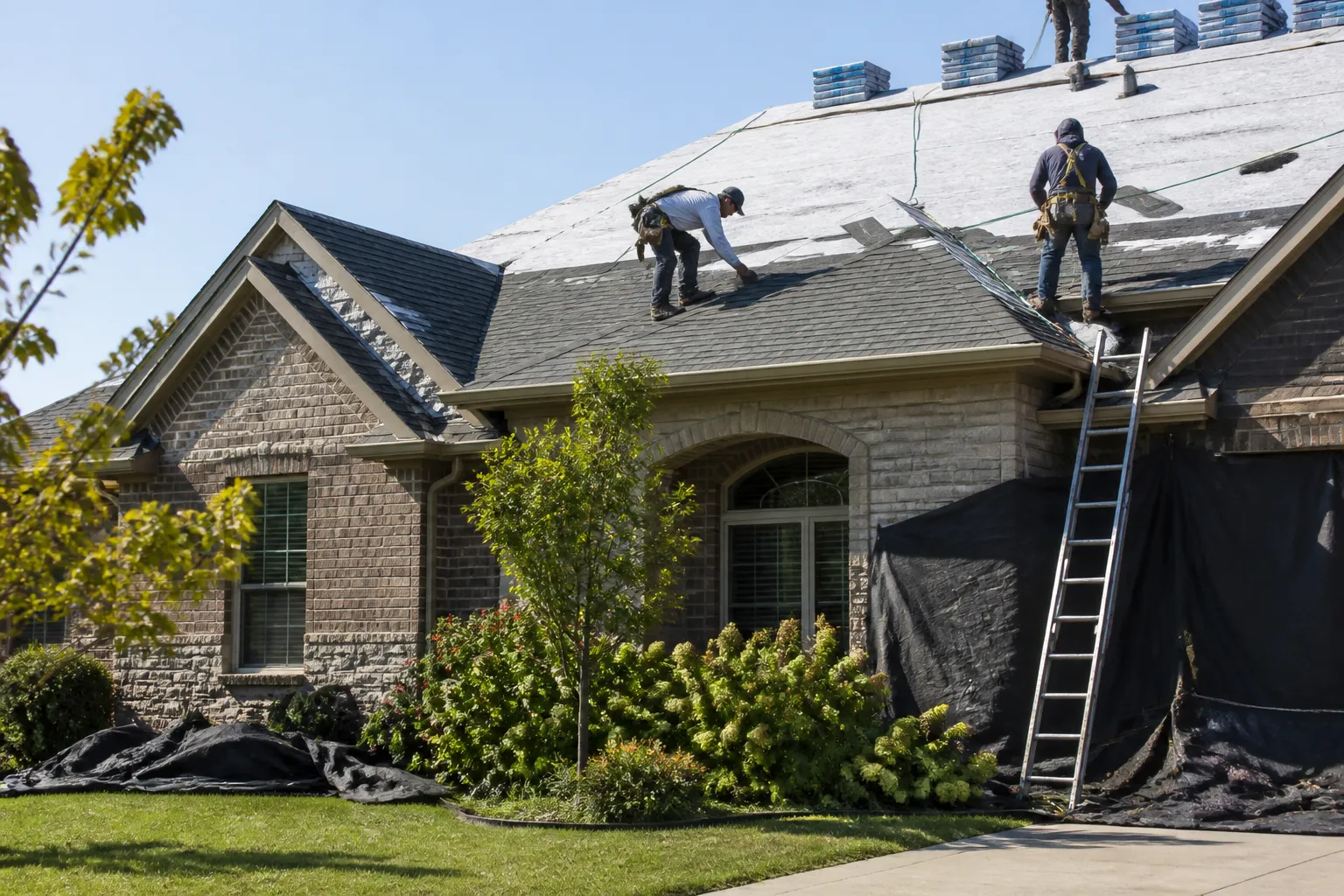
Arkansas Roofing Guidance
Roof Replacement in Centerton, AR
Compare roof replacement options, material systems, tear-off, decking, ventilation, site protection, cleanup, and itemized written proposals.
Arkansas Roofing Guidance
Compare roof replacement options, material systems, tear-off, decking, ventilation, site protection, cleanup, and itemized written proposals.
Replacing a roof starts with understanding the condition of the existing system, not choosing a shingle color. For a Centerton, Arkansas property, an assessment should describe wear across the roof, areas of past or active leakage, flashing and ventilation concerns, and any visible signs that decking may need review once the old covering is removed.
A clear proposal explains what will be removed, which materials and roof details are included, how the property will be protected, and how concealed conditions will be handled. Comparing itemized scopes helps distinguish a complete replacement plan from proposals that use similar labels but cover different work.
Look for patterns rather than relying on one damaged shingle or one interior stain. The review may consider cracking, curling, missing materials, exposed underlayment, wear on different roof slopes, previous repairs, and recurring water intrusion. Flashing, valleys, roof edges, and penetrations such as plumbing or exhaust vents also affect the condition of the system.
Ask which observations point toward replacement and whether a defined repair remains a reasonable alternative. The roof's age can be useful context, but age alone does not describe its present condition. If leaks have returned, share where they appear and what work has already been attempted. An assessment should explain how the roof evidence supports the proposed scope.
Asphalt shingles and metal roofing are different systems, with distinct appearance, installation details, and components. A useful comparison considers the roof shape and slope, transitions, penetrations, drainage, and the building's needs rather than comparing only the visible surface material. Ask what underlayment, flashing, edge details, and ventilation components are included with each option.
Color and profile are also worth confirming before materials are ordered. If a property has association documents or other recorded restrictions, review the applicable documents with the responsible organization or qualified local source. Do not assume a restriction applies without checking the property records. The guide to metal roofing versus asphalt shingles can help frame questions about the two material categories.
A replacement proposal should state whether existing roofing will be removed and how debris will be handled. Tear-off exposes the roof deck for examination. The proposal should clarify what decking work is included, how the condition will be documented, and how any additional work will be described and approved if concealed damage becomes visible. Avoid relying on an unstated assumption that all underlying material is sound or that every possible repair is automatically included.
Ask how the new underlayment, flashing, valleys, edges, and roof penetrations will be addressed. These details help the new covering function as a system. A proposal that names only the surface material may leave important components unclear.
Ventilation should be considered as part of the roof system, not treated as an unrelated add-on. Ask what intake and exhaust openings are present, whether they are being retained or changed, and how the proposed arrangement fits the roof design. The estimate should describe any ventilation work included and identify what is outside the scope.
Roof-to-wall transitions, valleys, gutters, and penetrations can also affect how water moves across and away from the roof. The written plan should identify the flashing and edge details that will be replaced or reused and explain the basis for that choice.
Before work begins, clarify how landscaping, walkways, outdoor equipment, and nearby surfaces will be protected from falling materials and debris. Ask where materials may be staged and what access the work will require. If there are fragile items or areas of concern, point them out in advance so the plan can be discussed.
Cleanup should be described, not left implied. Confirm how removed roofing and packaging will be collected, which areas will be checked for stray debris, and how the site will be left at the end of the work. These questions help establish expectations without assuming a particular crew size or schedule.
Review proposals side by side and check that each describes the same roof areas and scope. Compare the covering, underlayment, tear-off and disposal, decking assumptions, ventilation, flashing, penetrations, property protection, and cleanup. Note exclusions and how concealed conditions or requested changes will be documented before proceeding.
Different totals are difficult to interpret if the scopes differ. Request clarification where an item is missing or described broadly. The Arkansas roof replacement cost guide explains project factors to compare without treating one proposal as a universal template.
Visit the Centerton service-area hub for local roofing information. The Arkansas roof replacement page covers broader replacement considerations. For a related local perspective, compare the Centerton roof repair page and ask what conditions support each scope.
When requesting an estimate, provide the property location, any recurring leaks, visible wear, prior repairs, and the kind of roof system being considered. Mention access or staging concerns that may affect property protection. Clear itemization makes the written proposals easier to compare.
No. Age is context, but the assessment should also consider material condition, leak history, wear across slopes, flashing, and any known decking concerns. Ask which observed conditions support the recommendation.
The exposed deck should be reviewed before new roofing is installed. Ask how observations will be recorded, what decking work is included, and how any additional scope will be explained and approved.
It should at least be considered and clearly described. Ask what intake and exhaust components are present, whether changes are proposed, and which ventilation work is included or excluded.
Compare itemized scope, including materials, tear-off, underlayment, decking assumptions, ventilation, flashing, property protection, cleanup, exclusions, and how concealed conditions are handled. Ask for clarification where the proposals differ.
What To Expect
Share your ZIP code, the service you are considering, and what you have noticed about the roof.
Discuss the observed condition, repair or replacement options, and proposed scope with the independent roofer, subject to local availability.
Review materials, work details, cleanup, exclusions, and any additional repairs before deciding how to proceed.
A Few Common Questions
Tell us where the property is and what your roof needs.
Roofing Estimate
Share the property ZIP code and the roofing service you need. The form uses the existing inquiry system.