Arkansas Roofing Guidance
Roof Repair in Centerton, AR
Get practical guidance on finding the source of a roof leak, repairing damaged shingles or flashing, and deciding when broader roof work merits comparison.
Arkansas Roofing Guidance
Get practical guidance on finding the source of a roof leak, repairing damaged shingles or flashing, and deciding when broader roof work merits comparison.
For a roof leak in Centerton, Arkansas, record the affected room, when moisture appears, and any earlier repair work. Water may travel beneath the roof covering, so these observations can focus an assessment but do not establish the entry point or repair scope.
Useful repair guidance explains the likely source, the materials and roof sections involved, and what the proposed work does not include. That makes it easier to compare a focused repair with replacement when wear or repeat leaks suggest a wider problem.
A ceiling mark may appear well away from the roof opening because water can move over decking or framing before showing indoors. Flashing, seals around roof penetrations, damaged shingles, and valleys are possible entry areas to inspect, not conclusions that can be drawn from a stain alone. In Centerton, Arkansas, the assessment should trace the likely water path before a repair is selected.
When calling All Arkansas Roofing, describe the room or ceiling location, when the leak began, whether it follows particular rain, and any visible changes or previous repairs. Indoor or ground-level photos can document what you see; do not climb onto the roof for pictures. Finding the source matters because a repair needs to address the likely entry path, not simply cover the indoor mark.
Missing, lifted, cracked, or displaced shingles can expose the layers beneath them. A repair scope should identify the affected section and describe how replacement shingles will be integrated with the surrounding roof. If the materials are aged or brittle, ask how that condition affects the proposed repair.
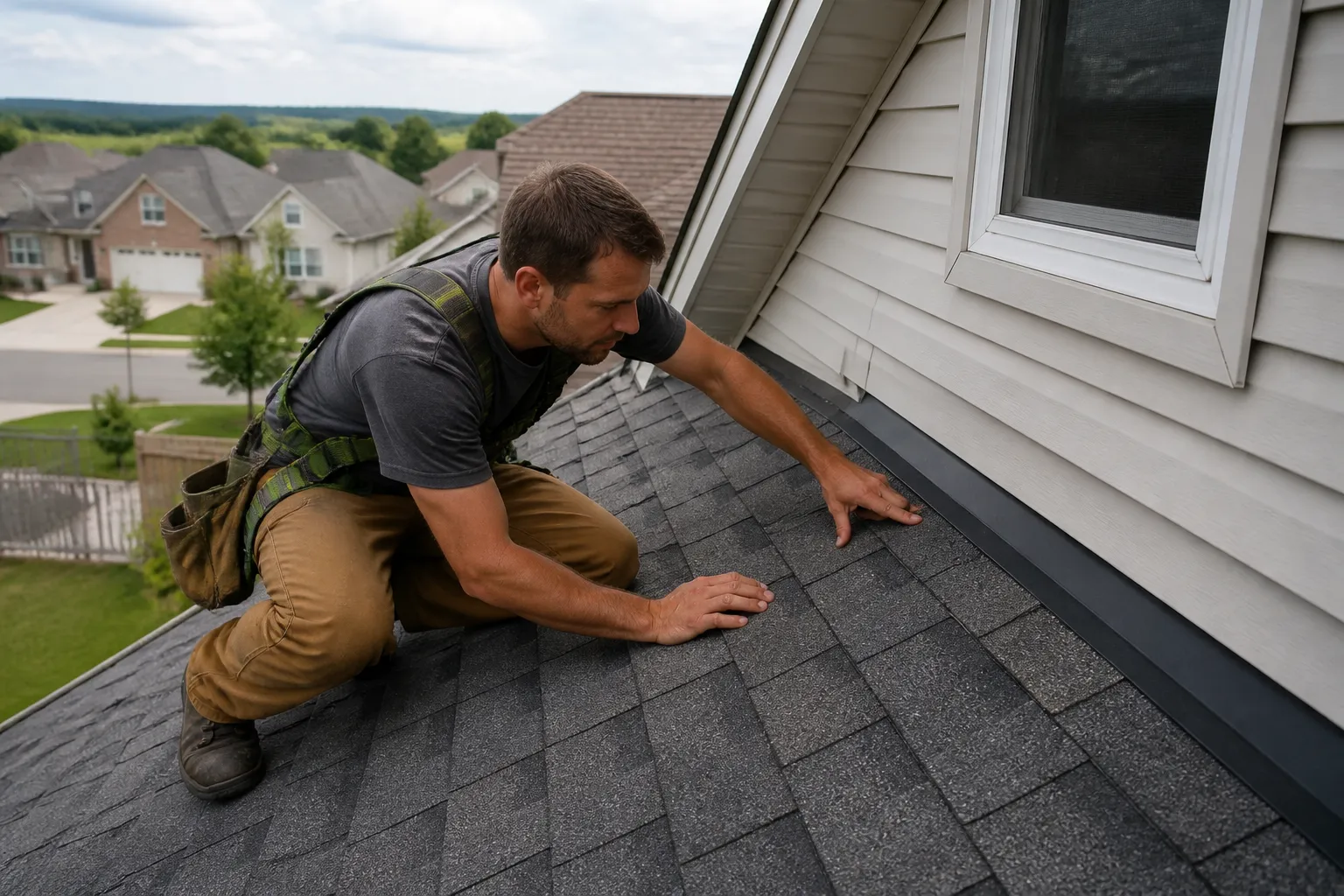
Flashing protects transitions where roofing meets a wall, chimney, valley, or other change in surface. Loose, corroded, bent, or poorly integrated flashing can allow water behind the roof covering. Roof penetrations such as plumbing vents and exhaust vents also need properly fitted boots, flashing, and seals. A written scope should state which transition or penetration is being addressed rather than use a broad phrase such as “seal roof.”
If water returns after a previous repair, share what was done and when the symptoms came back. The earlier work may have addressed a visible symptom without correcting the entry path, or a separate nearby component may also be involved. Ask what areas were inspected this time and how the recommended work differs from the prior repair.
Recurring moisture can affect ceilings, insulation, and interior finishes. If water is near electrical equipment, a sagging ceiling, or another unsafe area, keep clear and seek appropriate help for the immediate hazard. Avoid touching wet electrical fixtures. Document the condition safely and describe it when requesting a roof assessment.
A useful written proposal identifies the roof area, the suspected cause, materials to be used, and the steps included. It should clarify whether damaged shingles, flashing, underlayment, a vent boot, or another component is part of the work. Ask whether neighboring materials will be checked and how concealed damage or a change in scope will be explained before additional work proceeds.
These details help compare proposals on scope rather than a short label. For more context after a leak, read the guide to what to do when a roof leaks after a storm.
A localized defect on an otherwise serviceable roof may be suited to repair. Replacement deserves comparison when deterioration appears across several slopes, leaks recur in different locations, or many separate repairs are being considered. Shingle age, cracking or curling, exposed underlayment, prior repair history, flashing condition, and the state of accessible decking all contribute to the discussion. No single visible symptom determines the answer.
Ask for the observations supporting each option. If replacement is proposed, request a clear explanation of why a defined repair is not considered adequate. If repair is proposed, ask what roof areas remain outside the scope and what signs would prompt another assessment. The Centerton roof replacement page outlines project details to compare.
For local roofing information, visit the Centerton service-area hub. The statewide Arkansas roof repair page covers common symptoms and assessment questions. If the issue may require broader work, compare the Centerton replacement page as well as the repair-versus-replacement guide.
When requesting an estimate, share the property location, when the leak began, whether it has returned, and any safe photos of interior staining or visible roof damage. Clear observations help frame the assessment without assuming the cause before inspection.
No. Water may travel over decking or framing first, so the visible mark is a clue rather than confirmation of the entry point.
The assessment can consider the boot or flashing, the seal around the penetration, surrounding shingles, and whether water could be entering at an adjacent transition. The written scope should name the components to be repaired.
The original entry path may not have been fully corrected, or another nearby roof component may be involved. Share the earlier repair details and ask what is newly observed and included in the current scope.
Consider comparing both when wear is widespread, leaks recur in different areas, or multiple repairs are accumulating. Ask what roof conditions support each option and which areas each proposal covers.
What To Expect
Share your ZIP code, the service you are considering, and what you have noticed about the roof.
Discuss the observed condition, repair or replacement options, and proposed scope with the independent roofer, subject to local availability.
Review materials, work details, cleanup, exclusions, and any additional repairs before deciding how to proceed.
A Few Common Questions
Tell us where the property is and what your roof needs.
Roofing Estimate
Share the property ZIP code and the roofing service you need. The form uses the existing inquiry system.