Arkansas Roofing Guidance
Roof Repair in Osceola, AR
Learn how roof leak assessment, localized repairs, recurring concerns, and replacement decisions are approached for properties in Osceola, Arkansas.
Arkansas Roofing Guidance
Learn how roof leak assessment, localized repairs, recurring concerns, and replacement decisions are approached for properties in Osceola, Arkansas.
A ceiling mark, damp spot, or visible change to roofing can raise questions about what is happening and what should be checked next. In Osceola, Arkansas, a useful repair discussion begins with the location of the concern, when it appears, and what can be observed safely. An indoor symptom can help describe the problem, but it does not identify the roof opening or establish the full repair scope.
All Arkansas Roofing connects property owners with independent roofing contractors for assessments and written estimates. Contractors evaluate the roof and perform any agreed work. Sharing the property address, building type, prior repair information if known, and safe photographs can help frame the conversation without assuming a diagnosis.
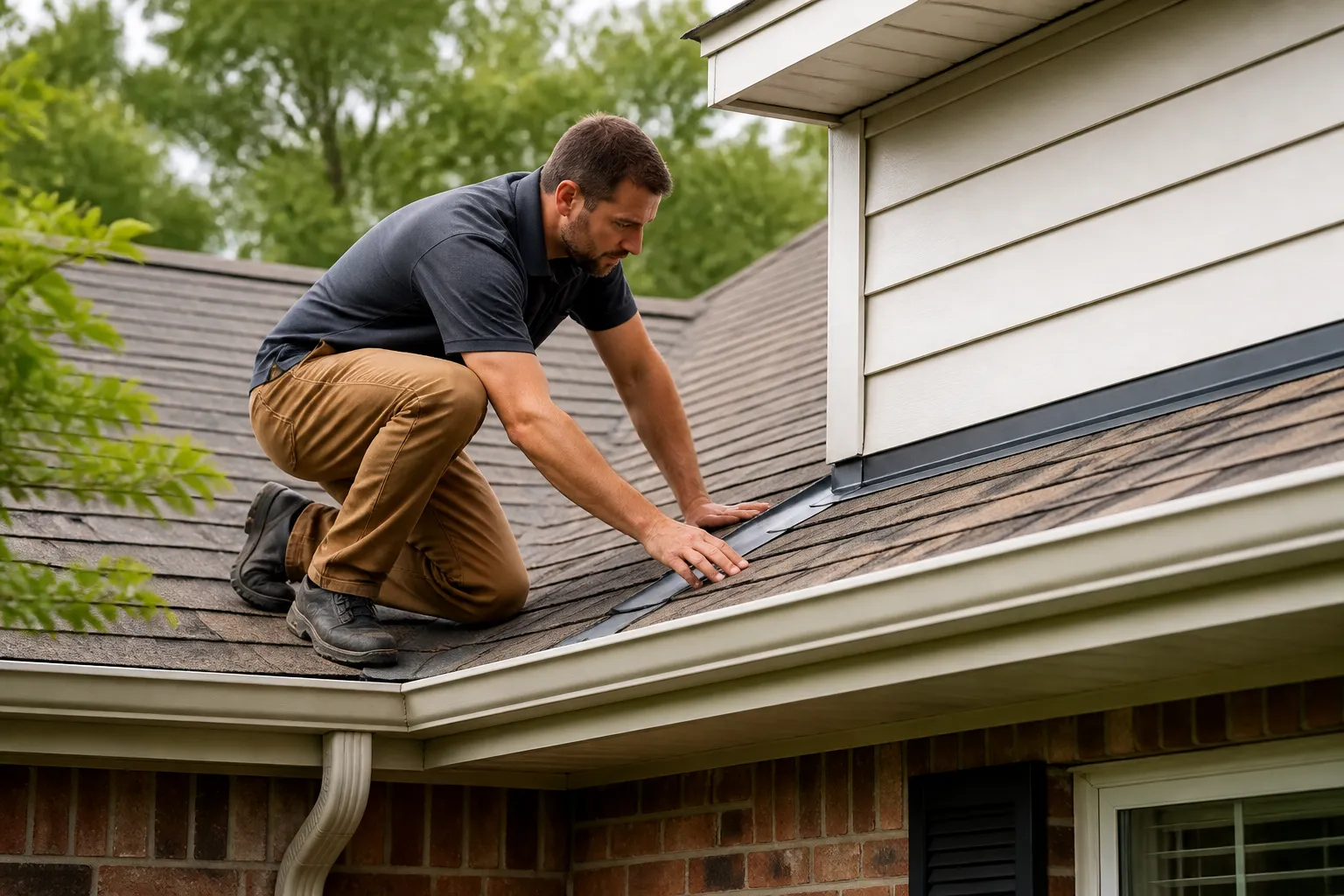
Water may enter at one roof detail and travel before it becomes visible indoors. It can follow decking, framing, underlayment, or other surfaces, so the ceiling stain may be offset from the entry point. Roof-to-wall transitions, valleys, flashing, vents, pipe boots, roof edges, and damaged covering are possible areas to assess. These are possibilities, not diagnoses: symptoms alone cannot establish which component is responsible.
When calling, report the room and approximate location of the moisture, when it first appeared, whether it changes during or after rain, and whether it has happened before. Mention any prior repairs or recent work near the affected area if known. Photos from indoors or from ground level can document a stain, visible ceiling change, or roof condition if they can be taken safely. Do not climb onto the roof or a ladder to investigate, and avoid areas with sagging surfaces, water near electrical fixtures, or other hazards.
Identifying the source matters because treating only the visible stain may leave the pathway or entry point unaddressed. A careful assessment compares interior observations with relevant roof areas and details, then explains what evidence supports the proposed work. If the apparent leak location and suspected roof detail differ, ask how the water path and the limits of the inspection informed the recommendation.
A repair may be appropriate when assessment finds a defined concern and the surrounding roofing remains suitable for the proposed work. The written scope should identify the roof section, component or transition involved, describe the repair, and state what adjacent areas are not included. Ask whether the work addresses the suspected source and how the result will be reviewed.
Localized work can involve more than replacing a visible piece of covering. A roof detail may include flashing, underlayment, fasteners, sealant, or nearby material that affects how water is managed. The actual components depend on what is found. Request an explanation of the proposed materials and the boundaries of the repair, rather than relying on a general phrase such as “patch leak.”
If moisture returns after prior work, share what was repaired, when it was done, and whether the recurrence appears in the same or a different place. A repeated symptom may relate to an incomplete source identification, a separate water path, or a condition that has changed. It is not enough by itself to determine that replacement is necessary. Ask for the new assessment findings and how they differ from the earlier scope.
Repair and replacement can be compared when concerns appear in several areas, nearby materials are deteriorated, or repairs are recurring. The comparison should explain the observed condition, the portion of the roof affected, and what each option would address. Roof age or a single ceiling mark does not settle the decision on its own. For a practical framework, read Roof Repair or Replacement? How to Compare Your Options.
A useful written estimate connects the findings to a defined scope. It should identify the roof area and work proposed, the components or materials included, any access or preparation assumptions, and exclusions or related work that may be considered separately. If more than one approach is offered, ask how each differs and what condition it is intended to address.
For a leak, clarify whether the estimate includes locating and addressing the suspected source, replacing affected materials, and checking related transitions. Ask how concealed conditions would be documented if they are found while work is underway. Comparing these details can make it easier to understand what is included without assuming that similarly worded proposals cover the same work. The roofing estimate checklist offers additional questions for reviewing a proposal.
Share whether the building is a home or another property type, how it is used, and any access or operating concerns. For residential work, note which rooms are affected and whether the issue has occurred before. For a business or other occupied building, identify areas that need to remain accessible. The details help the assessor understand the property, but the roof itself still needs to be evaluated before a repair can be defined.
To explore other roofing options in the area, visit the Osceola, Arkansas roofing hub or review roof repair across Arkansas. All Arkansas Roofing connects property owners with independent contractors; provider availability and services vary by location. For a broader scope, compare roof replacement in Osceola. Any local building or permit requirements should be confirmed with the appropriate office for the property address and exact project scope.
No. Water can travel along roof layers or framing before becoming visible. The stain helps describe where moisture appeared, but a roof assessment is needed to identify the likely source and define the work.
Share the affected room, approximate location, timing, relation to rain, whether it has happened before, and any previous repair information. Safe indoor or ground-level photos may help document visible conditions.
No. Do not climb onto the roof or use a ladder to inspect it. Take photos from indoors or ground level only when doing so is safe, and leave roof access and inspection to an appropriate assessor.
Compare options when assessment finds broader deterioration, concerns across multiple areas, or recurring repairs. Ask what evidence supports each scope and which roof areas it would address; recurrence alone does not prove replacement is required.
What To Expect
Share your ZIP code, the service you are considering, and what you have noticed about the roof.
Discuss the observed condition, repair or replacement options, and proposed scope with the independent roofer, subject to local availability.
Review materials, work details, cleanup, exclusions, and any additional repairs before deciding how to proceed.
A Few Common Questions
Tell us where the property is and what your roof needs.
Roofing Estimate
Share the property ZIP code and the roofing service you need. The form uses the existing inquiry system.