Arkansas Roofing Guidance
Roof Repair in Marion, AR
Learn about roof repair in Marion, AR, including leak assessment, repair scope, recurring problems, and how to compare repair with replacement.
Arkansas Roofing Guidance
Learn about roof repair in Marion, AR, including leak assessment, repair scope, recurring problems, and how to compare repair with replacement.
A ceiling mark, damp attic material, loose-looking shingles, or water near a roof edge are observations to report, not proof of where a leak starts. For a Marion, Arkansas property, an assessment should relate these symptoms to the roof covering, flashing, transitions, and other relevant details.
All Arkansas Roofing connects property owners with independent roofing contractors for assessments and estimates. Describe what you have observed and ask for a written scope that identifies the affected area and the work being considered. The Arkansas roof repair overview provides statewide service context. For broader homeowner needs, see residential roofing in Arkansas; if replacement is also under consideration, compare roof replacement in Marion.
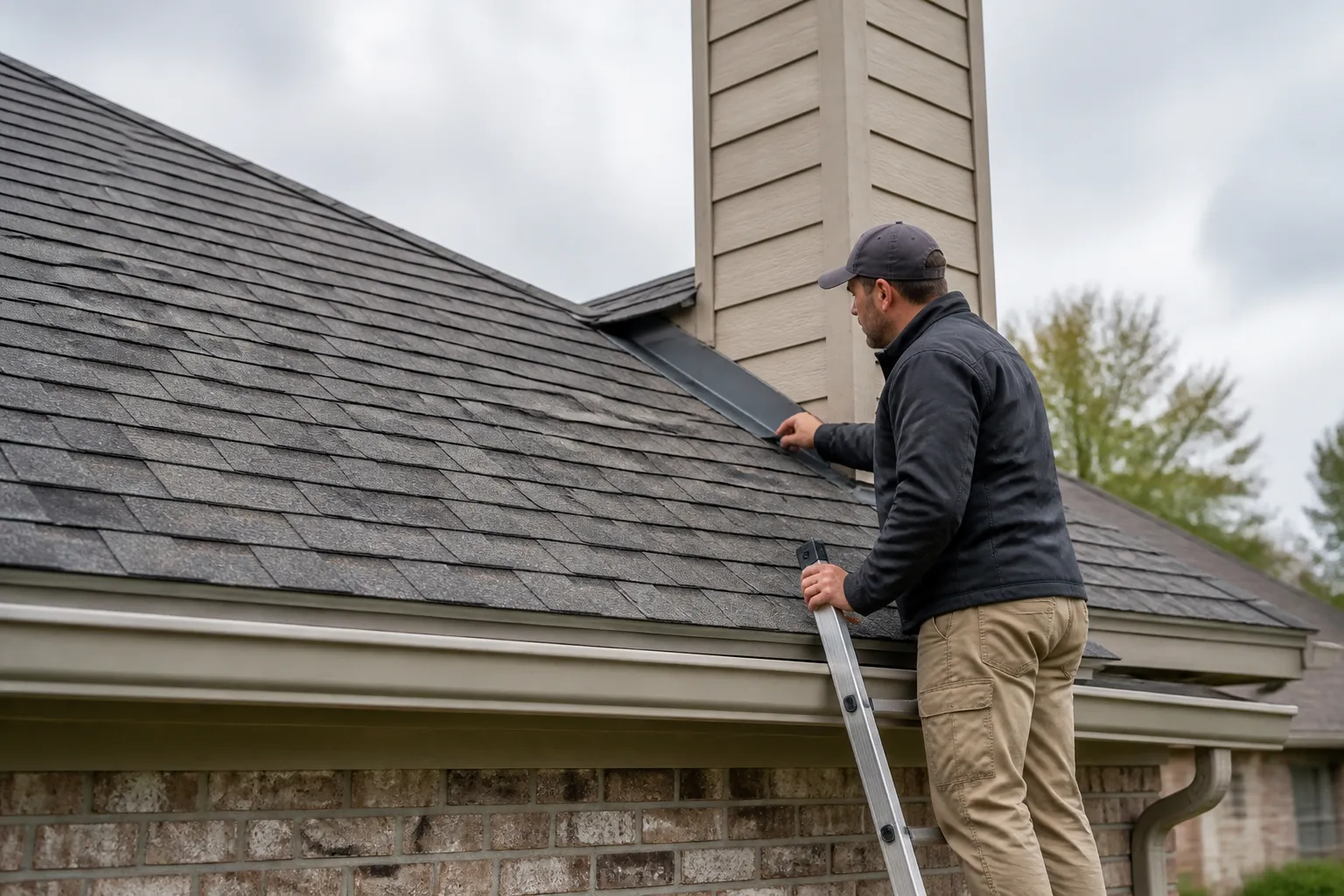
Water can move along roof decking, framing, insulation, or other surfaces before appearing inside. A stain or drip may therefore be some distance from the point where water entered. Depending on the roof system, possible areas for assessment can include flashing, valleys, roof-to-wall transitions, plumbing or vent penetrations, seams, shingle edges, and fasteners. These are possibilities to inspect, not a diagnosis based on a symptom.
When calling, share the property address, where moisture appears indoors, when it began, how it relates to rainfall if known, whether it has happened before, and any earlier repair history. Photos taken from inside or safely from the ground can help show the concern. Do not climb on the roof, reach from a ladder, or attempt a repair to get a closer view. If a ceiling is sagging or water is near electrical equipment, keep clear and describe that condition when requesting help.
Locating the source matters because sealing or patching the visible stain alone may leave the water path untouched. An assessment should explain which roof components are implicated, what evidence supports the proposed repair, and whether nearby materials or transitions also need attention.
A focused repair may be a reasonable option when assessment finds a limited area of damage and the surrounding roof remains serviceable. The scope could involve a specific roof covering, flashing detail, penetration, or transition, depending on the system and observed condition. Ask which materials will be removed or replaced, how the repaired area will tie into existing roofing, and what adjacent items are outside the quoted work.
The estimate should describe the location and limits of the repair in language you can identify. It should also explain any access or concealed-condition assumptions, disposal of removed materials, and how additional work would be reviewed and approved. A written scope helps distinguish a defined repair from a general statement that a roof will be “patched.”
A leak that returns can have several explanations: an earlier repair may not have addressed the entry point, another roof detail may be involved, or more extensive wear may be present. Repeated symptoms alone do not prove that the entire roof must be replaced. The roof and the repair history need to be reviewed together, including whether moisture appears in the same place, after similar weather, or in more than one area.
Replacement may merit comparison if damage or deterioration is widespread, multiple repairs have accumulated, or a contractor finds that the roof system cannot be addressed reliably with a limited scope. Ask for the observations behind each option, the areas each proposal covers, and the remaining concerns if repair is selected. The guide to comparing roof repair and replacement can help organize that discussion.
Repair methods must fit the existing roof covering and adjoining components. Asphalt shingles, metal panels, membranes, and other systems have different laps, fasteners, sealants, and flashing details. A material that looks similar may not be compatible with the existing assembly. Ask what replacement material or fastening approach is proposed and how it will connect to the existing roof without interfering with drainage or movement.
For homes and small businesses alike, the roof’s slope, penetrations, drainage paths, and ventilation conditions may affect the assessment. If ventilation or moisture concerns are mentioned, ask whether they are part of the repair scope or a separate recommendation. A clear proposal identifies what is included rather than implying that every roof component will be corrected by a limited leak repair.
The City of Marion lists a Roofing Permit among its permit types. The city also explains that permit and inspection requirements depend on regulated work and approval before work begins. Do not assume every repair has identical requirements: confirm with the city what applies to the property address and proposed scope before scheduling. Review the City of Marion permits and inspections information.
Before a site visit, note known access procedures, pets or gates, occupied rooms, business hours, and any restrictions that may affect inspection or work planning. Keep the ground-level area near the home accessible if possible, but do not remove roofing materials or move equipment yourself.
No. Water can travel along roof and building components before becoming visible indoors. The stain is useful information, but the roof and possible water path need assessment before identifying a repair.
Use photos taken safely from indoors or ground level to show the stain, nearby interior conditions, or roof areas visible without climbing. If a useful view is not safely accessible, describe it instead.
Not by itself. A repeated leak can indicate an unresolved or separate detail, or broader roof wear. Ask for an assessment that explains the observed condition and compares the limits of repair with any replacement option.
It should identify the roof area and components included, the repair method and materials, relevant exclusions, and how concealed conditions or added work will be handled. Ask for unclear terms to be explained in writing.
For a Marion roof concern, share what is known and request an assessment rather than trying to diagnose it from inside or from a photograph. The Marion roofing hub provides a local starting point, while the roof leak guidance after a storm covers safe documentation and next steps.
What To Expect
Share your ZIP code, the service you are considering, and what you have noticed about the roof.
Discuss the observed condition, repair or replacement options, and proposed scope with the independent roofer, subject to local availability.
Review materials, work details, cleanup, exclusions, and any additional repairs before deciding how to proceed.
A Few Common Questions
Tell us where the property is and what your roof needs.
Roofing Estimate
Share the property ZIP code and the roofing service you need. The form uses the existing inquiry system.