Arkansas Roofing Guidance
Roof Replacement in Texarkana, AR
Roof replacement guidance for evaluating roof condition, materials, tear-off, ventilation, and written proposals in Texarkana, Arkansas.
Arkansas Roofing Guidance
Roof replacement guidance for evaluating roof condition, materials, tear-off, ventilation, and written proposals in Texarkana, Arkansas.
For a home in Texarkana, Miller County, Arkansas, assess the pattern of shingle and flashing wear, signs of moisture below the roof, and whether problems are isolated or appearing across several slopes. Age alone does not determine whether replacement is warranted. A clear assessment should explain what is visible and distinguish confirmed damage from areas that still need to be checked after old materials come off.
Before comparing proposals, identify the property as being on the Arkansas side of Texarkana and describe the building, access, and any known leak history. This keeps the discussion focused on the correct property and scope. A written plan can help compare material choices, removal, ventilation details, protection, and cleanup rather than relying on a single total or a broad promise.
Widespread granule loss, curling or brittle shingles, repeated leaks, exposed underlayment, damaged flashing, and soft or stained areas inside may point to a roof that needs closer review. None of these signs alone decides the outcome. Consider how many slopes are affected, whether the roof covering can still shed water reliably, and whether prior repairs have addressed isolated defects or only delayed larger work.
Ask for observations that connect the recommendation to the roof: which areas are worn, where water intrusion is suspected, and what remains in reasonable condition. If repair is still a possible option, compare its scope and limitations with replacement. The local Texarkana roof repair page explains how isolated damage and recurring leaks can be assessed.
Asphalt shingles are a familiar choice for many homes, with options that vary in profile, weight, appearance, and installation requirements. Metal roofing may offer a different appearance and roof-system approach, but the complete assembly, fastening method, underlayment, trim, and compatibility with the structure should be considered. The right comparison includes how each option fits the roof geometry and the owner’s priorities, not just the visible surface.
Ask each proposal to identify the specific product or system, underlayment, flashing approach, ventilation components, and any accessories included. If the descriptions are too general to compare, request clarification before choosing. The guide comparing metal roofing and asphalt shingles can help organize questions about material tradeoffs.
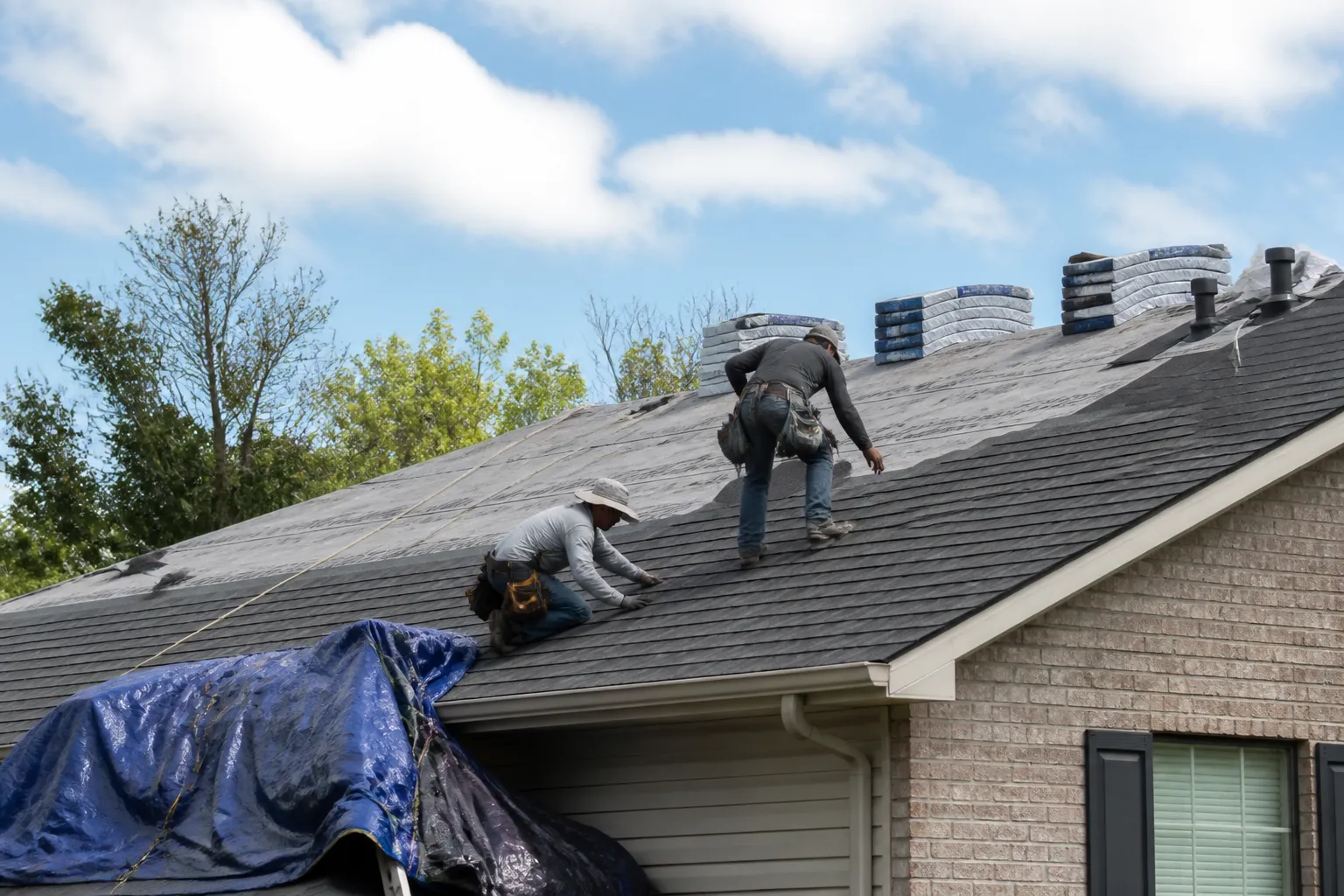
Removing existing roofing exposes the deck and can reveal conditions that were not visible from above. The proposal should say how many existing layers are included in removal, how the deck will be inspected, and how damaged or unsuitable sections will be documented and handled. Ask how any additional work would be described and approved before it changes the agreed scope.
Decking condition matters because the new roof depends on a stable, properly fastened base. A useful plan explains how the exposed surface will be reviewed and how replacement material, if needed, will be identified. Avoid assuming every roof has the same hidden conditions; the final scope may depend on what is uncovered during removal.
Replacement is an opportunity to evaluate how air moves through the roof assembly and whether intake and exhaust paths are balanced for the building’s design. Ventilation should not be treated as a generic add-on: the proposal should identify existing conditions, recommended changes, and how the system works with insulation and attic configuration. Water-shedding details at valleys, eaves, walls, and roof penetrations also deserve explicit attention.
Ask how flashing will be handled around chimneys, plumbing vents, and other openings, and whether the work includes replacing worn components rather than covering them. If a proposal calls for a ventilation change, ask what condition supports that recommendation and what components are included.
A written work plan should explain how landscaping, walkways, outdoor equipment, and nearby surfaces will be protected during removal and installation. Clarify how materials will be staged, where debris will be collected, and how the work area will be reviewed at completion. Homeowners can also ask what access is needed and how to prepare vehicles, pets, or outdoor items.
Cleanup should be part of the scope, not an afterthought. Ask whether debris removal and a final ground-level review are included, and how leftover materials will be handled. Once work is complete, request a clear summary of the installed system and any conditions observed during the project.
Compare proposals line by line. Each should state the roof areas covered, tear-off and disposal, underlayment, edge and flashing details, ventilation work, materials, cleanup, and how concealed decking conditions will be addressed. Check that the product descriptions are specific enough to compare and that exclusions or owner responsibilities are visible.
Ask follow-up questions when one proposal combines many tasks into a vague allowance or leaves out an important detail. A lower or higher total is hard to evaluate without knowing what is included. Keep the scope, product information, and any revised terms together so the final agreement reflects the answers received.
For further local guidance, visit the Texarkana roofing hub, review roof replacement guidance for Arkansas, and compare this page with roof repair in Texarkana. Any project-specific approval question should be confirmed with the appropriate Arkansas-side authority; general planning guidance should not be taken as proof that every roofing project requires the same approval.
No. Age is one factor, but the condition and distribution of wear, evidence of moisture, repair history, and remaining serviceability also matter. Ask for findings that explain why repair or replacement is recommended for this specific roof.
Look for defined roof areas, removal and disposal, materials, underlayment, flashing, ventilation, cleanup, and a process for documenting concealed decking issues. Clear inclusions and exclusions make proposals easier to compare.
Old roofing can conceal soft, damaged, or unsuitable sections. Once exposed, the deck can be assessed directly so the new system is installed on a sound base and any additional work is described before proceeding.
Compare complete system specifications, roof compatibility, installation details, appearance, maintenance considerations, and the scope included in each proposal. The material name alone does not describe the full roof assembly.
What To Expect
Share your ZIP code, the service you are considering, and what you have noticed about the roof.
Discuss the observed condition, repair or replacement options, and proposed scope with the independent roofer, subject to local availability.
Review materials, work details, cleanup, exclusions, and any additional repairs before deciding how to proceed.
A Few Common Questions
Tell us where the property is and what your roof needs.
Roofing Estimate
Share the property ZIP code and the roofing service you need. The form uses the existing inquiry system.