Arkansas Roofing Guidance
Roof Repair in Texarkana, AR
Roof leak diagnosis and targeted repairs for damaged shingles, flashing, and roof penetrations in Texarkana, Arkansas.
Arkansas Roofing Guidance
Roof leak diagnosis and targeted repairs for damaged shingles, flashing, and roof penetrations in Texarkana, Arkansas.
A roof leak rarely points to the exact place water enters. Moisture can travel along decking, rafters, or interior finishes before it appears on a ceiling, so the stain is a clue rather than a diagnosis. For a property in Texarkana, Miller County, Arkansas, note when the leak occurs, which rooms are affected, and whether it follows rain direction or wind. Those details help narrow the inspection without assuming the visible damage tells the whole story.
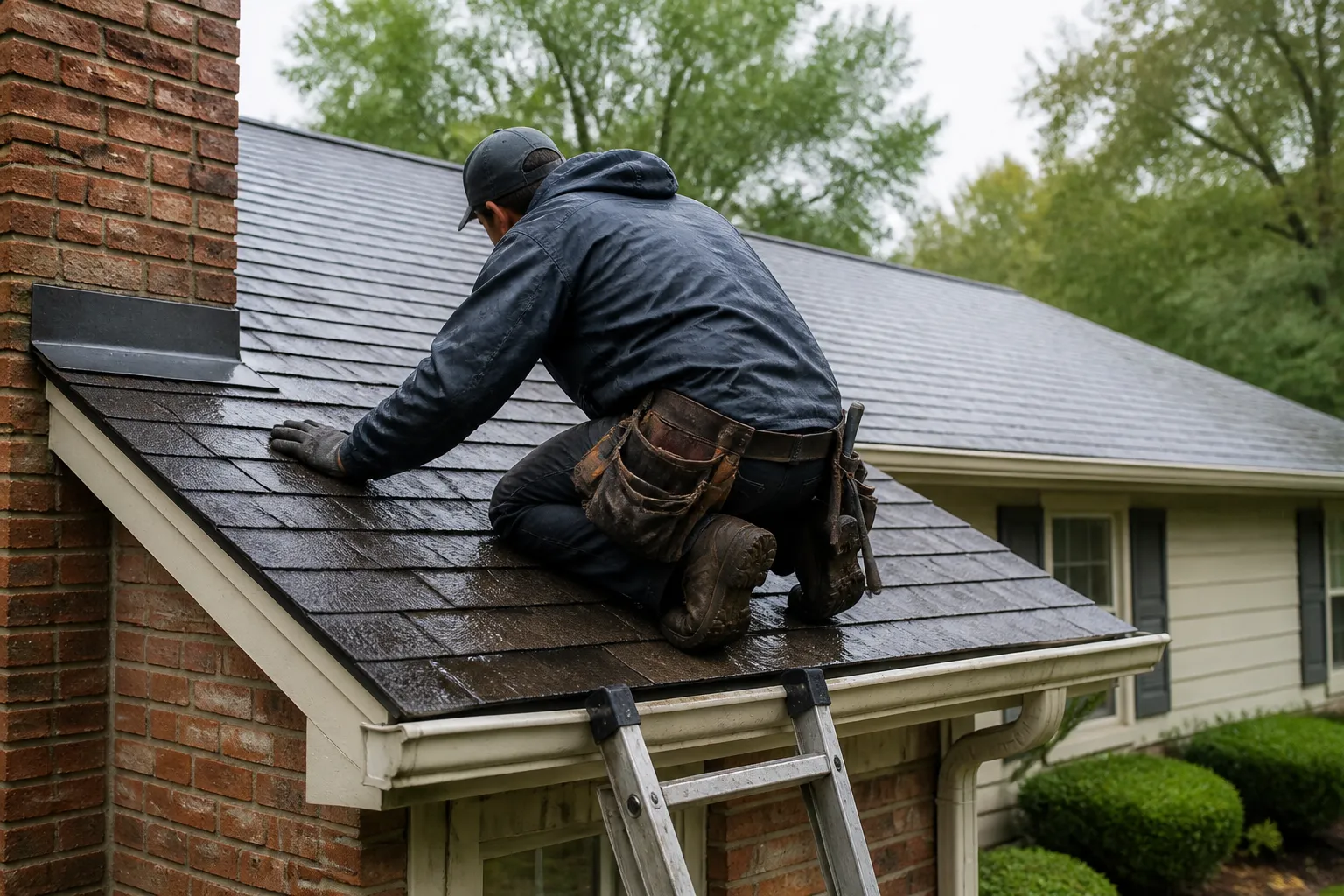
Roof repair starts with tracing the water path, checking the roof surface and transitions, and distinguishing a localized defect from wider wear. If water is entering now, protect belongings and avoid climbing onto a wet or damaged roof. A bucket or temporary interior protection may limit damage while the roof can be assessed safely.
Water may move along decking, rafters, or interior finishes before a ceiling stain appears. Flashing, roof penetrations, damaged shingles, and valleys are possible entry points, but a stain or drip alone cannot diagnose which one is involved. When contacting All Arkansas Roofing, report the affected room or roof area, when the moisture appears, whether it has recurred, and what visible changes you have noticed.
Photographs taken from indoors or from a safe ground-level location can document visible changes; do not climb onto the roof to take them. The source needs to be identified before choosing a repair so the proposed work addresses the water path rather than only the place it showed indoors.
A useful repair description identifies the affected roof area, the suspected source, the materials to be removed or reset, and the steps intended to restore water shedding. Ask whether adjacent shingles, flashing, underlayment, or decking need attention and what conditions could change the scope once work begins. Photos of the affected area can make the explanation easier to review.
Small localized damage may be repairable when the surrounding roof remains serviceable and compatible materials can be integrated. If shingles are brittle or discontinued, matching and careful tie-ins may be more difficult. The goal is not to replace sound material unnecessarily, but to understand whether a limited repair will be durable in the context of the roof as a whole.
Replacement may merit comparison when leaks recur in different areas, shingle wear is widespread, repairs keep expanding, or the roof has several layers of aging components. Interior symptoms alone do not establish that a roof needs replacement, and a single leak does not automatically mean the whole roof has failed. Review the roof’s overall condition, the number and location of defects, and the likely limits of continued repairs.
For an older roof, ask for the reasoning behind either option: which areas can be repaired, what remains vulnerable, and what signs would justify reconsidering the decision. The guide to what to do when a roof leaks after a storm offers practical first steps. For broader local context, see roofing guidance for Texarkana, roof repair across Arkansas, and roof replacement in Texarkana.
Ask what evidence supports the diagnosis, whether the proposed work is limited to one slope or detail, and how the completed repair will be checked. Clarify what is included in the written scope and how unexpected concealed damage would be discussed before expanding the work. Keep copies of inspection notes, photos, and the repair description so future leaks can be compared with the original condition.
For properties in Texarkana, Arkansas, identify the Arkansas-side property location when requesting information; the city shares a name across the state line, but the property jurisdiction matters. No particular permit requirement should be assumed from general planning information alone. If a project raises a local approval question, confirm it with the relevant Arkansas-side authority for the specific scope and address.
Water can move along roof or framing surfaces before reaching an interior finish, so the stain is not a reliable marker of the entry point.
Yes. A missing, lifted, or cracked shingle can expose the layers below, particularly near an edge or transition. The surrounding shingles and underlayment should also be checked to determine the full repair area.
The original source may have been missed or another area may be involved; compare the new leak pattern with the previous repair scope.
Compare the extent and distribution of wear, the number of separate defects, the condition of nearby materials, and how much roof life remains reasonably serviceable. Ask for the evidence behind both options rather than relying on the age of the roof alone.
What To Expect
Share your ZIP code, the service you are considering, and what you have noticed about the roof.
Discuss the observed condition, repair or replacement options, and proposed scope with the independent roofer, subject to local availability.
Review materials, work details, cleanup, exclusions, and any additional repairs before deciding how to proceed.
A Few Common Questions
Tell us where the property is and what your roof needs.
Roofing Estimate
Share the property ZIP code and the roofing service you need. The form uses the existing inquiry system.