Arkansas Roofing Guidance
Roof Replacement in Hot Springs, AR
Compare roof replacement options in Hot Springs, AR, including materials, tear-off, decking, ventilation, property protection, cleanup, and written estimates.
Arkansas Roofing Guidance
Compare roof replacement options in Hot Springs, AR, including materials, tear-off, decking, ventilation, property protection, cleanup, and written estimates.
Replacement deserves consideration when wear is widespread, leaks keep returning, or multiple roof areas show deterioration. A single leak does not automatically mean the entire roof needs to be replaced. Start with an assessment that explains the roof’s condition and compares a practical repair scope with a full project. A useful proposal should also describe removal, decking review, materials, ventilation, property protection, cleanup, and how additional work would be approved.
Roof layout and access vary by property. Mention sloped approaches, trees near work areas, or valleys that collect debris if they apply. These details can affect planning, but the site and roof should guide the plan. For local context, visit Roofing in Hot Springs. Use the estimate form to request a discussion.
Look beyond one missing shingle or ceiling mark. An assessment should consider where wear appears, prior repairs, vulnerable transitions, and signs of moisture. Cracked, curling, brittle, or repeatedly displaced shingles may point to broader deterioration when similar conditions appear across several sections. The roof deck and related components matter too, though some conditions remain hidden until old materials are removed.
Ask which findings support replacement and which could be addressed with a focused repair. If the roof is generally sound and damage is limited, repair may remain practical. If concerns are widespread or recurring, compare that option with replacement. The recommendation should connect the observed condition to the proposed scope.
Material selection affects appearance, installation details, and the other components included in the system. Asphalt shingles are commonly considered for residential roofs; metal roofing may be another option for property owners comparing systems. The fit depends on the roof design, structure, and priorities for the property.
Compare the specified product and system details, not just a broad material label. Ask what underlayment, flashing, edge details, and ventilation work are included. If considering metal, discuss the proposed system and how it fits the roof geometry. The metal roofing versus asphalt shingles guide can help frame questions. No material should be treated as suitable without considering the actual roof and installation scope.
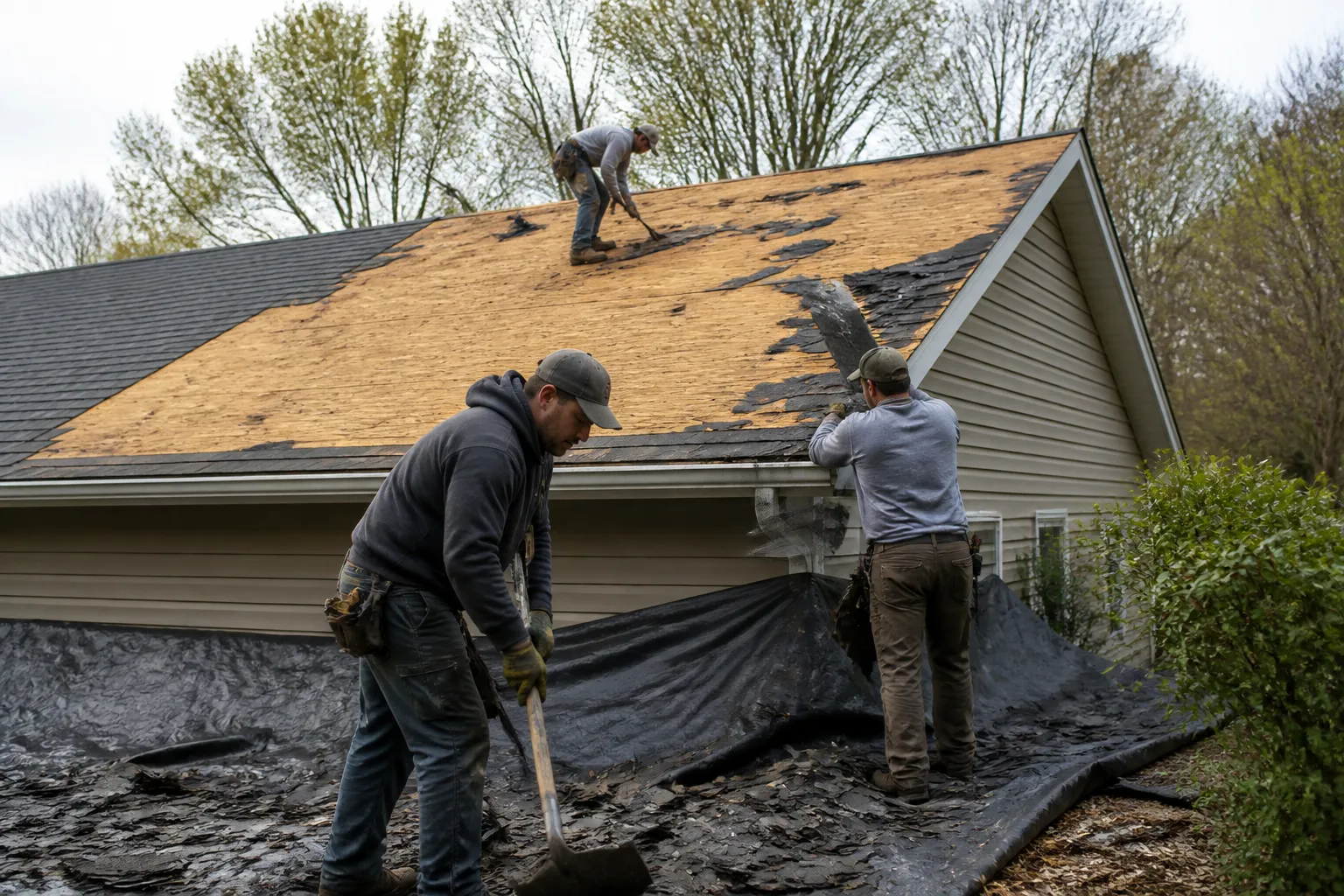
Replacement generally begins with removing the existing covering included in the proposal. Once exposed, the deck can be checked for damaged or weakened areas. The written estimate should state what inspection is included, how concealed damage will be documented, and how approval will be obtained before work beyond the agreed scope proceeds.
Ask what happens if additional deck work is recommended. A clear process identifies the finding, describes the added work, explains any cost change, and obtains authorization before proceeding. Proposals may use different assumptions, so compare those terms directly.
A new roof is a system, not only a surface layer. Flashing at walls, valleys, edges, and penetrations manages water around transitions. A proposal should identify what will be replaced or reused and address details around vents and other openings.
Ventilation should also be reviewed. Ask whether existing intake and exhaust conditions will be assessed and what work, if any, is included. Valleys, complex intersections, and nearby tree cover are property-specific considerations. If branches or debris affect the roof, discuss preparation based on what is actually present.
Clarify how the plan addresses landscaping, walkways, outdoor fixtures, and other nearby areas. Material delivery and safe access may require coordination, especially where an approach is sloped or space is limited. These are site-specific planning questions, not assumptions about every Hot Springs property.
Review how debris will be collected and removed, what cleanup is included, and what areas will be checked at the end. A written scope helps establish expectations before work is authorized.
Compare estimates that address the same roof areas and work. Check material specifications, tear-off, underlayment, flashing, ventilation, decking assumptions, property protection, debris handling, cleanup, exclusions, and the process for approving added work. A total alone does not show whether two proposals cover equivalent scopes.
Ask for unclear assumptions to be explained in writing. All Arkansas Roofing connects property owners with independent roofing providers; providers give estimates and perform roofing work. The statewide Roof Replacement in Arkansas page has broader information. For the repair alternative, see the roof repair versus replacement guide. Compare local repair information at Roof Repair in Hot Springs, AR.
No. Age is one consideration; visible condition, repair history, and how widely wear appears also matter. An assessment should explain whether targeted repairs remain reasonable or replacement should be compared.
Ask how the condition will be documented, how the additional work and any cost change will be explained, and how approval will be obtained before the scope changes.
Compare materials, tear-off, underlayment, flashing, ventilation, decking assumptions, protection, cleanup, exclusions, and the approval process for added work. Confirm each proposal covers the same areas.
Ask about access and delivery arrangements, and clarify how nearby landscaping, walkways, and outdoor items will be protected. Use a site-specific plan rather than assumptions.
What To Expect
Share your ZIP code, the service you are considering, and what you have noticed about the roof.
Discuss the observed condition, repair or replacement options, and proposed scope with the independent roofer, subject to local availability.
Review materials, work details, cleanup, exclusions, and any additional repairs before deciding how to proceed.
A Few Common Questions
Tell us where the property is and what your roof needs.
Roofing Estimate
Share the property ZIP code and the roofing service you need. The form uses the existing inquiry system.