Arkansas Roofing Guidance
Roof Replacement in Clarksville, AR
Clarksville roof replacement guidance covering roof condition, material choices, tear-off, decking, ventilation, property protection, and written proposals.
Arkansas Roofing Guidance
Clarksville roof replacement guidance covering roof condition, material choices, tear-off, decking, ventilation, property protection, and written proposals.
When shingles are aging across several slopes, leaks keep returning, or storm damage affects more than one area, a roof replacement assessment can help clarify the next step. In Clarksville, Arkansas, the decision should be based on the roof’s observed condition, repair history, and the needs of the property, not age or a single visible mark alone.
A complete proposal explains what will be removed, what will be installed, how the roof deck and ventilation will be handled, and how the home and grounds will be protected. Comparing those details makes it easier to distinguish a full, defined scope from a price or material label without enough project information.
Look for patterns rather than one symptom in isolation. Curling, cracked, brittle, or missing shingles across multiple slopes; recurring leaks in different rooms; and repeated patching can all support a broader review. Storm damage may also prompt inspection of shingles, flashing, edges, and penetrations. Visible signs do not automatically mean the entire roof needs replacement, so ask what was observed and how it affects the system.
The assessment should consider roof covering, flashing, valleys, penetrations, ventilation, and accessible signs of moisture below the roof. If repair remains a reasonable option, compare its limits and likely scope with replacement. For focused repair guidance, see Roof Repair in Clarksville, AR.
Material selection depends on the building, roof shape and slope, existing details, appearance preferences, and the priorities of the owner. Asphalt shingles are common on homes, while metal roofing may be considered as an alternative system. A proposal should identify the specific product or system rather than relying only on a broad label.
Ask how the chosen material will work with valleys, roof edges, flashing, penetrations, and ventilation. Confirm the scope identifies underlayment and other components, as well as any work needed to integrate the new covering with the existing structure. The relevant comparison is not only between materials, but also between the installation details included in each written proposal.
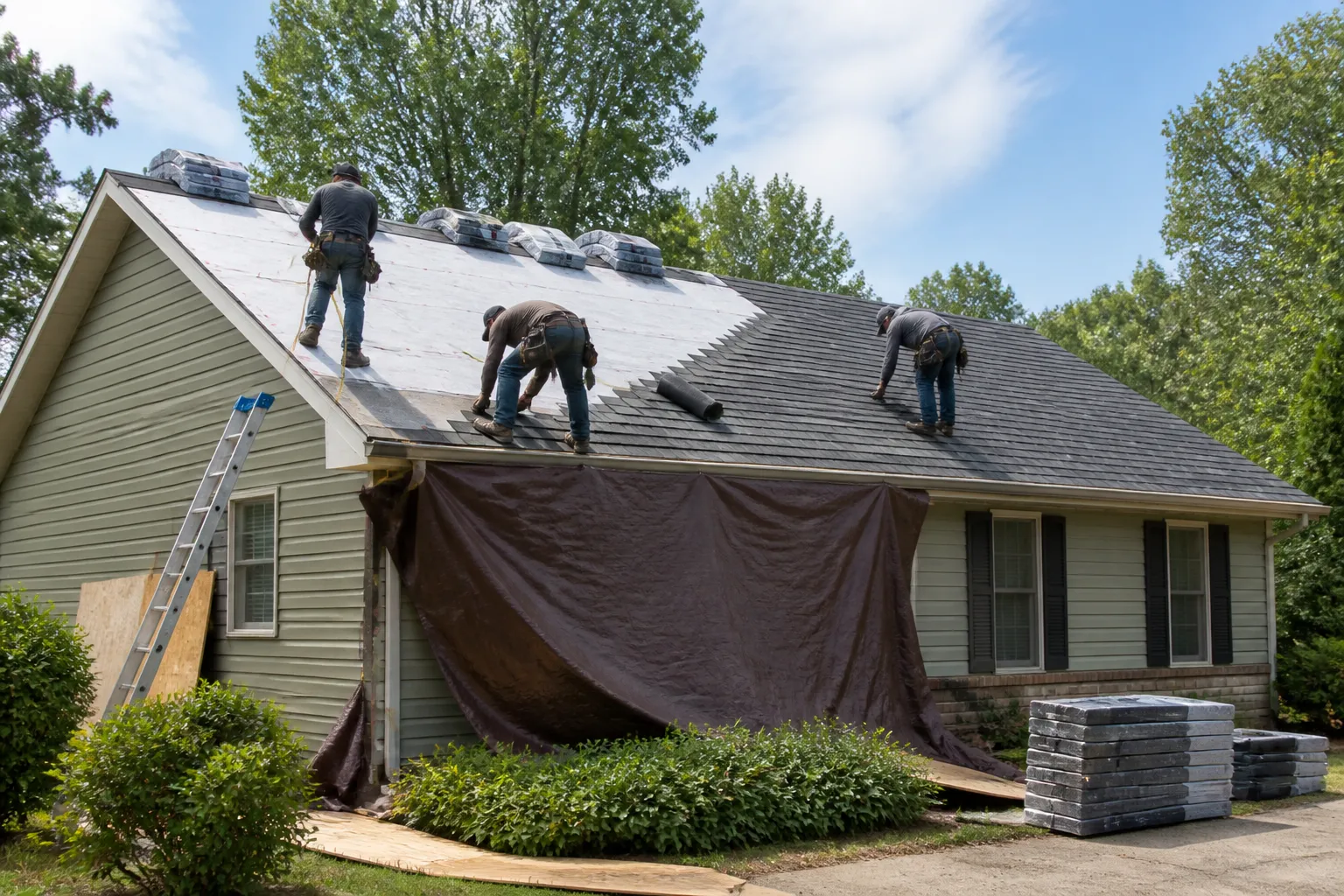
Most replacement scopes explain whether existing roofing will be removed and how debris will be collected and disposed of. Tear-off makes the roof deck accessible for review. The deck may reveal weak, damp, or damaged areas that were not visible before removal, so the written proposal should explain its assumptions and how additional work would be documented and approved.
Ask whether removal includes all existing layers or describes a different approach, what is included in disposal, and how concealed conditions will affect the scope. A clear process helps avoid confusion if the exposed deck differs from what could be seen during the initial assessment. Compare the allowances and approval steps across proposals rather than assuming they are equivalent.
Ventilation is part of the roof system and should not be treated as an afterthought. Ask what was observed about existing intake and exhaust openings and whether the proposal includes any changes. The scope should distinguish existing components that remain from those being added, replaced, or adjusted.
Check that the proposal also addresses flashing at walls and chimneys, valleys, eaves, rakes, and roof penetrations. These details help connect the roof covering to transitions and openings where water can enter. If two proposals describe different detail work, ask each provider to clarify the materials, locations, and tasks included.
Roof removal and installation create falling debris and movement around the home. Ask how landscaping, outdoor equipment, walkways, windows, and other nearby areas will be protected, and where materials or disposal containers may be staged. The practical plan depends on the property layout and access.
Cleanup should be addressed in writing, including how roofing debris will be collected and what final site review is included. Clarify who handles any damage or unexpected conditions discovered during the work and how changes are approved. These details help set expectations for the whole project, not just the new roof surface.
Gather proposals that describe comparable work. Look for the roof areas and materials specified; tear-off and disposal; underlayment; decking assumptions; ventilation; flashing and penetration details; property protection; and cleanup. Note exclusions, allowances, and the process for authorizing work if concealed conditions arise.
If one proposal is much shorter, ask for the missing details rather than comparing totals alone. A useful written scope ties recommendations to observed roof conditions and identifies what is included. The Arkansas roof replacement guide outlines factors that can affect a project and help frame questions about proposals.
Clarksville is in Johnson County, Arkansas. The Clarksville service-area hub provides a local overview, while the statewide Arkansas roof replacement page covers broader replacement considerations. For the paired local repair topic, visit Roof Repair in Clarksville, AR.
Before requesting an estimate, note the property address, visible roof concerns, known repair history, and any material preferences. Ask for an itemized proposal and a clear explanation of what inspection findings support replacement. An independent roofing professional can assess the property and provide the project scope; no recommendation should be assumed before that assessment.
No. Age is one consideration, but the condition and extent of wear, leak history, prior repairs, and state of related components should inform the recommendation.
With the old covering removed, the deck can be examined for visible weak or damaged areas. Ask how the proposal handles concealed conditions, added work, documentation, and approval.
Ventilation is part of the roof system. The proposal should explain what was observed and identify any ventilation work included, changed, or left as-is.
Compare itemized materials, removal and disposal, decking assumptions, ventilation, flashing, property protection, cleanup, exclusions, and how scope changes are approved. Ask for unclear items in writing.
Share the roof’s visible condition, recurring problems, previous repairs, and questions about materials or project preparation. A clear written scope makes it easier to understand the proposed work before choosing how to proceed.
What To Expect
Share your ZIP code, the service you are considering, and what you have noticed about the roof.
Discuss the observed condition, repair or replacement options, and proposed scope with the independent roofer, subject to local availability.
Review materials, work details, cleanup, exclusions, and any additional repairs before deciding how to proceed.
A Few Common Questions
Tell us where the property is and what your roof needs.
Roofing Estimate
Share the property ZIP code and the roofing service you need. The form uses the existing inquiry system.