Arkansas Roofing Guidance
Roof Repair in Clarksville, AR
Clarksville roof repair guidance for leaks, damaged shingles, flashing, roof penetrations, and recurring water intrusion.
Arkansas Roofing Guidance
Clarksville roof repair guidance for leaks, damaged shingles, flashing, roof penetrations, and recurring water intrusion.
A ceiling stain, damp attic area, or drip during rain can point to a roof leak, but the visible mark may not sit beneath the opening. Water can move along roof decking and framing before appearing indoors. In Clarksville, Arkansas, note the affected room or roof area, when the leak occurs, and any visible changes or prior repair attempts.
A useful repair recommendation explains the suspected entry path, the roof details involved, and the limits of the proposed work. If earlier patching did not resolve recurring water intrusion, a closer look at adjacent flashing, penetrations, and surrounding shingles may be needed before repeating the same repair.
Water may travel along decking or framing, so a ceiling stain can appear some distance from the roof entry point. Flashing, roof penetrations, damaged shingles, and valleys are possible routes for water, but an indoor symptom alone cannot diagnose the source. When contacting All Arkansas Roofing, describe where the water shows, when it appears or returns, and what has visibly changed.
If useful, take photos from inside the building or from a safe ground-level position; do not climb onto the roof. Those records can show the stain or exterior changes without putting you at risk. Identifying the likely source and checking related roof details helps determine whether a targeted repair fits, especially when a leak has recurred.
Shingles that are missing, cracked, lifted, or creased can expose underlayment and roof decking to moisture. A repair assessment should also look at the surrounding courses and edges, because damage can extend beyond the most visible shingle. Ask which area will be addressed and whether nearby materials remain suitable to tie into.
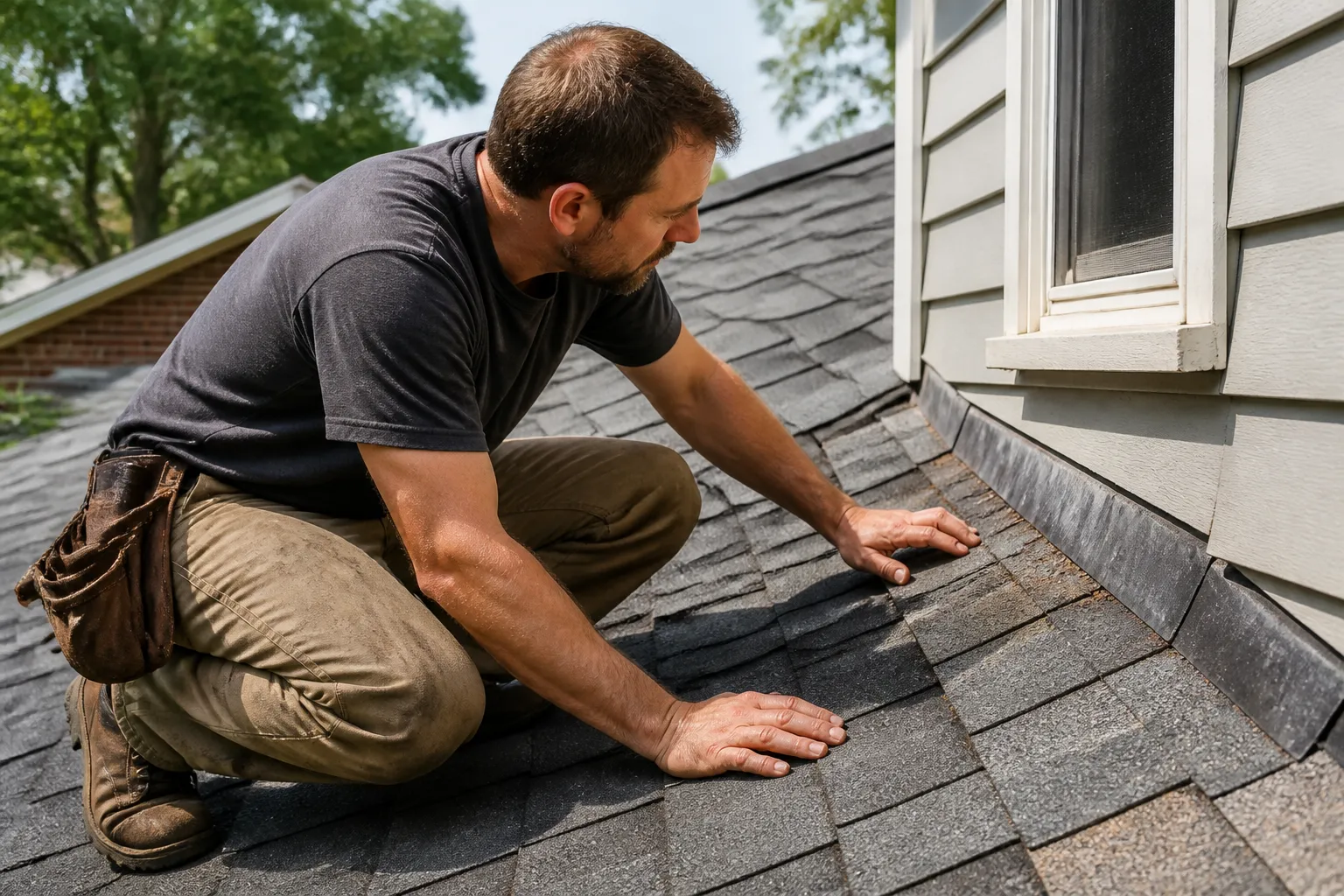
Flashing protects transitions where roof surfaces meet walls, chimneys, valleys, and other changes in plane. Loose, bent, corroded, or poorly integrated flashing can allow water to enter even when the shingles nearby appear intact. Vents, pipes, and other penetrations create additional seams in the roof system. Their boots, collars, or seals can age or separate, and simply covering the visible opening may not correct the water path.
When a leak returns, ask what was included in the earlier repair and what new evidence points to the source now. Recurrence can mean the original entry point was not fully addressed, water is entering at a nearby detail, or more than one area is involved. An assessment should describe the observed condition and explain why the proposed repair fits it.
A clear written repair scope identifies the roof area, affected components, materials or flashing work, and what is excluded. It should distinguish a localized repair from broader work and explain how concealed damage or additional findings would be handled. If only a limited area is included, clarify what signs would prompt another assessment rather than assuming a small repair restores the whole roof.
Replacement may deserve consideration when shingle wear is widespread, leaks recur in separate areas, repairs are accumulating, or roof components are deteriorating across multiple slopes. Aging alone does not decide the answer. The roof’s condition, repair history, remaining serviceable materials, ventilation, and any visible decking concerns all matter.
Ask for the repair option and replacement option to be explained against the same observations. A focused repair may make sense when damage is limited and surrounding materials are serviceable. Where broader deterioration is present, comparing a full replacement scope with continued repair can make the trade-offs clearer. For a homeowner-friendly comparison, see the roof repair versus replacement guide.
Clarksville is in Johnson County, Arkansas. For local coverage information, visit the Clarksville service-area hub. Property owners considering broader work can also review Roof Replacement in Clarksville, AR, alongside the statewide Arkansas roof repair page.
When requesting an estimate, describe the leak timing, rooms or roof areas affected, previous repairs, and visible damage. Include the property address and safe photos if available. These details can help an independent roofing professional understand what should be inspected, without treating a ceiling mark as a confirmed diagnosis.
No. Water can travel along building surfaces before becoming visible indoors, so the stain does not establish the entry point.
The assessment may include the boot, collar, seal, nearby shingles, and the way the penetration is integrated with surrounding roofing. The exact scope depends on the visible condition and leak history.
The original entry path may not have been fully addressed, water may be entering through a nearby detail, or multiple areas may be involved. Ask what was inspected and how the new scope differs from prior work.
Consider comparing both when wear is widespread, leaks occur in separate areas, or repairs keep recurring. Ask what roof conditions support each option and which components each written scope includes.
Share what is happening and what has already been tried so the proposed repair scope can address the specific concern. If a replacement assessment may also be useful, compare the options before deciding on the next step.
What To Expect
Share your ZIP code, the service you are considering, and what you have noticed about the roof.
Discuss the observed condition, repair or replacement options, and proposed scope with the independent roofer, subject to local availability.
Review materials, work details, cleanup, exclusions, and any additional repairs before deciding how to proceed.
A Few Common Questions
Tell us where the property is and what your roof needs.
Roofing Estimate
Share the property ZIP code and the roofing service you need. The form uses the existing inquiry system.