Arkansas Roofing Guidance
Roof Replacement in Bryant, AR
Explore roof replacement in Bryant, AR, including repair-versus-replacement decisions, materials, tear-off, decking, flashing, ventilation, and estimates.
Arkansas Roofing Guidance
Explore roof replacement in Bryant, AR, including repair-versus-replacement decisions, materials, tear-off, decking, flashing, ventilation, and estimates.
Roof replacement is worth considering when the condition of the roof makes repeated repairs difficult to rely on, but a single visible defect does not automatically call for a full tear-off. The decision should follow an assessment of the roof’s overall wear, leak history, damaged areas, and the condition of related components. In Bryant, a clear written scope can help homeowners and business owners understand what is proposed before approving work.
Compare the roof’s observed condition with the work each option would address. A focused repair may remain reasonable for a limited issue; broader wear, recurring leaks, or multiple affected areas may make replacement worth discussing. See the Bryant roofing hub for other local roofing options, or review the Arkansas roof replacement overview.
Start with the scope and pattern of the problems. If a contractor identifies a limited damaged section and the surrounding roof remains serviceable, repair may address the concern without replacing unaffected areas. When leaks recur in different locations, roof materials show widespread deterioration, or earlier repairs have not resolved the underlying issues, ask whether continued patching is still practical.
Request an explanation of the roof areas inspected and the evidence supporting each option. Compare what a repair would correct, what it would leave unchanged, and how replacement would address the broader roof assembly. The answer should be specific to the observed roof, not based on a single symptom alone.
Material selection affects more than appearance. Ask which roofing product is specified and how it fits the roof design and existing structure. Asphalt shingles are a common residential option; metal roofing is another system to compare. Commercial properties may require a system suited to their roof configuration and use. Review the proposed product, underlayment, edge details, flashing, and ventilation as parts of one assembly.
Flashing closes transitions around walls, valleys, penetrations, and other roof details. The estimate should state which flashing is being replaced or reused and how those details are handled. Ventilation should also be considered in relation to the roof system. Ask what is included and why, rather than assuming that changing the roof surface covers every component.
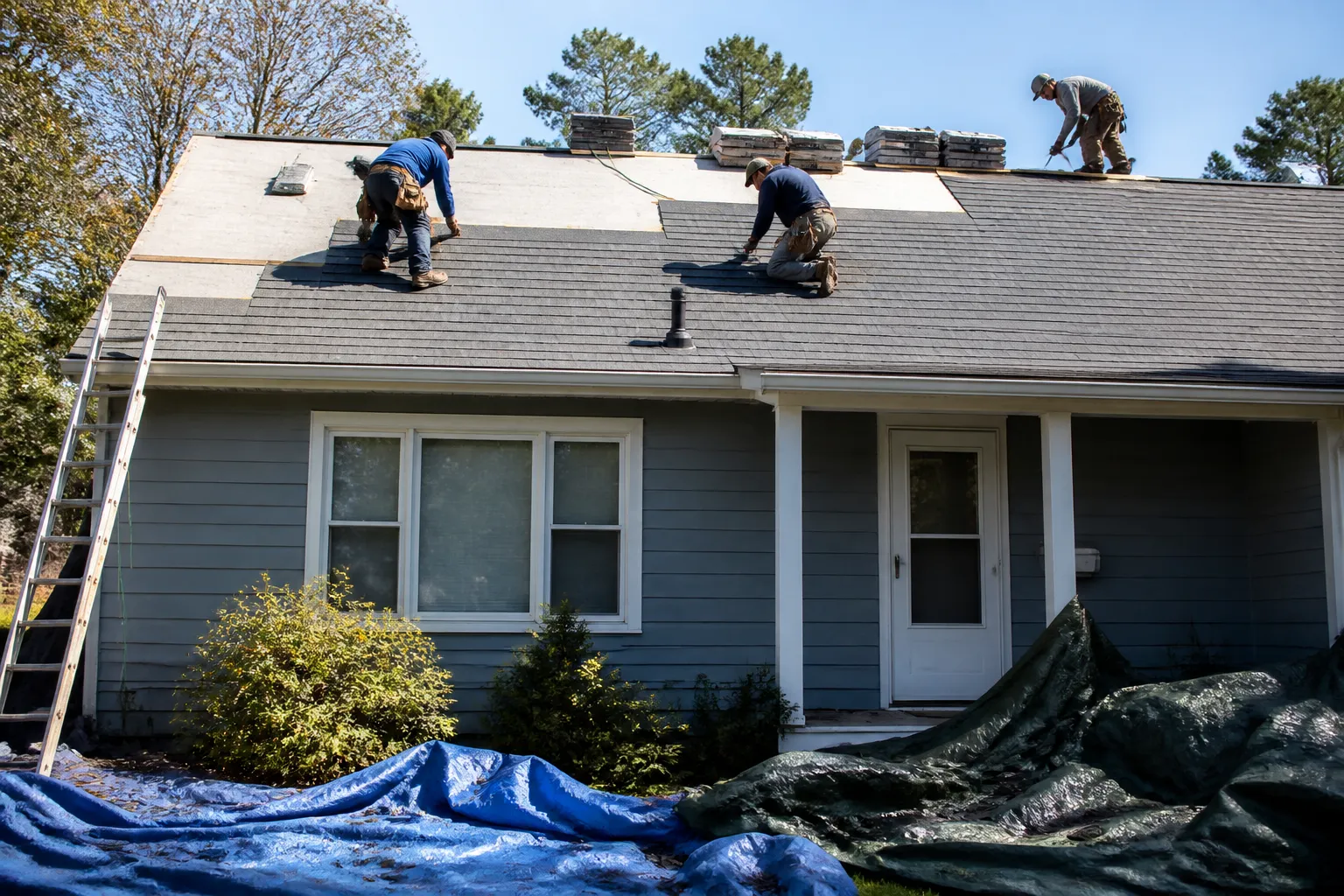
A replacement project generally begins with removal of existing roofing material in the areas described by the scope. Once the old covering is removed, the roof deck can be examined for sections that are soft, damaged, or otherwise unsuitable for the new installation. The extent of concealed decking conditions may not be visible beforehand.
Before approving a proposal, ask how the deck will be checked, how any damaged sections will be documented, and how additional work will be priced and presented. Confirm that extra work will not proceed without your authorization. A written process for documenting and approving changes helps prevent confusion once removal has begun.
Preparation should account for the building and the surrounding property. Ask what needs to be moved or secured, how plants, walkways, vehicles, and outdoor items will be protected, and where materials or debris will be handled. The precise arrangements depend on the property, so the estimate or project discussion should identify relevant access and protection needs.
Clarify how old roofing and packaging will be removed and what cleanup is included. Ask how the work area will be checked for leftover materials after installation. These details are part of the project scope and deserve the same attention as the roofing product itself.
When reviewing estimates, compare equivalent roof areas and project steps. Each proposal should make it possible to understand the materials, removal, decking review, flashing, ventilation, property protection, debris handling, and cleanup. Note which items are included, excluded, or conditional. Ask for written clarification if one estimate is less specific than another.
Keep the original estimate and any written revisions together. Before authorizing the project, make sure the agreed work, exclusions, and process for additional work are clear. The roofing estimate checklist offers more questions for comparing proposals. To discuss roof replacement in Bryant, use the estimate form.
Not by itself. The cause, extent of affected areas, surrounding roof condition, and history of prior repairs all matter. Ask for a comparison of repair and replacement based on the roof assessment.
Some visible conditions may be noted beforehand, but concealed deck areas can become clearer after old materials are removed. Ask how the deck will be inspected and how any additional work will be documented and approved.
Compare the specific products and roof components proposed for the building, including underlayment, flashing, and ventilation details. Ask how each option fits the roof design rather than comparing broad material labels alone.
It should explain how removed roofing and project debris will be handled and what cleanup is included. Ask how the property and work area will be checked when installation is complete.
For repair-specific concerns, visit Roof Repair in Bryant, AR to compare localized work with replacement considerations.
What To Expect
Share your ZIP code, the service you are considering, and what you have noticed about the roof.
Discuss the observed condition, repair or replacement options, and proposed scope with the independent roofer, subject to local availability.
Review materials, work details, cleanup, exclusions, and any additional repairs before deciding how to proceed.
A Few Common Questions
Tell us where the property is and what your roof needs.
Roofing Estimate
Share the property ZIP code and the roofing service you need. The form uses the existing inquiry system.