Arkansas Roofing Guidance
Roof Replacement in Benton, AR
Review roof condition, replacement materials, decking, flashing, ventilation, cleanup, and written estimates for Benton, AR properties.
Arkansas Roofing Guidance
Review roof condition, replacement materials, decking, flashing, ventilation, cleanup, and written estimates for Benton, AR properties.
A roof replacement decision starts with the roof’s condition, not a material sample. Widespread wear, recurring leaks, or damage across multiple areas may make replacement worth comparing with repair. For local context, visit the Benton roofing hub and the Arkansas Roof Replacement page. An assessment should identify what is affected, explain the recommendation, and describe the proposed scope before approval.
Ask for a written estimate that separates removal, new materials, flashing, ventilation, decking work, property protection, and cleanup. If hidden damage is discovered after removal, the process for documenting it and approving additional work should be clear before the project begins.
A limited, clearly identified problem on an otherwise serviceable roof may be addressed with repair. Replacement deserves consideration when wear or damage is broad, leaks keep returning, or separate repairs would leave major concerns unresolved. No single symptom settles the question. The roof’s overall condition, affected components, and scope of a practical repair all matter.
Ask what was observed on the roof and how those findings support the recommendation. If repair remains an option, request its scope and limitations alongside the replacement proposal. A comparison is more useful when both estimates address the same areas and explain what problems may remain after the selected work.
Material selection should fit the roof design and the project scope. Asphalt shingles are a common residential option; metal roofing may be worth reviewing when considering a different roof system. Ask which specific product is proposed, what related components are included, and how the material works with the roof’s slopes, edges, and penetrations. Avoid comparing proposals by a broad label alone.
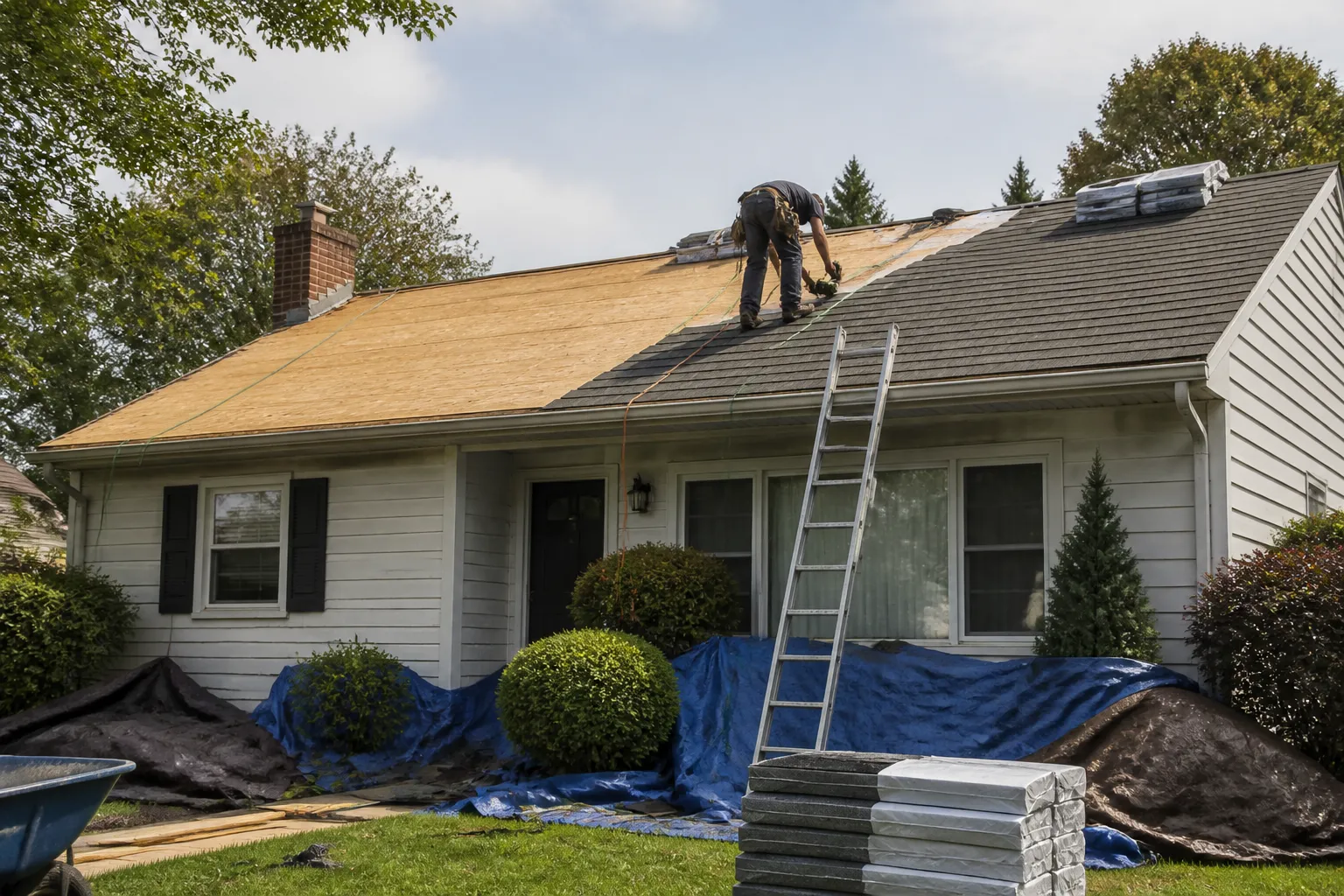
Removing old roofing exposes portions of the roof deck that could not be fully evaluated from above. The written scope should say how the deck will be checked and how damaged or unsuitable sections will be documented. Before approving the project, ask how any added work will be described, what supporting information will be provided, and how written approval will be obtained before the scope changes.
Agreeing on that process in advance helps keep the original estimate distinct from additional work. Do not assume that every replacement includes the same decking allowance or treatment. Compare the terms in writing and ask which conditions are included, excluded, or subject to a separate approval.
A replacement involves more than the visible roof covering. Flashing at valleys, roof edges, walls, and penetrations helps manage transitions where water could enter. Ask which flashing will be replaced, reused, or addressed, and how the estimate identifies those locations. Pipe boots and other roof penetrations should also be considered in the scope.
Ventilation is another part of the roof system to discuss. Ask whether the existing arrangement was reviewed, whether any changes are proposed, and what work is included. A written estimate should make clear which components are part of the project rather than leaving important details implicit.
Before work starts, clarify how nearby areas will be protected from falling materials and debris, how access will be managed, and what preparation is expected from the property owner. Discuss any delicate landscaping, outdoor furniture, or access needs without assuming the same plan fits every property.
Ask what cleanup includes and how the work area will be reviewed when roofing is complete. The estimate should identify debris removal and any stated cleanup steps. Keep the agreed preparation and cleanup details with the written project scope so expectations are clear to everyone involved.
Look beyond the total. Compare roof areas, material product and components, removal, decking terms, flashing, ventilation, protection, debris handling, and cleanup. Note exclusions and how changes are communicated. If one estimate omits an item, ask whether it is excluded or simply not described.
Use the roof repair or replacement guide to frame the comparison. If repair is still under consideration, see Roof Repair in Benton, AR and the Arkansas Roof Repair page. For a local estimate discussion, use the estimate form.
Ask for the roof conditions behind each recommendation, then compare the areas, components, work, exclusions, and remaining limitations in writing. Both scopes should address the same concern as clearly as possible.
It should explain how decking will be checked after removal and how damaged sections will be recorded. Ask how any additional work will be submitted for written approval before it is performed.
They are roof-system details beyond the surface covering. Clarify which flashing locations and ventilation components are being reviewed and what work, if any, is included in the scope.
Ask how the work area and nearby property will be protected, what preparation is expected, how debris will be handled, and what cleanup steps the estimate includes.
To discuss replacement options or request an estimate, use the estimate form or the site’s call controls.
What To Expect
Share your ZIP code, the service you are considering, and what you have noticed about the roof.
Discuss the observed condition, repair or replacement options, and proposed scope with the independent roofer, subject to local availability.
Review materials, work details, cleanup, exclusions, and any additional repairs before deciding how to proceed.
A Few Common Questions
Tell us where the property is and what your roof needs.
Roofing Estimate
Share the property ZIP code and the roofing service you need. The form uses the existing inquiry system.