Arkansas Roofing Guidance
Roof Repair in Benton, AR
Learn how to assess a roof leak, compare repair and replacement options, and review written roof repair estimates in Benton, AR.
Arkansas Roofing Guidance
Learn how to assess a roof leak, compare repair and replacement options, and review written roof repair estimates in Benton, AR.
A repair scope should connect an observed roof condition with the specific work proposed. A ceiling mark or loose shingle alone does not show whether damage is confined to one area or extends farther, so ask what was inspected and what the repair is intended to address.
For a broader local overview, see roofing in Benton. For additional information, read the guide to what to do when a roof leaks after a storm and the Arkansas roof repair page.
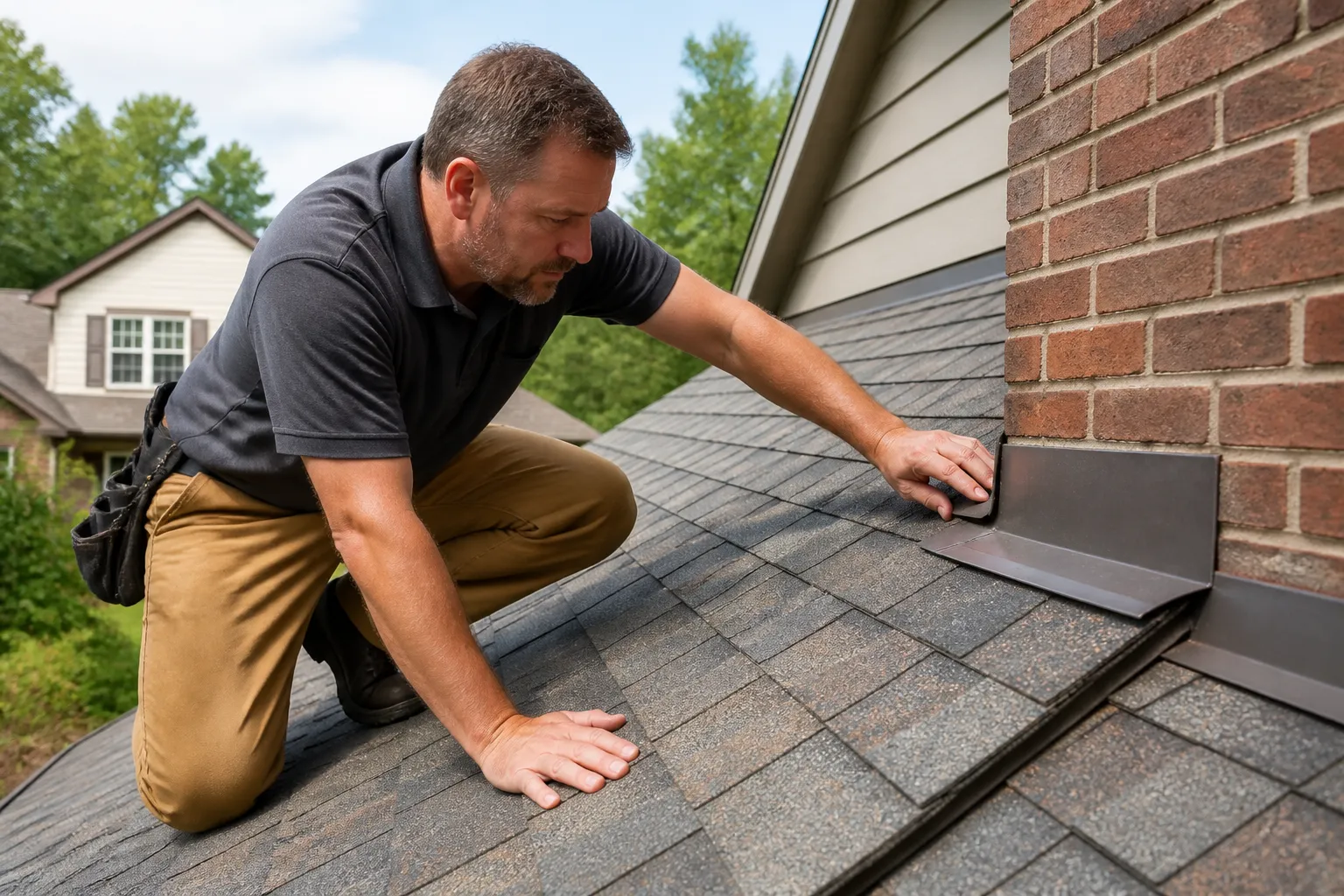
Water can follow decking, framing, or other surfaces and show up indoors some distance from the roof opening. Flashing, roof penetrations including pipe boots, damaged shingles, and valleys are possible entry points, not diagnoses made from a stain or drip alone. The likely source needs to be identified before a repair is selected, so the scope responds to the route water is taking rather than only the visible mark.
When calling All Arkansas Roofing, report the room or roof area involved, when the leak began and whether it changes after rain, and any visible changes such as a growing stain or displaced shingle. Photos taken safely indoors or from ground level can help document those details. Do not climb onto the roof or use a ladder to investigate; the observations guide an assessment but cannot establish the cause on their own.
If water is near a light, outlet, or electrical equipment, keep clear and contact an appropriate qualified professional for the immediate safety concern. Do not open a sagging ceiling or enter an unsafe attic to gather evidence.
Roof repair can address different components, depending on what is damaged and how the roof is assembled.
A previous patch may have addressed a symptom without resolving the source, or a separate roof area may have developed a problem. If water returns in the same place, gather the dates and any safe indoor photos from each occurrence. Ask whether the suspected entry point has changed, whether adjacent flashing or roof details were reviewed, and what the new scope does differently.
Repeated repairs can also reveal that the roof has broader wear or that multiple components need attention. A repair has limitations: it may be appropriate for a localized problem, but it cannot restore materials across a roof that is widely deteriorated. Ask what the repair is expected to address and what conditions would remain afterward.
A focused repair may make sense when the damage is confined and nearby roofing remains serviceable. Replacement may be worth comparing if problems appear across several areas, leaks recur despite prior work, or the roof’s overall condition makes isolated fixes less useful. These are questions to assess, not automatic rules. The recommendation should be tied to observed conditions rather than a single stain or loose shingle.
Before approving work, check that the estimate describes the suspected leak source, affected shingles or roof details, and the exact repair proposed. Ask whether flashing or a pipe boot is included, what is excluded, and how concealed conditions or additional work will be communicated. Keep revised scopes and approvals in writing so the agreed work is clear.
If the assessment points toward broader work, compare with Roof Replacement in Benton, AR.
No. Water can travel before it becomes visible; the stain alone does not locate the entry point.
Only photograph what is safely visible from indoors or ground level. Stay away from unstable ceilings, wet electrical areas, and roof access.
When leaks return or concerns appear in multiple areas, ask for the roof’s broader condition and compare a defined repair scope with replacement. Repeated patches alone do not prove replacement is necessary.
Look for the affected area, suspected source, components and materials involved, specific work, exclusions, cleanup, and how concealed conditions or additional work will be explained and approved.
To discuss a roof concern or request an estimate, use the estimate form or the site’s call controls.
What To Expect
Share your ZIP code, the service you are considering, and what you have noticed about the roof.
Discuss the observed condition, repair or replacement options, and proposed scope with the independent roofer, subject to local availability.
Review materials, work details, cleanup, exclusions, and any additional repairs before deciding how to proceed.
A Few Common Questions
Tell us where the property is and what your roof needs.
Roofing Estimate
Share the property ZIP code and the roofing service you need. The form uses the existing inquiry system.