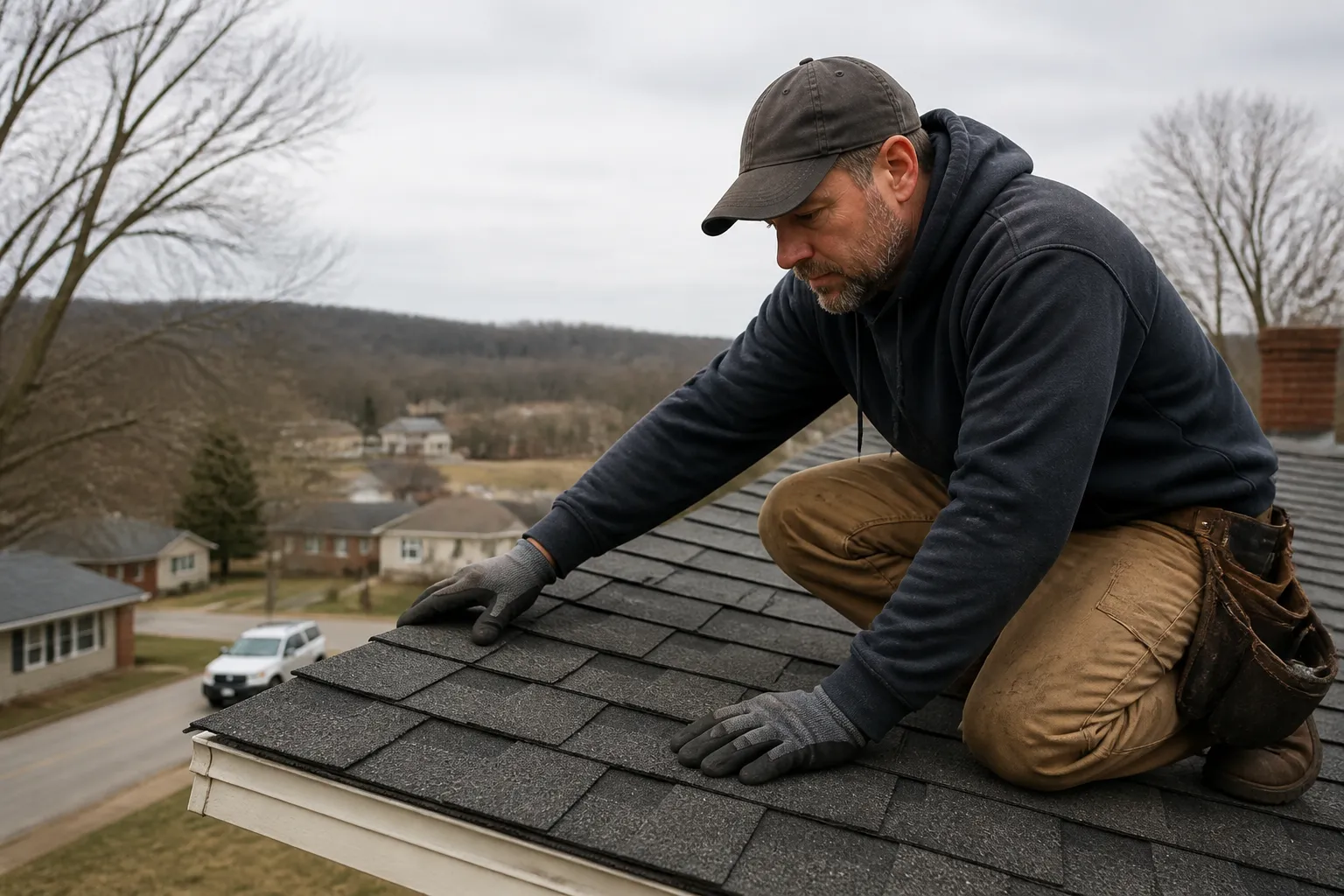
Arkansas Roofing Guidance
Roof Repair in Pocahontas, AR
Learn what to report about a roof leak or visible damage in Pocahontas, Arkansas, how repair scope is assessed, and when to compare replacement.
Arkansas Roofing Guidance
Learn what to report about a roof leak or visible damage in Pocahontas, Arkansas, how repair scope is assessed, and when to compare replacement.
A ceiling stain, damp attic area, or missing-looking shingle can raise questions about where water is entering and how much of the roof is affected. In Pocahontas, Arkansas, the first useful step is to describe what is visible, when it appeared, and whether the same concern has happened before. An indoor mark does not by itself identify the roof opening or show the full extent of concealed moisture.
All Arkansas Roofing connects property owners with independent roofing contractors for assessments and estimates. Share the property address, building type, affected rooms, and any safe observations. The Pocahontas roofing hub includes local roofing options, while this page focuses on repair questions and what to expect from a defined repair scope.
Water can move along roof decking, framing, insulation, or other surfaces before becoming visible on a ceiling or wall. Because of that travel, the stain indoors may not sit directly below the point where water entered. Flashing, roof penetrations, valleys, roof edges, and damaged covering are possible entry areas, but a symptom alone cannot diagnose which detail is responsible.
When calling about a leak, report where moisture appears, when it was first noticed, whether it seems connected to rainfall, and whether it has returned after earlier work. Mention whether the area is actively wet or whether the visible mark is old, and identify any rooms or contents that may be affected. If you can take them safely, indoor and ground-level photos of the stain or visible exterior concern can help communicate changes. Do not climb a ladder or roof to take pictures or investigate.
Identifying the source matters because repairing only the nearest visible roof feature, or covering the interior stain, may leave the actual water path unresolved. An assessment should consider the reported interior location and the relevant roof area before deciding what material or transition needs attention. If a leak recurs, ask what was observed and how the proposed work addresses the suspected source rather than assuming the prior repair or the visible symptom tells the whole story.
A repair may be suitable when an assessment finds a limited damaged area and the surrounding roof remains serviceable. The scope should state which section will be worked on, what covering or related components are included, and where the repair stops. It should also identify related concerns that were observed but are not included, so you can understand what the work is intended to address.
Localized damage can involve more than the visible surface. Roof coverings, underlayment, flashing, edges, and nearby transitions work together to shed water. Ask how the proposed repair accounts for adjacent materials and whether any concealed conditions could change the scope. If conditions cannot be confirmed until work begins, ask how additional findings will be documented and presented for review before work expands.
For interior safety, avoid touching wet electrical fixtures or entering areas with sagging ceiling materials. Share those concerns when requesting help. A person assessing the roof can determine what access is safe and which portions can be inspected.
A repeated leak deserves another look at the source, prior repair area, nearby roof details, and possible moisture beyond the visible mark. Recurrence does not automatically mean a roof needs replacement; it does mean the new assessment should explain what differs from the prior scope and whether surrounding materials remain in serviceable condition.
Replacement may be worth comparing when wear or damage spans multiple areas, concerns keep returning, or a repair would address only a small part of a broader condition. Ask the contractor to describe observed roof conditions and explain why repair, replacement, or both options are being considered. Roof age or one ceiling stain alone should not determine the recommendation. Review the roof repair versus replacement guide for questions that can help frame that conversation.
Written proposals are easier to evaluate when they define the same work area and intended result. Look for the affected roof section, materials and components included, access or protection needs, disposal and cleanup, exclusions, and how concealed conditions will be handled. For a leak repair, the description should make clear how the suspected source will be addressed, not only where a patch or material replacement is planned.
Ask whether the estimate includes related flashing or transition work, and whether interior repairs are part of the scope or separate. If two proposals differ, compare their descriptions and assumptions instead of treating the total as the only meaningful detail. For a broader checklist, see what a roofing estimate should include. Availability and the specific work offered depend on the property and independent contractor.
Water can travel across decking, framing, insulation, or other surfaces before it becomes visible indoors. The mark may not align with the entry point, so the roof and possible water path need assessment.
Give the address, where moisture appears, when it began, whether it seems related to rainfall, whether it has happened before, and any rooms affected. Safe indoor or ground-level photos can help; do not climb to take them.
Possibly. The cause, repair history, surrounding roof condition, and extent of affected materials matter. Ask for the observed findings and how the proposed scope addresses the source.
Consider comparing options when damage is widespread, leaks return, or a localized repair may leave broader wear unresolved. Ask for the reasoning and work boundaries for each option.
For a Pocahontas property, share clear observations and ask for a written scope that identifies the roof area and components to be addressed. If replacement is also being considered, compare it with the local roof replacement page for Pocahontas and the statewide Arkansas roof repair service.
What To Expect
Share your ZIP code, the service you are considering, and what you have noticed about the roof.
Discuss the observed condition, repair or replacement options, and proposed scope with the independent roofer, subject to local availability.
Review materials, work details, cleanup, exclusions, and any additional repairs before deciding how to proceed.
A Few Common Questions
Tell us where the property is and what your roof needs.
Roofing Estimate
Share the property ZIP code and the roofing service you need. The form uses the existing inquiry system.