Arkansas Roofing Guidance
Roof Repair in North Little Rock, AR
Explore roof repair in North Little Rock, AR, including leak diagnosis, shingles, flashing, roof penetrations, recurring water intrusion, and repair scope.
Arkansas Roofing Guidance
Explore roof repair in North Little Rock, AR, including leak diagnosis, shingles, flashing, roof penetrations, recurring water intrusion, and repair scope.
Roof repair in North Little Rock can involve a localized leak, damaged shingles, or another roof concern. Describe the affected rooms or roof area and any earlier repair attempts so an assessment can focus on the reported issue.
North Little Rock is its own Arkansas municipality, so the property's actual address matters when arranging project questions or checking local requirements. For the roof itself, diagnosis should look beyond the stain to the nearby roof covering, transitions, flashing, drainage, and penetrations that could create an entry path.
Water may enter at one point, travel along framing or roof layers, and appear as a ceiling stain somewhere else. Possible entry points include flashing, roof penetrations, damaged or displaced shingles, and valleys. These are areas to inspect, not diagnoses that can be made from an indoor symptom alone.
When calling, describe where water appears, when it happens, and any visible changes, such as a new or growing stain, dripping, or damage you can see from the ground. Safe indoor or ground-level photos can help explain the concern; do not climb onto the roof. Identifying the likely source and how far the damage extends matters before choosing a repair, because the visible stain may not show the roof area or materials that need attention.
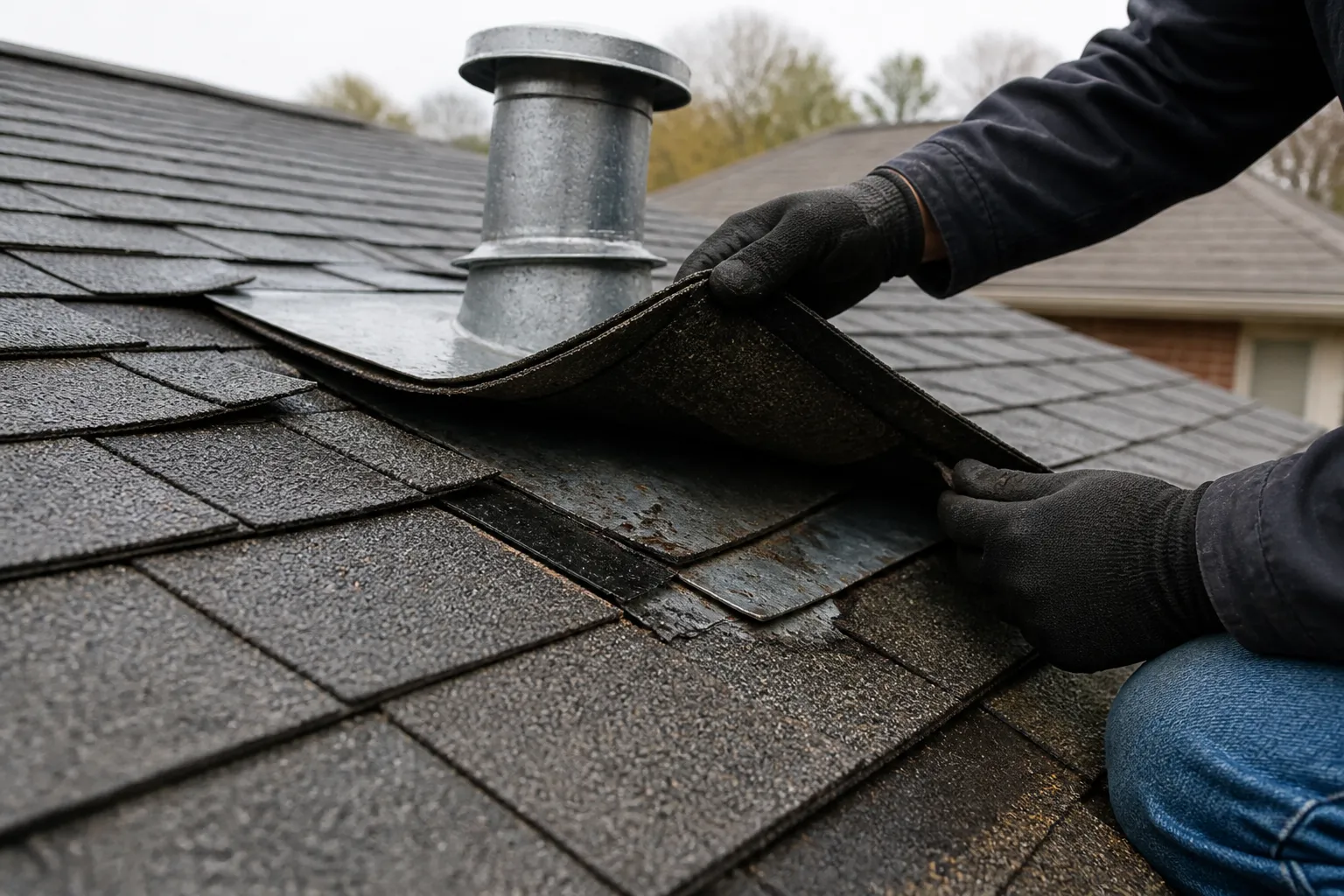
Localized repair questions often involve more than the surface material. Missing, cracked, lifted, or displaced shingles can expose adjoining layers. Flashing at a wall, chimney, valley, or roof edge must work with the surrounding roofing rather than simply cover a gap. Pipe boots and other seals around roof penetrations can loosen or deteriorate, while vents, exhausts, and mounted equipment create transitions that need to remain properly integrated with the roof assembly.
These are inspection points, not a diagnosis by themselves. A clear explanation should connect the observed condition to the proposed repair.
A leak that returns after a repair calls for a fresh look at the full path water may be taking. The initial work could have addressed one visible defect while a nearby flashing joint, penetration, seam, or separate roof area remains involved. The moisture may also appear in a different room because it follows framing or changes direction before becoming visible.
Keep notes on dates, weather conditions, affected locations, and prior work. If the pattern changes, share that information. Ask what was checked around the previous repair and whether the assessment found another possible entry point. Repeating a patch without understanding why water continues to appear can make it harder to distinguish a recurring defect from a new one.
A written scope should identify the roof area being addressed, the condition observed, the materials and details included, and any exclusions. It should explain whether the work includes related flashing, underlayment, shingles, penetration seals, or adjacent sections where needed. If matching existing materials is uncertain, ask how that limitation will be handled and described. The estimate should also state how concealed conditions will be communicated if they are found after work begins.
Compare proposals by the work described, not just by a short label such as “leak repair.” Clarify what is included, what remains untouched, how the source was identified, and what observations could change the scope. This makes it easier to understand whether the proposed work addresses the likely water path or only the interior symptom.
A focused repair may be reasonable when the problem is limited and surrounding materials remain serviceable. Replacement deserves comparison when wear or damage appears across multiple sections, leaks recur in different places, or a history of repairs has not resolved broader roof concerns. A careful assessment should distinguish localized defects from signs that the roof system as a whole may need attention.
Ask for the observed conditions that support each option. If replacement is proposed, request a written scope describing removal, the roof deck review, materials, flashing, ventilation where relevant, property protection, and cleanup. If repair is proposed, ask which areas were reviewed and what conditions remain outside that scope. For a broader decision framework, read the roof repair versus replacement guide.
For local roofing information, visit the North Little Rock service-area hub. Statewide information about roof repair in Arkansas can help with general assessment questions, while the related North Little Rock roof replacement page covers broader project planning.
For a property-specific estimate, describe the location, the visible symptoms, how long they have occurred, and any prior repair work. Confirm any permit or project requirements with the office responsible for the property and the exact work scope rather than assuming neighboring jurisdictions follow the same process.
Not necessarily. Water can travel across roof layers or framing before appearing inside. The stain's timing and location are useful clues, but the roof and nearby transitions need assessment to identify a likely entry path.
Note when it occurs, which rooms or roof sections seem affected, whether it changes after rain, and what prior repairs were made. Safe photos of interior marks or visible exterior damage can add context.
That depends on the extent of damage and the condition of the surrounding roof. An assessment should identify the affected area, related flashing or penetrations, and whether similar wear appears elsewhere.
Compare both when leaks recur, deterioration affects several roof sections, or prior repairs have not resolved broader concerns. Ask for the observed conditions and written scope behind each recommendation.
Use All Arkansas Roofing's call-first controls or estimate form to describe the North Little Rock property and the roof concern. Clear symptoms and previous repair details can help make the initial conversation more specific.
What To Expect
Share your ZIP code, the service you are considering, and what you have noticed about the roof.
Discuss the observed condition, repair or replacement options, and proposed scope with the independent roofer, subject to local availability.
Review materials, work details, cleanup, exclusions, and any additional repairs before deciding how to proceed.
A Few Common Questions
Tell us where the property is and what your roof needs.
Roofing Estimate
Share the property ZIP code and the roofing service you need. The form uses the existing inquiry system.