Arkansas Roofing Guidance
Roof Repair in Bella Vista, AR
Explore roof leak diagnosis, shingle and flashing repairs, recurring water intrusion, and repair-versus-replacement considerations for Bella Vista, Arkansas.
Arkansas Roofing Guidance
Explore roof leak diagnosis, shingle and flashing repairs, recurring water intrusion, and repair-versus-replacement considerations for Bella Vista, Arkansas.
A ceiling mark or drip can identify where moisture became visible, but not necessarily where it entered. For a Bella Vista repair request, note the affected room and whether the issue has returned after earlier work.
Water may travel along framing or roof layers before a ceiling stain appears, so the stain is a clue rather than a map of the opening. Flashing joints, roof penetrations, damaged shingles, and valleys are possible entry points to inspect, not diagnoses that can be made from an indoor symptom alone. The assessment should trace the likely water path and check nearby roof details before a repair is selected.
When calling All Arkansas Roofing, report the location, when moisture appears and whether that timing varies with weather, plus any visible changes such as a spreading stain or newly displaced shingle. Mention prior repair dates and areas if the leak has recurred. Photos taken safely from indoors or from ground level can document changes; do not climb onto the roof to investigate.
Cracked, curled, lifted, or missing shingles may leave a localized area exposed. A repair assessment should look at the damaged shingles and surrounding courses, not just the most visible spot. If shingles are brittle or wear is widespread, matching materials and tying a repair into the existing roof may be more difficult. Ask what condition was observed and how the proposed work will protect the surrounding area.
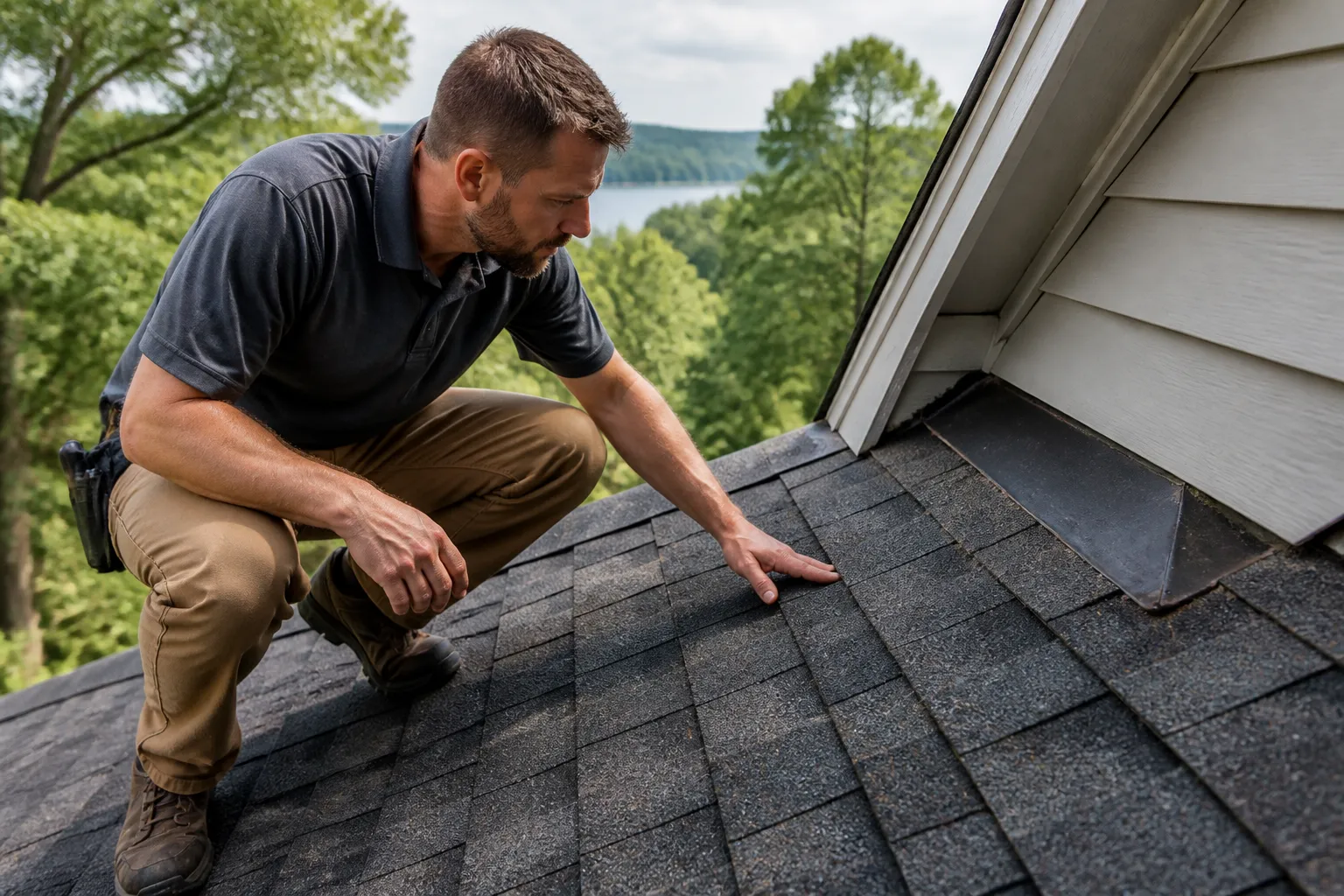
Flashing manages transitions where roof surfaces meet walls, chimneys, or other features. Loose, corroded, bent, or poorly seated flashing can permit water intrusion even when nearby shingles appear intact. Valleys channel runoff where roof slopes join. On properties where leaves or small branches collect, debris may obscure the area or affect drainage. Trees and debris are property-specific factors, so observations should be tied to the actual roof rather than assumed for every home.
A focused repair may be appropriate when the cause is localized and the neighboring roof materials remain serviceable. The written scope should identify the area, the component being repaired, and how the proposed work addresses the entry point. If the issue involves a vent, flashing transition, or valley, ask whether the related detail and adjacent materials are included rather than only the visible stain or shingle.
Replacement deserves consideration when damage or deterioration appears across several roof areas, leaks recur despite correctly scoped repairs, or the roof covering is broadly worn. One leak does not automatically mean the entire roof needs replacement. Likewise, a small repair should not be treated as a lasting solution without considering the condition around it. Ask for the observations supporting each option and compare the scopes in writing. The roof repair versus replacement guide offers a practical framework for that discussion.
Keep away from sagging ceilings, wet electrical fixtures, and unsafe roof access. The inspection should determine the roof condition; climbing to investigate can create additional risk. If the location has sloped access, nearby trees, or limited places for equipment, mention those property details when discussing the assessment or repair plan.
When reviewing written proposals, check that each describes the same affected area and component. Look for the repair method, the materials included, related flashing or penetration work, and any exclusions. Ask how concealed conditions would be handled if they are discovered during the work and whether changes to the scope will be documented before additional work proceeds. The roofing estimate checklist can help organize questions. Compare the reasoning and defined work, not just a short label such as “leak repair.”
No. Water can travel before it reaches the ceiling, so an assessment needs to follow the likely path and inspect roof details.
Review the earlier repair area and nearby roof details. Share the prior work and when moisture returned so the new assessment can consider whether the source or scope differs.
Not necessarily. A localized repair may remain practical if surrounding materials are serviceable. The extent of damage and condition across the roof help determine whether broader work deserves consideration.
Ask the proposal to name the affected area, describe the repair method and included materials, and identify related details or exclusions. If there are recurring leaks, confirm how the scope addresses the reported history.
For a local overview, visit the Bella Vista roofing hub. For statewide repair information, see Roof Repair in Arkansas. If the roof’s overall condition points beyond a targeted repair, compare the Bella Vista roof replacement page and its assessment considerations.
What To Expect
Share your ZIP code, the service you are considering, and what you have noticed about the roof.
Discuss the observed condition, repair or replacement options, and proposed scope with the independent roofer, subject to local availability.
Review materials, work details, cleanup, exclusions, and any additional repairs before deciding how to proceed.
A Few Common Questions
Tell us where the property is and what your roof needs.
Roofing Estimate
Share the property ZIP code and the roofing service you need. The form uses the existing inquiry system.