Arkansas Roofing Guidance
Roof Replacement in Mountain Home, AR
Review roof replacement in Mountain Home, AR, including repair versus replacement, material choices, decking, flashing, ventilation, written estimates, and approval of added work.
Arkansas Roofing Guidance
Review roof replacement in Mountain Home, AR, including repair versus replacement, material choices, decking, flashing, ventilation, written estimates, and approval of added work.
For a Mountain Home replacement proposal, compare how each option addresses removal, decking, flashing, ventilation, installation, and cleanup before weighing material choices.
A written scope makes it easier to see what is included, what is excluded, and how unexpected conditions will be handled. Ask questions before approving the work, and request written documentation and approval steps if removal reveals additional repairs.
The right option depends on the roof’s observed condition, how much area is affected, and whether prior repairs have resolved earlier problems. A localized issue with serviceable surrounding materials may support a targeted repair. Broad wear, repeated leaks, or damage across multiple sections may make replacement worth considering. Roof age can provide context, but it does not determine the answer by itself.
Ask what conditions were observed and which areas each option would address. A useful comparison explains the limits of a repair as well as the scope of replacement. If a proposal recommends a full project, request the reasons in writing and ask whether a smaller repair remains practical. See the Mountain Home roof repair page for related repair considerations.
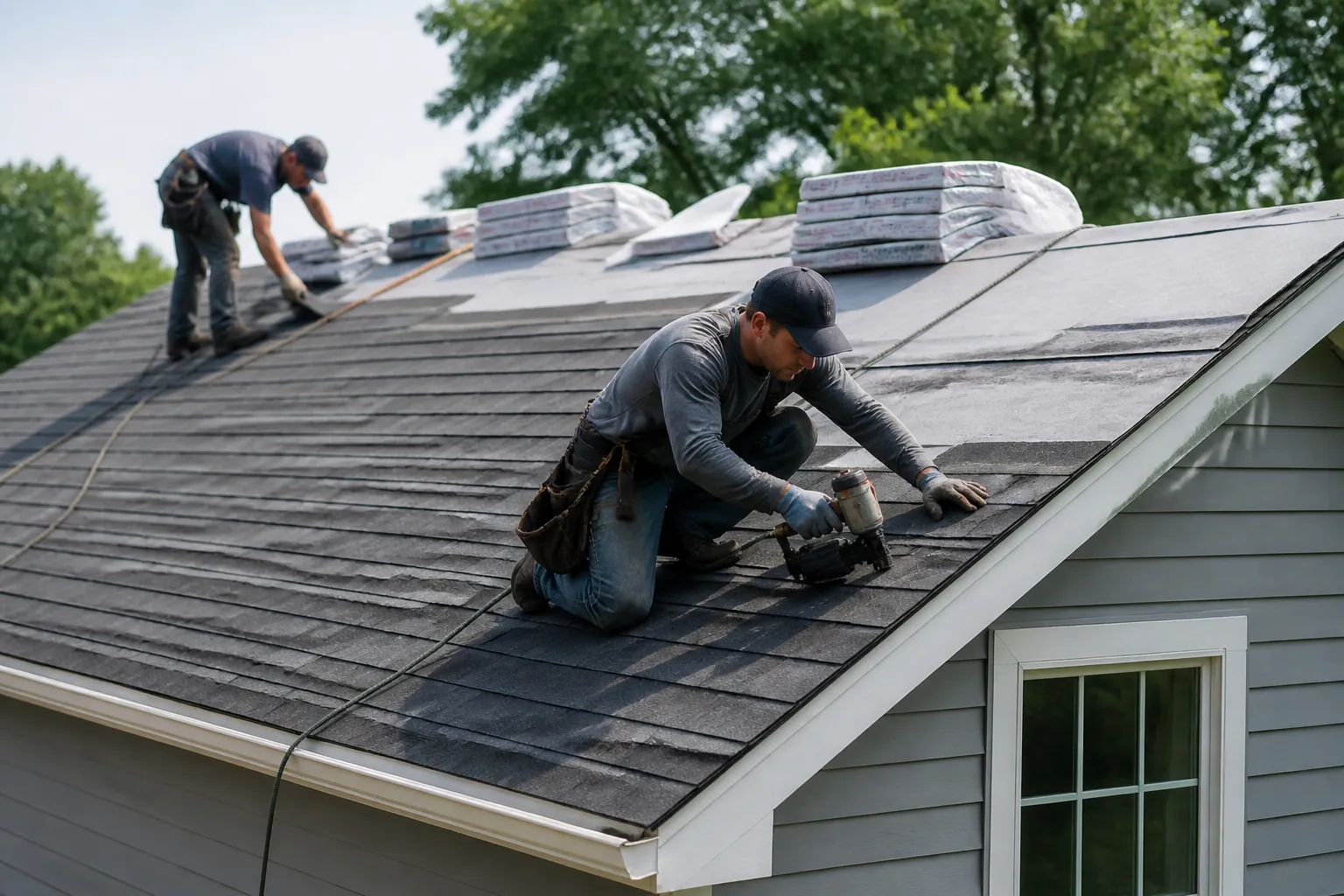
Review the sequence of work, not only the finished material. A replacement estimate should explain which roof sections are included, how existing materials will be removed, and how the exposed decking will be inspected. It should also describe underlayment, flashing, ventilation components, installation details, disposal, property protection, and cleanup.
Ask which details are included in the price and which are conditional on what is found after removal. If the proposal is unclear about an item, request a written explanation before accepting it.
The roof deck supports the roofing system, so its condition may not be fully visible until old materials come off. Ask how the deck will be checked, how affected sections will be documented, and what notification and approval will happen before additional work proceeds. A clear process helps avoid confusion when concealed conditions change the original scope.
Flashing manages transitions around roof edges, walls, valleys, and penetrations. The proposal should identify which flashing will be replaced, reused, or otherwise addressed. Ventilation also deserves a direct conversation: ask which intake or exhaust components are included, how they relate to the existing roof, and whether the estimate covers any changes. Avoid relying on a broad phrase like “complete installation” when specific system details matter.
Material selection should match the building, roof shape, and project requirements. Asphalt shingles and metal roofing have different profiles, attachment methods, and detailing needs. Compare the exact products or system components named in each estimate, along with color or finish choices, edges, penetrations, and transitions. Ask how the selected system will be installed and what preparation it requires.
Do not compare proposals by material label alone. Look at whether each covers the same roof areas, removal, underlayment, flashing, ventilation, decking review, and cleanup. For broader replacement guidance, read Roof Replacement in Arkansas and the Mountain Home roofing hub.
Before signing, confirm the estimate lists the scope, materials, removal and disposal, decking review, flashing, ventilation, cleanup, exclusions, payment terms, and the process for changes. Ask how the work area and nearby property will be protected, where debris will be collected, and what cleanup is included.
If unexpected conditions appear after removal, request photos or another clear description, the proposed additional work, and any change to the schedule or price in writing. Review the change and give written approval before the added work begins. Keep copies of the original estimate, revisions, and approvals. This process makes it easier to understand what changed and why.
Ask for the conditions observed, the extent of affected areas, and a comparison of what repair and replacement would address. Recurring problems or widespread wear may warrant comparing both scopes.
The estimate should explain how decking will be inspected once materials are removed and how damaged sections will be recorded. Ask how added work and its cost will be presented and approved before proceeding.
Compare the specific product or system, roof-area coverage, installation and flashing details, ventilation, removal, decking review, and cleanup. Ask how the material fits the building and roof design.
Request a written description of the condition, supporting photos if available, the proposed extra work, and any estimate change. Review and approve the change in writing before additional work begins.
Take time to compare complete written scopes rather than only the material name or total. A clear proposal describes the work from removal through cleanup and sets out how concealed conditions will be documented. For questions about the process or local options, start with the Mountain Home service-area guide and request an estimate using the form below.
What To Expect
Share your ZIP code, the service you are considering, and what you have noticed about the roof.
Discuss the observed condition, repair or replacement options, and proposed scope with the independent roofer, subject to local availability.
Review materials, work details, cleanup, exclusions, and any additional repairs before deciding how to proceed.
A Few Common Questions
Tell us where the property is and what your roof needs.
Roofing Estimate
Share the property ZIP code and the roofing service you need. The form uses the existing inquiry system.