Arkansas Roofing Guidance
Roof Replacement in Maumelle, AR
Understand roof condition, material options, tear-off, decking, ventilation, property protection, cleanup, and how to compare itemized replacement proposals.
Arkansas Roofing Guidance
Understand roof condition, material options, tear-off, decking, ventilation, property protection, cleanup, and how to compare itemized replacement proposals.
Replacement is worth evaluating when shingles are failing across multiple areas, leaks keep returning, or the roof no longer responds well to localized repairs. Those signs call for a condition-based review, not an automatic decision: some visible defects remain limited, while other roofs have wear or hidden damage that makes broader work more practical.
For a Maumelle property, a useful proposal should explain what was observed and how removal, deck review, ventilation details, material selection, property protection, and cleanup will be handled.
A roof assessment should look across slopes and key details, including valleys, flashing, edges, penetrations, and areas with previous repairs. Ask whether shingles are brittle, curling, losing granules, or separating, and whether concerns are isolated or widespread. Interior stains and accessible attic observations may help explain moisture history, but water can travel before it appears indoors.
Replacement may deserve consideration when recurring leaks occur in separate areas, shingles are deteriorating broadly, or prior repairs have not resolved continuing water intrusion. A single leak or a roof’s age alone does not prove that full replacement is necessary. Ask for the findings that support the recommendation and, where practical, a comparison with any targeted repair option.
Material selection should account for roof design, slope, structure, appearance, and the installation details required by the chosen system. Asphalt shingles are common on homes; metal roofing is another option with different profiles and installation considerations. Compare the actual products and system components proposed rather than relying only on broad material names.
Before changing roofing material or color, check applicable property-association requirements and confirm whether any local review applies. Do not assume the same restrictions apply to every property. The proposal should also identify underlayment, flashing, ventilation components, and other details that are part of the selected roof assembly.
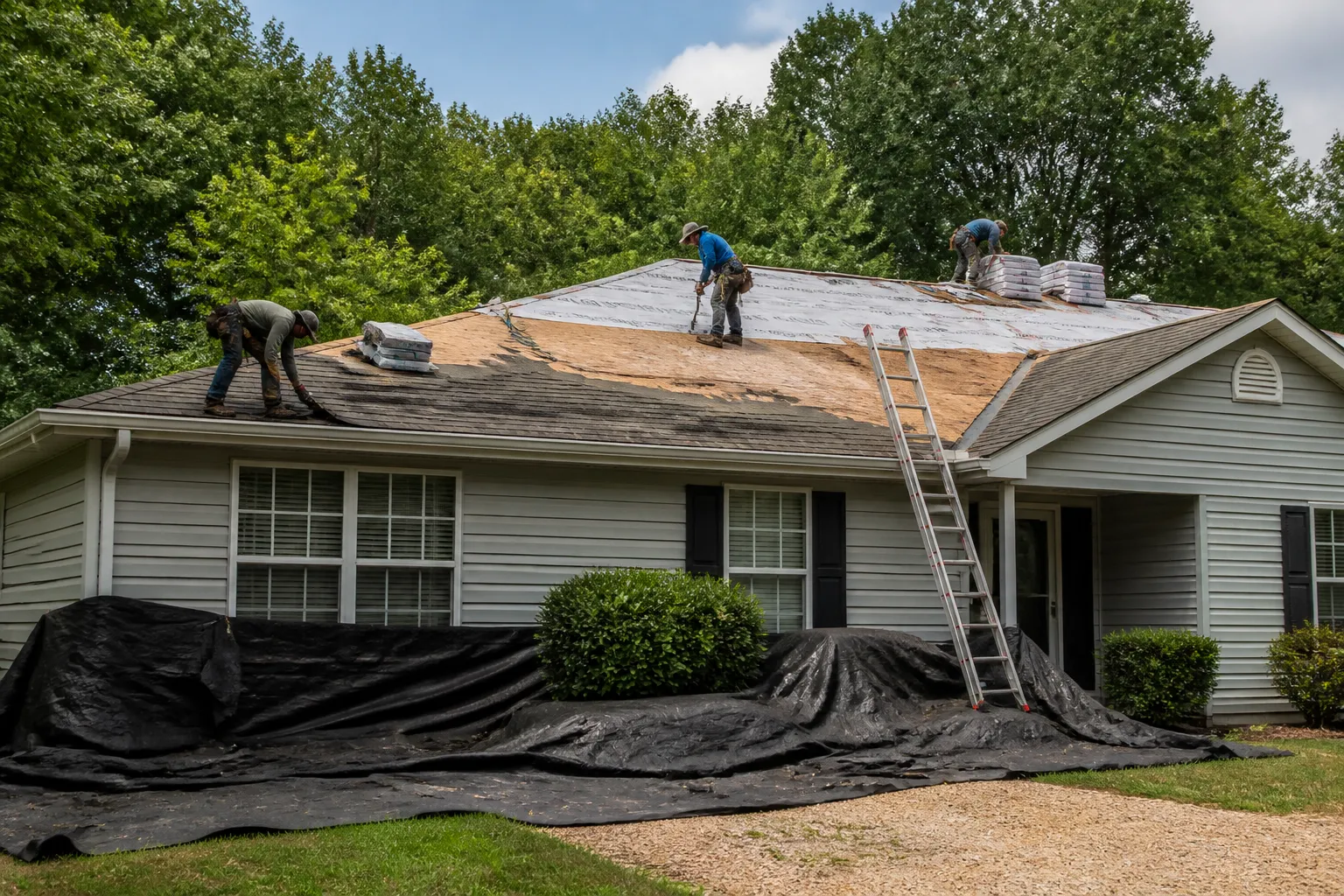
Removing old roofing exposes the deck for inspection. A replacement scope should explain how existing layers will be removed and disposed of, how the deck will be checked, and how damaged or unsuitable sections will be addressed if uncovered. Ask how any added work and related changes will be documented and approved before proceeding.
Deck condition matters because new roofing needs a sound base. The written scope can clarify whether deck replacement is included, how additional sections are handled, and what materials will be used. This avoids treating hidden conditions as though they can be fully known before tear-off.
Roof replacement is a chance to review ventilation as part of the whole roof system. Ask what intake and exhaust components are present, whether they will be retained or changed, and what findings would support a ventilation adjustment. A proposal should distinguish included work from optional or condition-dependent items.
Project planning should also cover how landscaping, walkways, outdoor fixtures, and nearby surfaces will be protected, where materials will be staged, and how debris will be collected. Trees close to the house or restricted delivery access can affect planning at some properties, but these are not conditions every Maumelle home shares. Describe any narrow access, steep driveway, or sensitive planting when discussing the site so the plan can reflect the actual lot. Ask what cleanup and final property review are included.
Request proposals that describe the same roof areas and identify the roofing product, underlayment, tear-off, disposal, flashing, ventilation, deck work assumptions, protection, and cleanup. Check whether permits or other approvals are included, excluded, or still to be confirmed. Ask how concealed conditions, substitutions, and scope changes will be written down.
The City of Maumelle’s Planning and Permits guidance lists roofs among common permit items for properties within its authority. Requirements depend on the actual jurisdiction and project scope. Confirm current requirements with the appropriate authority for the specific address rather than assuming a Maumelle postal address establishes City jurisdiction.
Read about roof replacement across Arkansas and the local Maumelle roofing hub. If the inspection finds that only a defined area needs work, compare roof repair in Maumelle. The roofing estimate checklist can help organize questions when reviewing written scopes.
No. Age is one consideration, but the condition and distribution of wear, repair history, and signs of moisture matter too. Ask for the observed evidence and whether a targeted repair remains practical.
The proposal should state how deck condition will be assessed and how additional work will be documented if unsuitable sections are uncovered. Clarify how scope changes are presented before the work proceeds.
It is useful to review the existing intake and exhaust arrangement when planning a new roof. Ask what components are present, what work is included, and what findings would support a change.
No. Confirm the property’s jurisdiction and the requirements for the specific project. The City’s published guidance lists roofs among common permit items for properties under its authority, but nearby mailing addresses may be outside City limits.
What To Expect
Share your ZIP code, the service you are considering, and what you have noticed about the roof.
Discuss the observed condition, repair or replacement options, and proposed scope with the independent roofer, subject to local availability.
Review materials, work details, cleanup, exclusions, and any additional repairs before deciding how to proceed.
A Few Common Questions
Tell us where the property is and what your roof needs.
Roofing Estimate
Share the property ZIP code and the roofing service you need. The form uses the existing inquiry system.