Arkansas Roofing Guidance
Roof Repair in Searcy, AR
Roof repair guidance for leaks, damaged shingles, flashing, pipe boots, and recurring patches, with practical questions to help compare the proposed work.
Arkansas Roofing Guidance
Roof repair guidance for leaks, damaged shingles, flashing, pipe boots, and recurring patches, with practical questions to help compare the proposed work.
A ceiling stain or damaged shingle is a reason to investigate, not an automatic reason to replace the entire roof. For roof repair in Searcy, look for an assessment that explains the cause, the affected materials, and the recommended fix.
Describe when the concern appeared, where it shows indoors, and whether the same area has needed attention before. For a broader overview of roofing in Searcy, compare repair and replacement considerations before deciding what work to approve.
Water can travel along framing, decking, or other layers before a ceiling stain appears, so the visible mark may be some distance from the roof opening. Flashing, roof penetrations, damaged shingles, and valleys are possible entry points to examine, not diagnoses that can be made from a symptom alone.
When calling All Arkansas Roofing, report where the water or stain appears, when you noticed it and whether it changes during or after rain, and any visible changes. Share photos from indoors or ground level only if it is safe; do not climb onto the roof. Identifying the likely source before choosing a repair helps connect the proposed work to the affected materials instead of treating the stain alone.
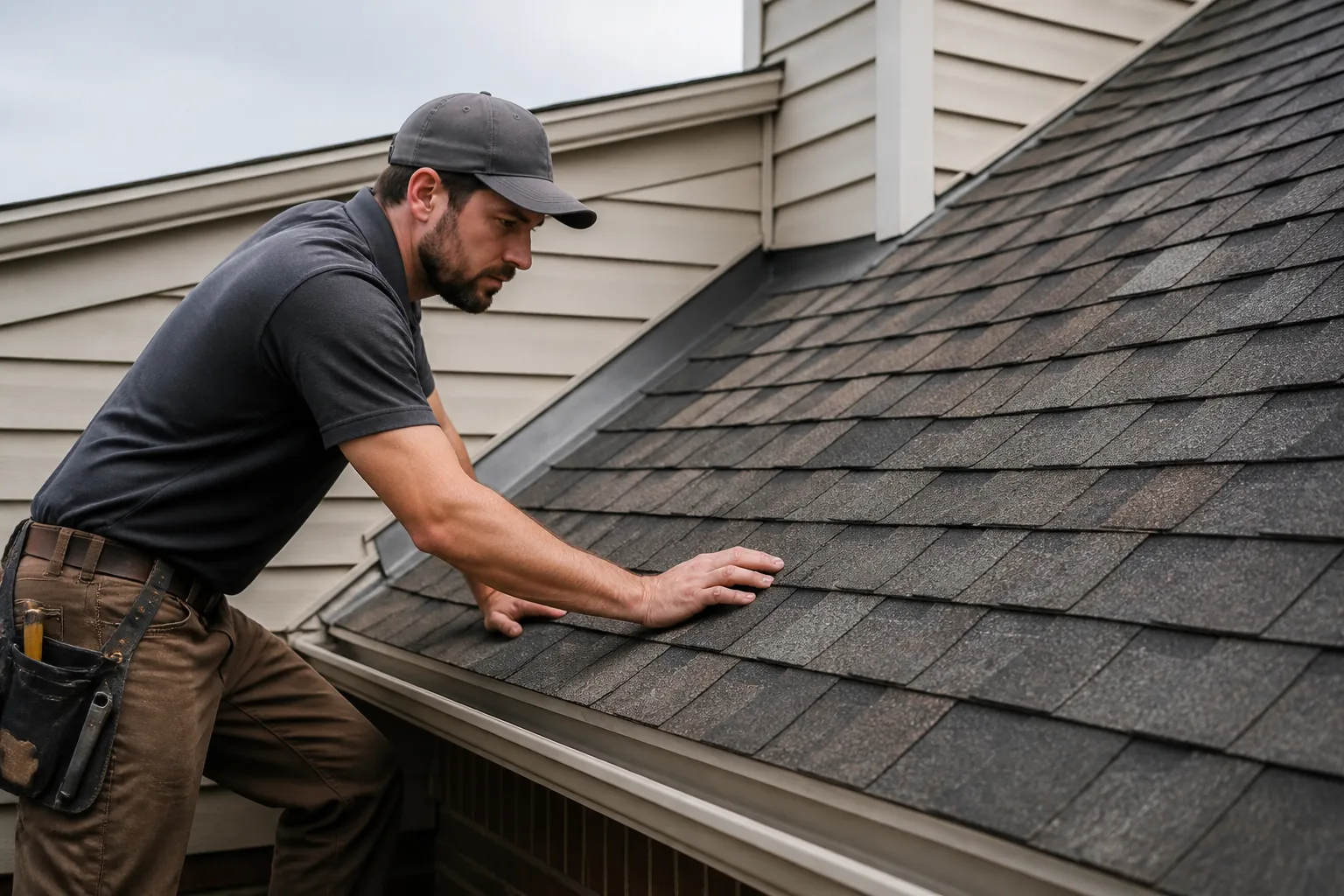
Missing, cracked, lifted, or displaced shingles can leave an area exposed. Damage may be limited, or it may occur alongside worn material nearby. A useful repair proposal identifies the affected roof area, the materials to be replaced or reset, and any related work needed for the repair to make sense.
Flashing directs water around roof intersections and openings. Ask whether the assessment included the relevant wall, chimney, valley, or roof-edge transitions and what condition was found. A pipe boot seals around a plumbing vent; splits, separation, or deterioration there may be relevant when a leak appears nearby. A written scope should say which flashing or penetration details are included instead of relying on a general phrase such as “seal leak.”
When a leak returns after earlier work, ask what changed and whether the previous repair addressed the source or only a visible symptom. Several patches in different areas can make it harder to understand the roof’s overall condition. The assessment should distinguish known findings from conditions that still need investigation.
Repair may be appropriate when damage is localized and surrounding materials remain in usable condition. Replacement may be worth comparing when deterioration is widespread, several areas are failing, or repeated repairs no longer address the roof’s condition. Age alone does not determine the answer. Ask what evidence supports each option, what a repair would leave in place, and what limitations or exclusions apply. The repair-versus-replacement guide offers questions for comparing the choices, while Roof Replacement in Searcy covers the larger project scope.
Keep away from sagging ceilings, wet electrical fixtures, and fallen power lines. Do not enter an unsafe attic or approach an area that seems unstable. Keep dated notes of what you observed and when the condition changed, along with estimates, invoices, and written approvals.
If you are contacting an insurer, review your policy and ask the insurer about documentation and applicable deadlines. Do not assume coverage or a deadline based only on a roofing estimate.
Compare the described work rather than relying on a short label or total alone. For statewide service information, see Roof Repair in Arkansas. For a broader local overview, return to the Searcy roofing hub. When ready to discuss an estimate, use the existing estimate request form.
No. The assessment should trace the likely entry point rather than assume it is directly above the stain.
Share when and where it was done and what changed afterward. Ask what the new assessment found and how the proposed scope differs.
Compare replacement when damage is widespread or repeated repairs no longer address the roof’s condition. Ask what evidence supports each option.
Use safe indoor or ground-level observations only, and keep clear of roof access and electrical hazards.
What To Expect
Share your ZIP code, the service you are considering, and what you have noticed about the roof.
Discuss the observed condition, repair or replacement options, and proposed scope with the independent roofer, subject to local availability.
Review materials, work details, cleanup, exclusions, and any additional repairs before deciding how to proceed.
A Few Common Questions
Tell us where the property is and what your roof needs.
Roofing Estimate
Share the property ZIP code and the roofing service you need. The form uses the existing inquiry system.