Arkansas Roofing Guidance
Roof Repair in Jacksonville, AR
Explore roof leak diagnosis, shingle and flashing repairs, recurring leak concerns, and repair-versus-replacement decisions in Jacksonville, Arkansas.
Arkansas Roofing Guidance
Explore roof leak diagnosis, shingle and flashing repairs, recurring leak concerns, and repair-versus-replacement decisions in Jacksonville, Arkansas.
A roof leak can leave a ceiling stain, damp attic insulation, or water along a wall, but the visible mark may not be directly below the opening. Water can travel along decking, framing, or roofing layers before it shows indoors. In Jacksonville, AR, careful roof repair starts by tracing the likely path and checking the components around it rather than treating the stain as the source.
Localized work may be appropriate when the cause is limited and the surrounding roof remains serviceable. Recurring leaks, several damaged areas, or widespread wear may call for a broader assessment. Describe what you have noticed, when it began, and whether earlier patches changed the problem. A written scope can then clarify what the repair addresses and what conditions may remain.
An assessment may check flashing, seals around roof penetrations, damaged shingles, and valleys. These are possible entry areas, not a diagnosis from the indoor symptom. In Jacksonville, Arkansas, the inspection should follow the likely water path and examine nearby roof details before recommending work.
When calling All Arkansas Roofing, share where moisture appears, when it began, whether it returns, and any visible changes or earlier repairs. Photos taken safely from indoors or at ground level can help show the condition; do not climb onto the roof to take them. Identifying the source first helps make the repair scope address the likely entry path rather than only the place where water became visible.
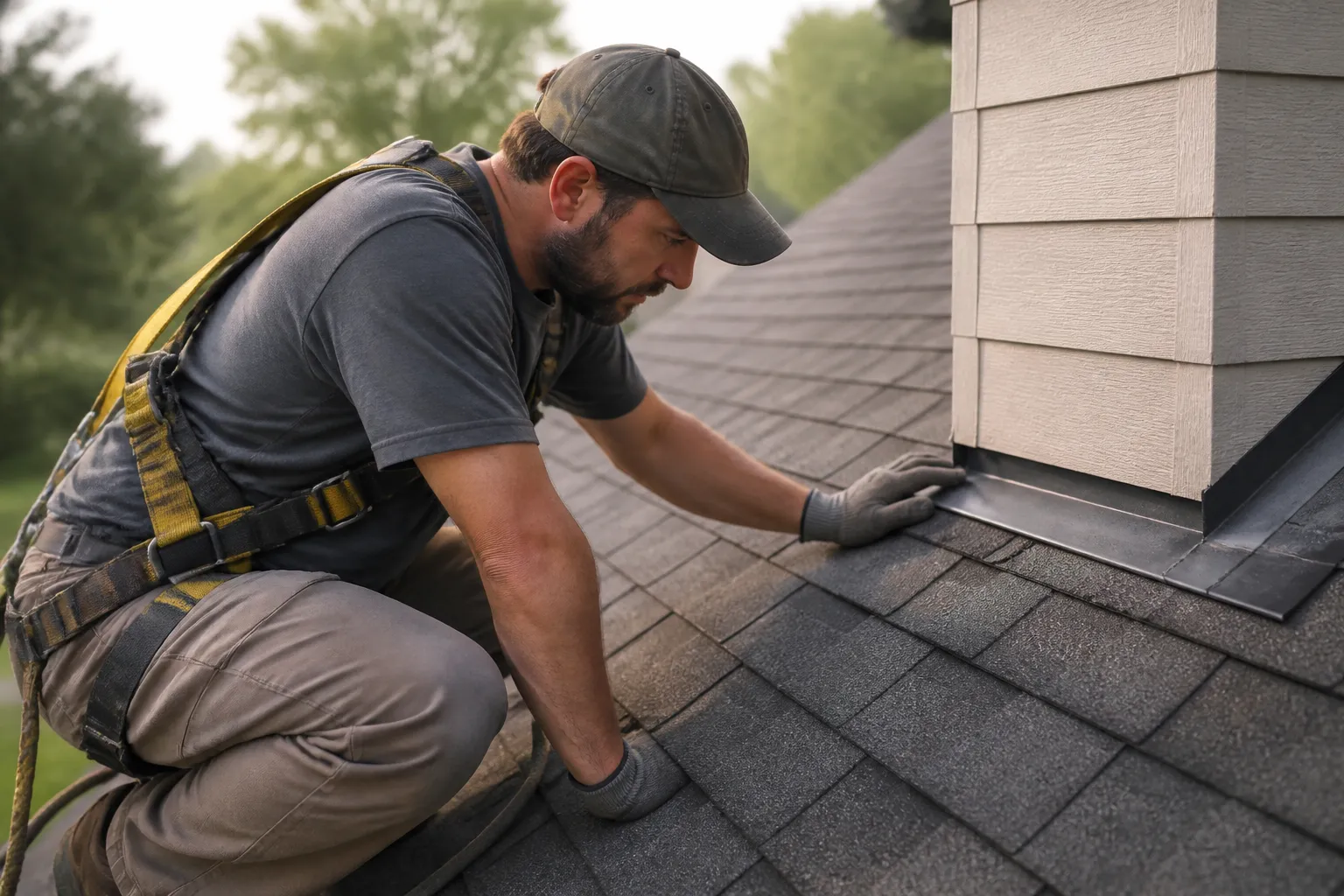
A repair assessment may focus on a specific roof detail, but the nearby materials matter too. Shingles that are cracked, displaced, or missing can expose the layers below. Flashing around roof intersections and penetrations can loosen or deteriorate, while a pipe boot may split where it seals around a vent pipe. Water can also enter at a transition and move before becoming visible indoors.
Ask what was observed, which component is thought to be allowing water in, and how the proposed work addresses that condition. The scope should name the affected area and explain any limits, including portions that were not accessible or could not be confirmed without opening the roof. Clear boundaries make it easier to understand what the repair is intended to solve.
A focused repair can make sense when damage is confined to a small area and the surrounding shingles, flashing, and roof layers remain in usable condition. The decision should reflect the actual pattern and extent of wear, not only the size of an indoor stain. If an inspection finds a clear, isolated source, the proposed repair can be compared with the condition of nearby materials.
Recurring leaks deserve a closer explanation. A patch that did not hold may have missed the true entry point, addressed only part of the affected detail, or been applied where broader deterioration is present. Before repeating a repair, ask what new evidence identifies the cause and whether the prior work area will be reviewed.
Replacement may be worth comparing when leaks return in different areas, shingle wear is widespread, or several roof details need attention. A roof can have one repairable defect and still be aging elsewhere, so a useful assessment distinguishes the local leak from the overall condition. Ask which observations support repair, which suggest broader work, and what concerns would remain after a repair.
Review any repair and replacement scopes side by side. A repair proposal should identify the location and components involved, while a replacement proposal should describe the roof areas, material, removal, flashing, ventilation, property protection, and cleanup. For a broader framework, read the roof repair versus replacement guide.
For Jacksonville property-specific guidance, review the Jacksonville roofing hub. The statewide Arkansas roof repair page covers common repair concerns, while Roof Replacement in Jacksonville, AR explains the broader project option. The right scope depends on the roof's observed condition and the details included in the estimate.
When requesting an estimate, share the property location, where moisture appears, when it was first noticed, any recurring pattern, and previous repair details. Photos from indoors or the ground can help describe visible conditions when taken safely. Ask for written documentation of the suspected source, proposed work, included materials, limitations, and any additional work that would require approval.
Water may travel along roof layers, decking, or framing before it becomes visible indoors, so the stain alone does not establish the source.
Sometimes. If the affected area is limited and surrounding materials remain serviceable, a focused repair may be appropriate. The assessment should also consider the roof's broader condition and any other signs of wear.
The original entry point may not have been identified, the problem may extend beyond the patched spot, or nearby materials may also be deteriorating. Ask what the inspection found before agreeing to repeat a surface patch.
Compare both when leaks recur, wear spans multiple areas, or the roof has several concerns. Review the observations, repair limitations, replacement scope, and remaining risks rather than relying on the size of one stain alone.
To share roof details or request an estimate, use the estimate form or the existing call-first controls.
What To Expect
Share your ZIP code, the service you are considering, and what you have noticed about the roof.
Discuss the observed condition, repair or replacement options, and proposed scope with the independent roofer, subject to local availability.
Review materials, work details, cleanup, exclusions, and any additional repairs before deciding how to proceed.
A Few Common Questions
Tell us where the property is and what your roof needs.
Roofing Estimate
Share the property ZIP code and the roofing service you need. The form uses the existing inquiry system.