Arkansas Roofing Guidance
Roof Repair in Heber Springs, AR
Learn how roof leak symptoms, localized damage, and recurring problems can guide a repair assessment in Heber Springs, Arkansas.
Arkansas Roofing Guidance
Learn how roof leak symptoms, localized damage, and recurring problems can guide a repair assessment in Heber Springs, Arkansas.
A ceiling mark, damp attic surface, or shingle out of place can point to a roof concern, but none of these observations reveals the full cause by itself. In Heber Springs, Arkansas, a useful repair assessment connects what is visible indoors with the roof areas and transitions that may be involved.
Record when the concern began, what weather preceded it, whether it has happened before, and which rooms or roof sections seem affected. All Arkansas Roofing helps property owners organize questions and compare written roofing scopes; independent contractors assess roofs, provide estimates, and perform agreed work.
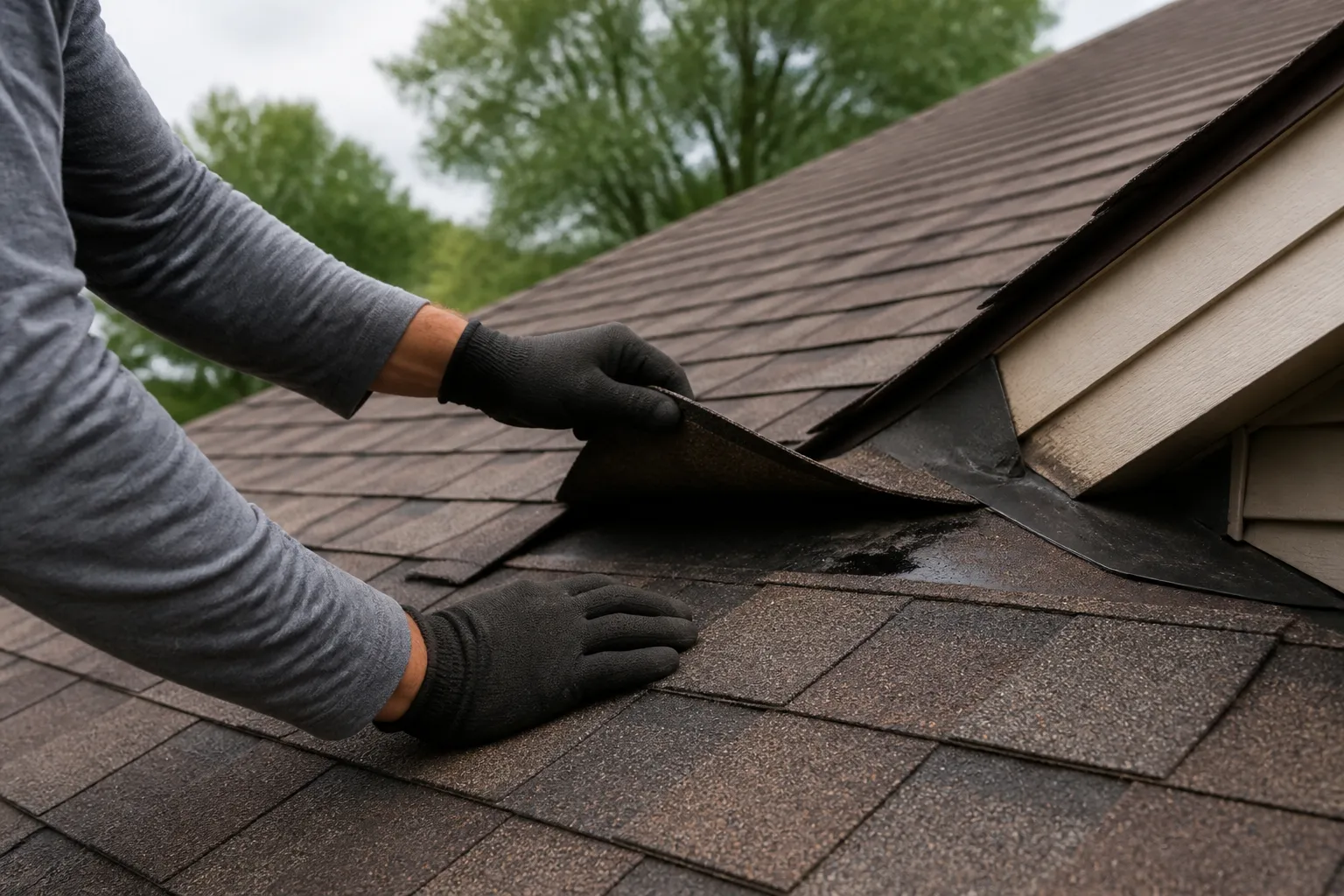
Water may travel along roof decking, rafters, insulation, or other surfaces before appearing as a stain or drip. The visible indoor spot can be several feet from the opening, so a symptom alone does not identify the entry point. Roof penetrations, flashing, valleys, roof edges, and damaged or displaced shingles are among the areas an assessment may consider, but none should be treated as the cause without inspection.
When requesting help, describe the location of the indoor sign, when it appears, whether it follows rain or wind, and whether the area has leaked previously. Mention any roof work already completed and what changed afterward. Safe photos from indoors or from ground level can help document the concern. Do not climb onto a wet, steep, or damaged roof or enter an unsafe attic to take pictures.
Identifying the source matters because repairing only the stain or the nearest visible roof feature can leave the actual water path unaddressed. An assessment should explain what was observed, which roof component appears involved, and how the proposed repair is meant to address it. If evidence is uncertain, ask what additional inspection is appropriate before authorizing a larger scope.
A focused repair can be worth considering when the affected area is limited and surrounding materials remain serviceable. The written scope should identify the roof section, describe removal and replacement work, and state whether flashing, underlayment, fasteners, or adjacent materials are included. The proposal should also note exclusions and explain how concealed damage would be handled if the area must be opened.
Water marks can remain after a leak has stopped, while a new mark can appear after a separate event. Note whether the stain grows, feels damp, or returns after precipitation, but avoid assuming that the ceiling condition alone determines the repair. A contractor can compare interior observations with relevant roof details and explain the limits of what can be confirmed.
A leak that returns after repair deserves a review of both the original scope and the roof condition around it. The earlier work may have addressed one component while another entry point or nearby transition remains unresolved. Ask for a clear explanation of what changed, what areas were inspected, and whether the new proposal addresses a different or broader section.
Compare estimates by the work described, not just by the label “roof repair.” Check the location and extent of the proposed work, material descriptions, flashing and underlayment details, protection and cleanup, and any assumptions about the decking. Ask how the contractor will document newly discovered conditions and obtain approval before work outside the stated scope proceeds.
Repair may be practical for isolated damage on a roof whose surrounding areas remain in serviceable condition. Replacement may be worth comparing when wear affects multiple roof sections, leaks recur, materials are broadly deteriorated, or repairs cannot reasonably restore the system. Roof age can inform the discussion, but it is not a diagnosis on its own.
Request the observations supporting either recommendation. If replacement is proposed, ask whether a limited repair remains viable and what risks or limitations accompany that alternative. For broader decision support, read the roof repair or replacement guide. You can also review roofing guidance for Heber Springs, the statewide roof repair page, and roof replacement in Heber Springs.
The City of Heber Springs’ current building-permit FAQ says replacing shingles or other roofing materials does not require a permit, but replacing any part of the decking does. That distinction matters if concealed decking damage is found after materials are removed. Confirm requirements for the property’s address and final work scope with the City building-permit office, especially if the property is outside city limits and another jurisdiction applies.
Not reliably. Water can move along framing or other surfaces before becoming visible indoors. Treat the stain as useful evidence of a symptom, not proof of the roof opening’s location.
Share where and when water appears, whether it follows rain or wind, whether the issue has returned, any previous repair details, and visible changes you can observe safely. Indoor or ground-level photos may help.
Compare both when wear or damage extends beyond one small area, leaks recur, or the roof’s overall condition is uncertain. Ask what each written scope addresses and what observed facts support the recommendation.
The City FAQ states that replacing any part of the decking requires a permit, while replacing shingles or roofing materials does not. Confirm the current requirement for the address and actual scope with the City, since jurisdiction can differ outside city limits.
What To Expect
Share your ZIP code, the service you are considering, and what you have noticed about the roof.
Discuss the observed condition, repair or replacement options, and proposed scope with the independent roofer, subject to local availability.
Review materials, work details, cleanup, exclusions, and any additional repairs before deciding how to proceed.
A Few Common Questions
Tell us where the property is and what your roof needs.
Roofing Estimate
Share the property ZIP code and the roofing service you need. The form uses the existing inquiry system.