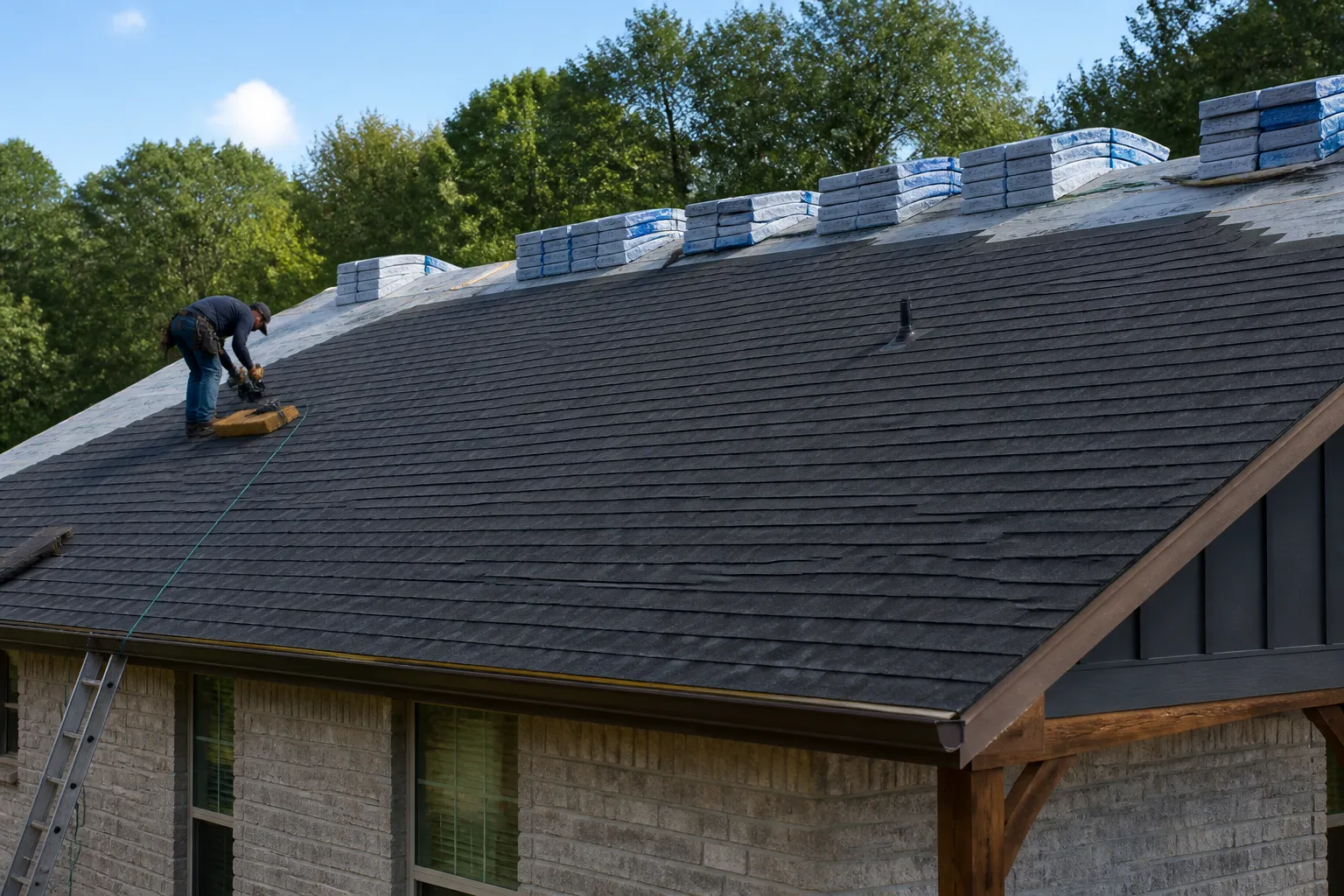
When replacing your Paragould roof, the details beneath the finished surface matter. Compare proposals that explain decking, flashing, ventilation, materials, removal, and cleanup so you understand the complete scope.
A replacement recommendation should be tied to observed roof conditions, not just a general description of age or appearance. Ask which sections need work, what repair options remain, and what each proposal includes from preparation through cleanup. For broader local context, review roofing options in Paragould.
Request a Roof Replacement Estimate
Assessing Roof Condition
Replacement may be worth considering when roofing materials have widespread deterioration, several areas have recurring problems, or repeated localized repairs no longer address the condition. A single leak or damaged section does not automatically mean the entire roof needs replacement. The assessment should describe what was observed, where the condition occurs, and how the proposed scope responds.
Ask whether repair remains a practical option and what it would address or leave unchanged. Consider patterns of leaks, the condition of shingles or other roof covering, transitions and penetrations, and any visible concerns with the supporting deck. Roof age can be useful context, but the recommendation should explain the actual condition and the work needed. Compare the assessment with Roof Repair in Paragould, AR before deciding which scope fits.
Compare Roofing Materials
Material options should be compared by the specific product and installation approach described in each proposal. Asphalt shingles and metal roofing differ in appearance, profiles, attachment details, and the components needed at roof edges, valleys, openings, and transitions. The right comparison depends on the building, the existing roof design, and the available written scope.
Ask what underlayment and related components are included, how the selected system fits the roof, and whether the proposal identifies product details clearly enough to compare. Avoid choosing from a broad label alone. If two estimates name different systems, request an explanation of what changes in preparation, flashing details, ventilation, installation, and maintenance information.
Removal and Decking
A complete replacement scope should say whether existing materials will be removed, how debris will be handled, and how the roof deck will be reviewed after removal. Because parts of the deck may be concealed until the old covering comes off, proposals should explain what happens if damaged or unsuitable decking is found.
Before approving work, ask how the condition will be documented, how the additional work will be described, and how revised scope and any related charges will be presented for approval. Clarify who will contact you and whether written authorization is required before the added work proceeds. These steps help prevent an unexpected condition from becoming an unclear change to the project.
Flashing, Ventilation, and Installation
New roof covering is only one part of the work. The estimate should identify flashing at relevant roof joints and penetrations, how pipe boots or other details will be handled, and whether ventilation work is included or excluded. Ask what preparation is planned before installation and which roof areas are covered.
Installation planning also affects how the property is protected and how the work area is managed. A written scope should describe the sequence at a practical level, materials to be installed, and cleanup expectations. If an item is conditional or depends on inspection, request a plain-language explanation so it is clear what is confirmed and what may change.
Reviewing a Written Estimate
Compare proposals line by line where possible. A useful estimate identifies the roof sections, preparation, removal, underlayment or other specified materials, decking review, flashing, ventilation, installation, debris handling, and cleanup. It should make exclusions and conditional items visible rather than leaving them implicit.
Ask how additional work will be documented and approved before it is performed. Keep a copy of the estimate and any later written changes so the agreed scope stays clear. If an item is described as an allowance or subject to inspection, ask what that means for the materials or work. The decision should be based on the roof condition and documented scope, not pressure or unsupported promises.
For regional guidance, see Roof Replacement in Arkansas. Use the estimate form below to describe the property and ask about the next step.
Request a Roof Replacement Estimate
Roof Replacement FAQ
Does one leak mean the roof needs replacement?
No. A leak may come from a limited repairable condition. Ask what was inspected, whether nearby materials are affected, and why the recommended scope is repair or replacement.
What should an estimate say about decking?
It should explain when the deck will be inspected, how concealed damage will be documented, how added work will be described, and how approval will be obtained before proceeding.
How should I compare asphalt shingles and metal roofing?
Compare the actual products and installation details, including preparation, underlayment, edges, flashing, penetrations, ventilation, and maintenance information. Ask how each proposal fits the existing roof design.
What should happen if unexpected work is needed?
Ask for the condition to be documented, the added work and scope change to be explained in writing, and approval to be obtained before the extra work begins.
For local repair information, visit Roof Repair in Paragould, AR. For an overview of services in the city, see the Paragould service-area page.