Arkansas Roofing Guidance
Roof Replacement in Monticello, AR
Review roof condition, removal, decking, materials, flashing, ventilation, cleanup, and written estimates for roof replacement in Monticello, Arkansas.
Arkansas Roofing Guidance
Review roof condition, removal, decking, materials, flashing, ventilation, cleanup, and written estimates for roof replacement in Monticello, Arkansas.
A new roof should address more than the worn outer covering. For your Monticello property, compare decking, flashing, ventilation, materials, and cleanup alongside the total price.
Replacement may be appropriate when wear or damage extends beyond a practical repair, but the decision should follow the roof’s observed condition. A clear written proposal lets you compare what will be removed, which materials will be installed, and how concealed damage or added work will be handled.
Missing or worn shingles, recurring leaks, damaged flashing, and visible sagging can prompt a closer review, but no single sign determines whether a roof needs replacement. The assessment should describe the affected areas, condition of the surrounding covering, and whether localized repairs remain practical. Ask how the roof’s overall condition supports the recommendation and what a repair would leave unresolved.
Compare the scope and expected result of repair with replacement. If problems are limited to one area and nearby materials remain serviceable, a focused repair may be worth considering. Widespread deterioration, repeated failures in separate locations, or conditions affecting the roof deck may make a broader project more reasonable. The proposal should explain the reasons rather than rely on a general statement that the roof is old or worn.
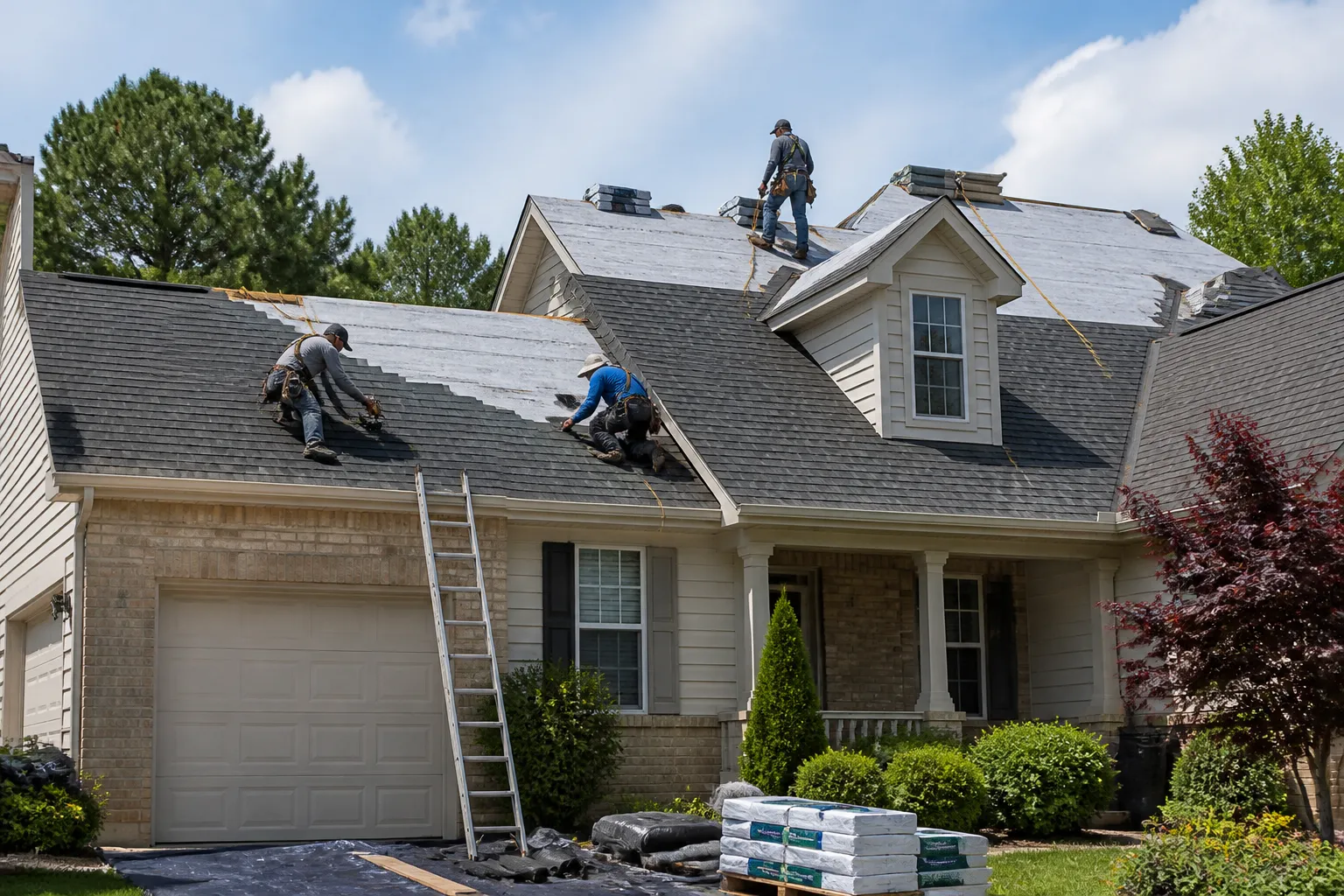
Replacement typically involves removal of existing roofing materials, preparation of the roof surface, installation of the selected system, and cleanup. Written estimates should state whether tear-off and disposal are included, what underlayment and edge details are proposed, and how flashing and roof penetrations will be addressed.
Decking is often concealed until removal. Ask how the exposed deck will be assessed, what conditions count as damage requiring repair, how those areas will be documented, and how additional work will be priced and approved. The estimate should explain whether any decking allowance is included and what happens if the discovered condition exceeds it. Do not assume an allowance or approval process without seeing it in the written scope.
Material selection should fit the roof design and property needs. Asphalt shingles and metal roofing are different system choices; compare the specific products, appearance, installation details, and project requirements rather than relying on broad claims. Ask which components are included with the selected material and whether the estimate identifies product names or specifications clearly enough to compare.
Flashing at walls, valleys, chimneys, edges, and roof openings helps manage transitions where water can enter. The proposal should describe whether existing flashing will be reused, repaired, or replaced, and how pipe boots and other penetrations will be finished. Ventilation details also matter to the roof assembly. Ask what ventilation conditions were observed and what changes, if any, are included in the scope.
A lower total may reflect a different set of included work. Review each written estimate for:
Ask that any unexpected condition be documented with its location and explanation. Before authorizing additional work, review the proposed change, cost, and effect on the scope in writing. Keep a copy of the accepted estimate and any approved changes so the agreed project details are clear.
Before work begins, clarify how the estimate addresses tear-off, debris disposal, protection of nearby surfaces, and final cleanup. Ask what preparation is expected at the property and how access or stored items should be handled. The project scope should also explain what work is excluded, so removal does not create assumptions about repairs beyond the listed items.
Roof replacement work is performed by independent roofing contractors. All Arkansas Roofing connects property owners with independent contractors and does not install roofs. Contractor availability depends on location and project needs.
For a Monticello property, compare proposals by the roof condition and the work each one actually includes. The Monticello service-area page offers broader local roofing information. Review Arkansas roof replacement guidance for statewide considerations, and compare Roof Repair in Monticello, AR if a focused repair may address the observed condition.
Ask what conditions were observed, which areas each option addresses, and what a repair would leave unchanged. Compare the written scopes rather than deciding from one symptom alone.
It should identify removal and disposal, preparation, property protection, roof-deck assessment, and how damage uncovered after removal will be documented and presented for approval.
They are part of the roof system details that affect how the replacement is completed. The proposal should state what flashing or ventilation work is included and what is excluded.
Ask for the affected area, condition, proposed work, and any cost or scope change in writing. Review and approve the change before additional work proceeds.
What To Expect
Share your ZIP code, the service you are considering, and what you have noticed about the roof.
Discuss the observed condition, repair or replacement options, and proposed scope with the independent roofer, subject to local availability.
Review materials, work details, cleanup, exclusions, and any additional repairs before deciding how to proceed.
A Few Common Questions
Tell us where the property is and what your roof needs.
Roofing Estimate
Share the property ZIP code and the roofing service you need. The form uses the existing inquiry system.