Arkansas Roofing Guidance
Roof Repair in Harrison, AR
Explore roof repair in Harrison, AR, including leaks, shingles, flashing, pipe boots, previous patches, repair limitations, and safe ways to document concerns.
Arkansas Roofing Guidance
Explore roof repair in Harrison, AR, including leaks, shingles, flashing, pipe boots, previous patches, repair limitations, and safe ways to document concerns.
Repeated patches can hide a roofing problem without resolving it. For roof repair in Harrison, start by identifying where the damage begins, which materials are affected, and what the proposed repair will address.
Describe when the leak or visible change started, whether it has happened before, and what earlier work you know about. All Arkansas Roofing connects property owners with independent roofing contractors; estimates and roofing work come from those providers. A clear description helps focus the assessment without assuming the cause before the roof is reviewed.
Water can move along framing or other surfaces before a ceiling stain appears, so the visible spot may not be directly below the roof opening. When calling All Arkansas Roofing, report the room or location, when the leak began or returns, and visible changes such as a growing stain or new drip. Flashing, roof penetrations, damaged shingles, and valleys are possible entry points, but symptoms alone do not diagnose the source.
Before choosing a repair, the suspected water path needs to be assessed against the roof components and transitions. Ask what was examined, which observations support the proposed source, and what remains uncertain. If access is limited or the leak occurs only occasionally, ask how that affects the proposed scope and whether further inspection is recommended.
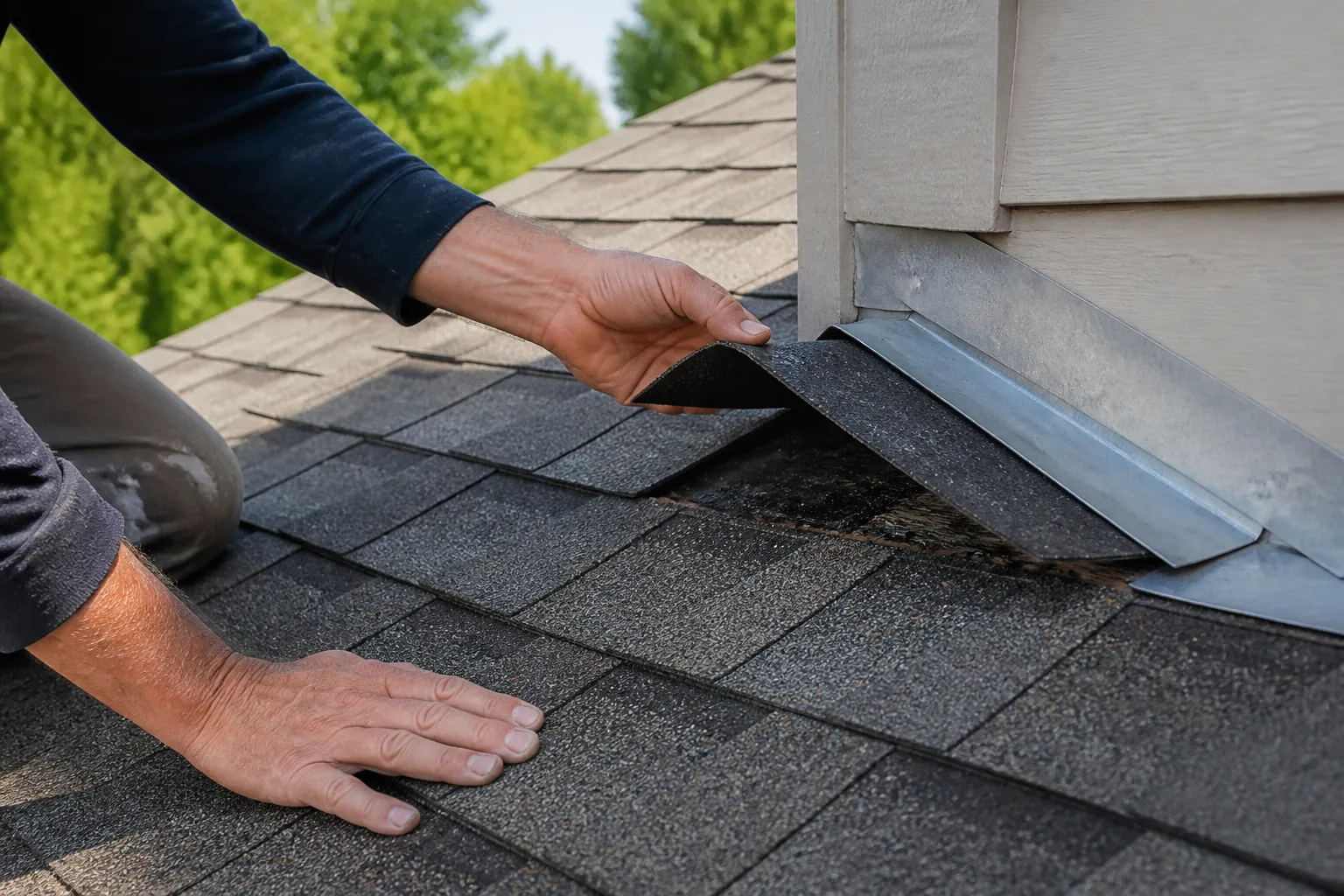
Roof components can fail in different ways, so the visible symptom alone may not identify the repair. Shingles may be missing, cracked, lifted, or displaced. Flashing protects transitions at roof edges, walls, valleys, and other intersections; loose, bent, or deteriorated flashing can allow water to pass behind it. Pipe boots seal around plumbing vent pipes, and a split, loose, or displaced boot may need attention.
Ask which components are affected and how the repair will meet the surrounding materials. Clarify whether the scope includes nearby shingles, underlayment, flashing, sealants, or the pipe boot itself. A written estimate should identify the roof area and describe the work, rather than relying on a broad label such as “patch leak.”
If the same area has been patched before, share what you know about when the work occurred and what was changed. The new assessment can consider whether the original source may remain, whether adjacent materials have deteriorated, or whether another roof detail is involved. Ask if the earlier patch will be removed, modified, or left in place, and why that approach fits the observed condition.
A repair has limits. Work in one opened area may not address hidden moisture, damage beyond that area, or other worn sections of the roof. Before approving a proposal, ask what is included, what is excluded, and what conditions could change the scope. If concealed damage becomes visible during the work, the process for documenting it and getting your approval should be clear.
You do not need to climb onto the roof to provide helpful information. From a safe indoor position, photograph ceiling stains or damp areas, note the date and room, and record whether the mark changes after rain. If it is safe, take exterior photos from the ground. Keep people away from a sagging ceiling, avoid touching wet electrical fixtures, and do not enter an unstable attic or stand beneath an active leak near electrical equipment. Mention any immediate safety concern when you ask about next steps.
A focused repair may be reasonable when the source is identifiable, the affected area is limited, and surrounding materials remain serviceable. Replacement may be worth discussing when damage is widespread, leaks recur in several places, or previous repairs have not resolved the underlying condition. One ceiling stain or one damaged shingle does not by itself determine the answer.
Ask for the observed conditions behind each recommendation and compare the scopes: which areas a repair would address, what it cannot address, and how that differs from replacement. Review the Harrison roofing hub, regional roof repair information, and Roof Replacement in Harrison, AR. To share the property details, use the estimate form below.
The original entry point may not have been identified, nearby materials may also be worn, or water may be traveling from another roof detail. Ask what was inspected and how the current scope addresses the suspected source.
Possibly. The decision depends on the affected area and the condition of the surrounding roof. Request an explanation of what was reviewed and why a localized repair or broader work is proposed.
Provide the approximate date, location, and any description or paperwork you have. Ask whether the earlier patch will be inspected or changed and have the new estimate state what is included.
Use indoor or ground-level photos from a safe position; do not climb onto the roof or approach wet electrical fixtures, unsafe attic areas, or sagging material.
What To Expect
Share your ZIP code, the service you are considering, and what you have noticed about the roof.
Discuss the observed condition, repair or replacement options, and proposed scope with the independent roofer, subject to local availability.
Review materials, work details, cleanup, exclusions, and any additional repairs before deciding how to proceed.
A Few Common Questions
Tell us where the property is and what your roof needs.
Roofing Estimate
Share the property ZIP code and the roofing service you need. The form uses the existing inquiry system.